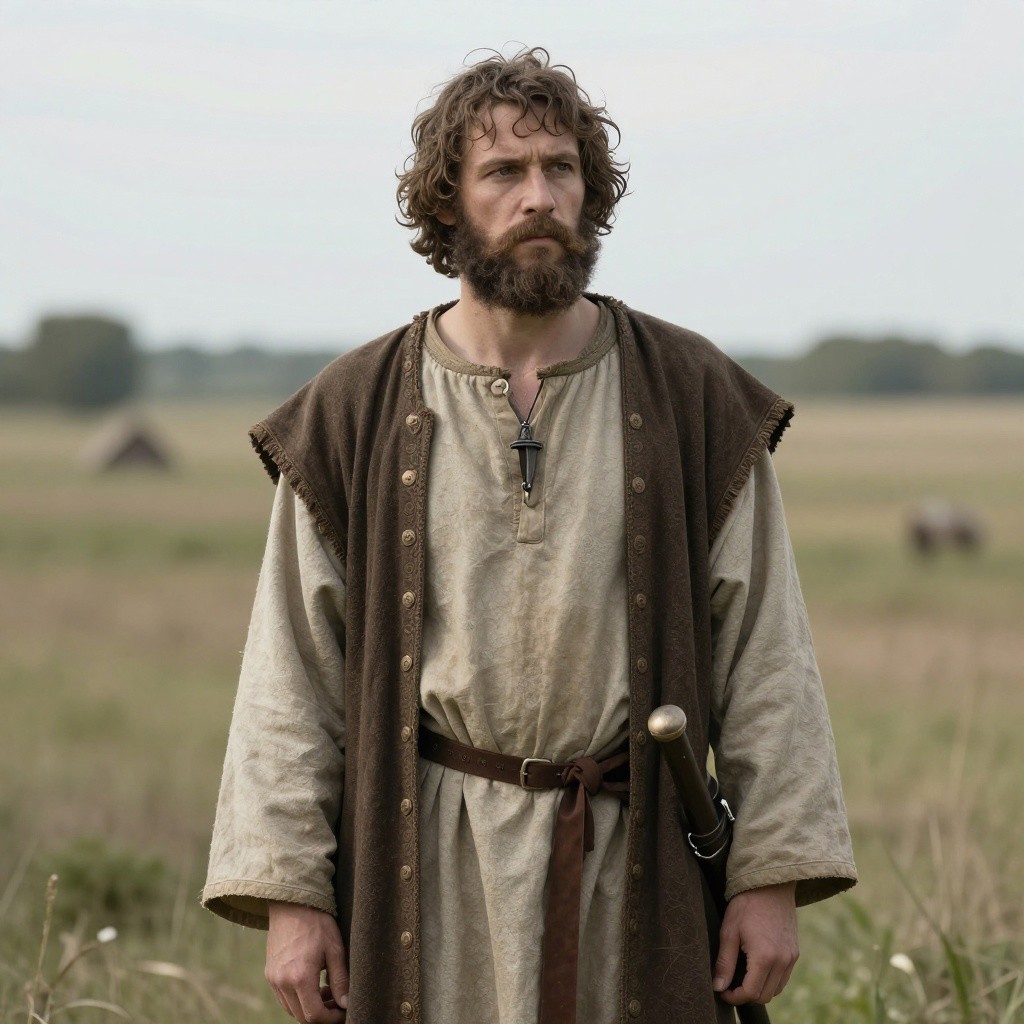
Medieval France, spanning from roughly the 5th to the 15th century, represents a dynamic period in Western European history marked by significant socio-political, cultural, and economic transformations. This era is typically divided into early, high, and late medieval periods, each characterized by distinct features and developments.
Early Medieval France (5th to 10th Century)
Historical Context:
The early medieval era began with the collapse of the Western Roman Empire, leading to the establishment of various Germanic kingdoms. Among these, the Frankish Kingdom rose to prominence. The Merovingian dynasty, beginning with Clovis I's conversion to Christianity in 496, laid the foundation for what would become medieval France.
Society and Feudalism:
Society was largely rural and organized around a feudal system that began to take shape during this period. Power was fragmented, with local lords exercising control over lands and peasantry in exchange for military service to higher nobility. The manor system dictated social relations, with serfs working the land under the protection of their local lord.
Religion and Culture:
Christianity played a crucial role in shaping Medieval France. The Church held immense power, influencing not only spiritual but also temporal affairs. Monasticism flourished, with the establishment of influential abbeys such as Cluny, which played a key role in religious reform and cultural life, preserving classical knowledge and fostering education.
High Medieval France (11th to 13th Century)
Political Developments:
The Capetian dynasty began to solidify royal authority during this period. Kings like Philip II Augustus (r. 1180–1223) expanded French territories and strengthened the monarchy, laying the groundwork for a centralized state. This era saw the growth of cities and the burgeoning of a more structured and powerful monarchy.
Feudal Society and Economy:
Feudalism reached its zenith, characterized by complex hierarchies of lords and vassals. The economy gradually transitioned from a predominantly agrarian base to include vibrant trade networks, facilitated by fairs and an emerging merchant class. This prosperity led to the development of guilds and a more interconnected European economy.
Cultural Renaissance:
A flowering of Gothic architecture led to the construction of grand cathedrals such as Notre-Dame de Paris and Chartres Cathedral. This period also saw the rise of universities, like the University of Paris, becoming centers of learning and philosophical discourse. The influence of scholasticism, championed by figures like St. Thomas Aquinas, marked intellectual life.
Late Medieval France (14th to 15th Century)
Challenges and Conflicts:
This era was dominated by the Hundred Years' War (1337-1453) between France and England, profoundly impacting French society and politics. Despite early setbacks, figures like Joan of Arc helped inspire French victories, leading to the consolidation of the French nation-state.
Social and Economic Change:
The Black Death (1347-1351) drastically reduced the population, leading to social upheavals and labor shortages. These changes challenged traditional feudal structures, leading to peasant revolts like the Jacquerie in 1358. Economically, the devastation caused by war and plague paved the way for shifts towards a more modern economy.
Cultural Developments:
The late medieval period witnessed a continuation and intensification of earlier cultural trends. The production of illuminated manuscripts, such as the \Très Riches Heures du Duc de Berry," exemplifies the artistic achievements of this time. The influence of humanism began to seep into French intellectual life, setting the stage for the Renaissance.
Overall Impact
Medieval France was a crucible for many of the political, social, and cultural norms that would shape modern Europe. The period saw the emergence of France as a distinct political entity, characterized by a strong monarchy, a flourishing culture deeply entwined with the Church, and a society navigating the complexities of feudalism. The challenges faced during the medieval period, including wars, plagues, and social transformations, ultimately forged a resilient nation that would play a pivotal role in European history."