A man buried in France in the era

Download PDF creates a visual, rasterized copy. Use Print for selectable text and better assistive-technology support.

Loading Report

Preparing your ancestry journey

Preparing the available report content...

Your report will open automatically.

Skip to main content
Reference library / Sample profile

A man buried in France in the era

Explore the recorded context, genetic comparisons and research behind this reference sample.

FranceFrance SaintLupienReze Medieval

A reference profile describes this sample. It does not establish a personal or family relationship.

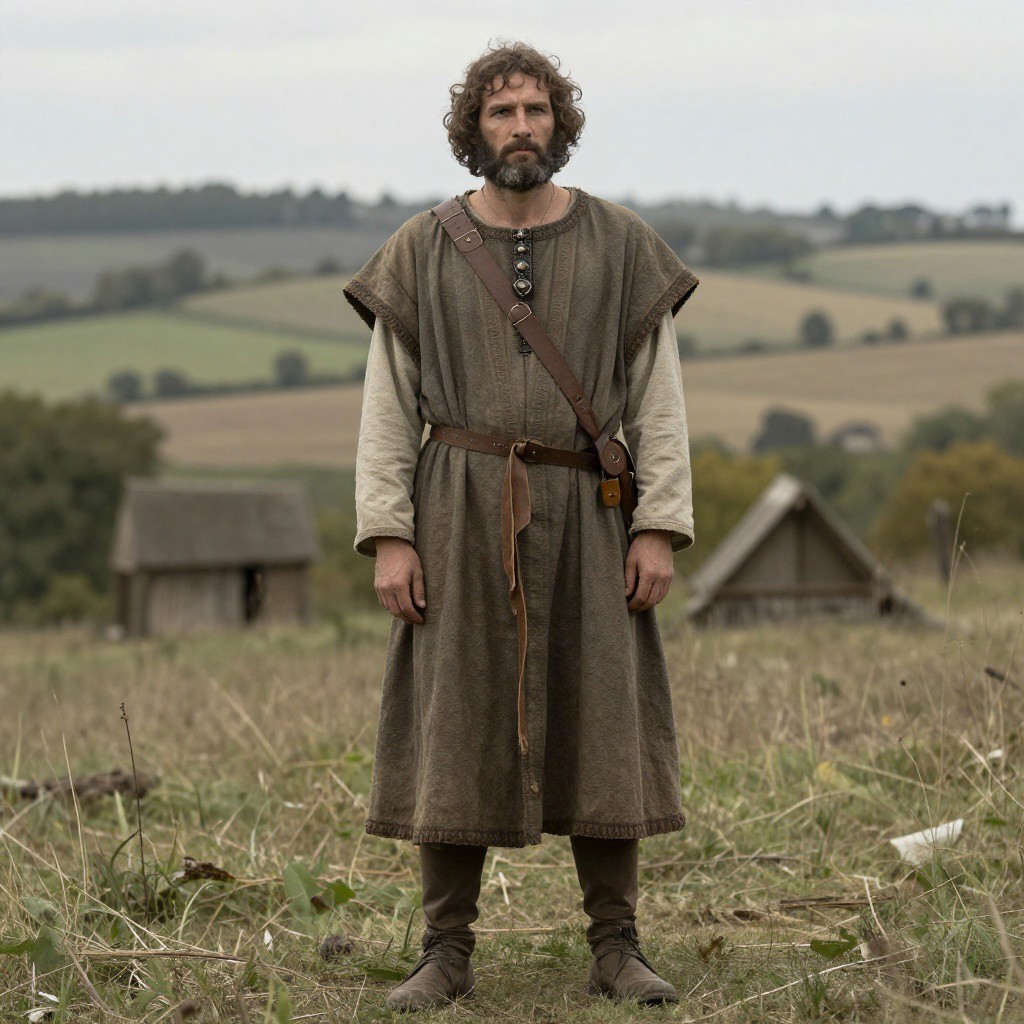
AI portrait reconstruction for A man buried in France in the  era
AI-generated artistic reconstruction, not a photograph of the individual.
Record

Sample details

Recorded details and available lineage markers.

Individual

Saint Lupien Reze Medieval individual, France

Sample ID: fra004_France

Date Range

403 CE - 563 CE

Cultural Period

France SaintLupienReze Medieval

Biological Sex

Male

mtDNA Haplogroup

Not available

Y-DNA Haplogroup

Not available

Geography

Location

Where this individual was discovered

Country France
Locality Saint Lupien Rezé (Pays de la Loire)
Coordinates 47.1922, -1.5625
Chronology

Date range

When this individual lived in the broader context of human history

Saint Lupien Reze Medieval individual, France 403 CE - 563 CE
Context

Historical context

Background information associated with the reference record.

Region & Environment

Medieval France in this period is best understood through its regional landscapes—river valleys, rolling agricultural countryside, and woodland margins that supported mixed farming. Networks of waterways and roads connected towns, villages, and estates, shaping how people moved and exchanged goods.

Historical Context

Between the early and high medieval centuries, power and administration were increasingly structured around local lordships and church institutions, though their forms varied by region. Written sources are unevenly preserved, so archaeology plays a key role in reconstructing settlement organization, production, and changing lifeways.

Populations & Lifeways

Most people lived in rural settlements engaged in agriculture, animal husbandry, and seasonal labor. Households relied on locally available resources, while some individuals participated in specialized crafts and trade. Burial evidence—when present and datable—offers clues to community identity and local practice.

Archaeology & Material Culture

Material culture from this medieval horizon typically includes domestic ceramics, locally manufactured or regionally distributed metalwork, and evidence of building materials and household maintenance. Analysis of craft debris, workshop features, and tool types can indicate how production was organized, whether through household-level work or more specialized activity.

Culture & Society

Cultural life in medieval France combined shared regional traditions with variation shaped by local patrons, ecclesiastical influence, and economic conditions. Artifact styles and burial customs help track how communities maintained continuity or adopted new practices as circumstances changed.

Legacy & Transition

As medieval societies moved toward later medieval configurations, shifts in settlement patterns, production, and regional exchange are often visible archaeologically. The Saint-Lupien/Rezzé horizon contributes to understanding these broader transitions by documenting how everyday material practices fit into changing regional histories.

Analysis

Genetic comparisons

These comparisons show genetic similarity, not identity or origin. The populations listed are those whose genomes show statistical alignment to this ancient individual.

Similarity reflects shared history, not shared identity. These are analytical comparisons, not claims about who this person was.

Modern Genetic Admixture

This analysis compares the DNA profile with present-day reference populations, showing statistical similarity to modern reference populations from different regions. The excavation site records where this individual was found, not a fixed modern genetic identity.

Europe 90.8%
Southern European 68.4%
Iberian 39.2%
Sardinian 16.7%
Italian 12.6%
Northwestern European 22.3%
English 16.7%
Northwestern European 5.6%
America 9.3%
America 9.3%
Native American 9.3%

Closest Modern Populations

These are the modern populations showing the closest statistical alignment to A man buried in France in the era, ranked by genetic distance. Lower distance values indicate closer statistical similarity. Cross-region similarity can reflect shared ancestry, population movement, continuity, or later admixture.

1
Afrikaner
2.5117
2
French Nord
2.8180
3
Belgianb
2.8751
4
French Alsace
2.8820
5
Belgianc
2.9415
6
Swiss German
2.9480
7
French Paris
3.1036
8
French Pas De Calais
3.1079
9
Belgiana
3.3635
10
German
3.4510
Context

Related Samples

This individual exists within a broader network of ancient samples. No ancient genome stands alone.
Individual Culture/Period Date Location Action
Saint Lupien Reze Medieval individual, France 403 CE Saint Lupien Rezé (Pays de la Loire), France View
Medieval individual, France 889 CE Chaussé Saint Pierre (Pays de la Loire, Maine-et-Loire, Angers), France View
Chausse Saint Pierre Medieval individual, France 389 CE Chaussé Saint Pierre (Pays de la Loire, Maine-et-Loire, Angers), France View
Medieval individual, France 592 CE Chémeré (Pays de la Loire Region, Chaumes-en-Retz commune), France View
Page 1
Individual Culture/Period Date Location Action
Saint Lupien Reze Medieval individual, France 362 CE Saint Lupien Rezé (Pays de la Loire), France View
Saint Lupien Reze Medieval individual, France 403 CE Saint Lupien Rezé (Pays de la Loire), France View
Page 1
Sources

References

Scientific publications and genetic data that inform this profile.

G25 Coordinates

These coordinates represent a position in genetic space, a tool for comparison, not a conclusion. You can use these to perform custom admixture analysis in G25 Studio.

fra004_France,0.1102407,0.12988408,0.04576396,0.03040126,0.03636346,0.0097345,-0.00303242,-0.0007568,0.01457646,0.00948006,-0.00200988,0.00579752,-0.00510466,-0.0108176,0.0082026,0.00132432,0.0032209,-0.00355216,-0.0026013,-0.00200606,0.00188992,0.0011001,-0.00148572,0.00760354,0.00176033
Continue in G25 Studio
Use code for 30% off • Expires Nov 16