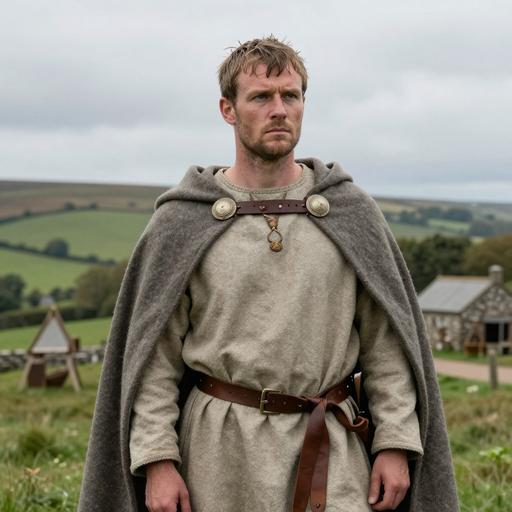
The transition from the Iron Age to Roman England marks a fascinating period in British history, characterized by significant cultural, technological, and societal changes. This era spans approximately from 800 BCE, with the beginning of the Iron Age, to the early 5th century CE, as Roman influence waned following the collapse of the Western Roman Empire.
Iron Age England (c. 800 BCE - 43 CE)
Celtic Tribes and Society:
Iron Age England was dominated by a Celtic culture, characterized by tribal societies. The Celts were a collection of tribes sharing linguistic and cultural similarities, although they were not politically unified. Notable tribes in England included the Iceni, Catuvellauni, and Brigantes among others. Society was hierarchical, typically led by warrior elites and chieftains who wielded power, supported by druids who were responsible for religious rites and knowledge-keeping.
Settlements and Fortifications:
The landscape was dotted with hillforts, which served as tribal centers and refuges during conflicts. These structures were strategically located on elevated ground, providing both defense and visibility of surrounding lands. Roundhouses, constructed from wattle and daub with thatched roofs, were common dwelling types within these settlements.
Economy and Craftsmanship:
Iron Age Celts were skilled metalworkers, particularly known for their iron tools and weapons, which offered advantages over earlier bronze implements. They also excelled in other crafts, producing intricate decorative items such as jewelry, pottery, and textiles. The economy was largely agrarian, with farming supplemented by hunting and gathering.
Religion and Culture:
Celtic religion was polytheistic, with a focus on nature and a pantheon of deities tied to the natural world and human activities. Sacred groves and water bodies were often sites of worship and ritual sacrifice. Art from the period, frequently incorporating spirals and geometric patterns, reveals insights into their aesthetic sensibilities and symbolic life.
Roman Britain (43 CE - early 5th century CE)
Conquest and Romanization:
Julius Caesar made initial forays into Britain in 55 and 54 BCE, but the full-scale Roman conquest began under Emperor Claudius in 43 CE. This marked the establishment of Roman Britain or \Britannia." Over the decades, the Roman army subdued various tribes, eventually extending control over much of present-day England and Wales.
Infrastructure and Urbanization:
The Romans introduced advanced engineering and infrastructure, constructing roads, aqueducts, and buildings that transformed the landscape. Urban centers such as Londinium (London), Eboracum (York), and Verulamium (St Albans) emerged, featuring Roman architectural styles with forums, baths, and amphitheaters.
Economy and Trade:
Roman occupation integrated Britain into a broader imperial economy. Agriculture flourished with new techniques and large-scale villa estates. Long-distance trade increased, connected by Roman roads and ports, bringing goods such as wine, olive oil, and ceramics from across the Empire.
Society and Culture:
Romanization led to cultural blending, with many Britons adopting Roman customs, language (Latin), and law. However, traditional Celtic practices persisted, particularly in rural areas. The Roman pantheon coexisted with local deities, and by the late Roman period, Christianity began to spread.
Military and Defense:
The Roman military presence was a defining feature, with Hadrian's Wall marking the northern boundary of Roman Britain. Built to defend against unconquered tribes, it also served as a customs checkpoint. Forts and garrisons throughout Britain housed Roman legions and auxiliary troops.
Decline and Legacy
By the early 5th century, Roman authority in Britain weakened as the empire faced internal strife and barbarian invasions across Europe. Roman legions were withdrawn, and local Romano-British leaders began to govern independently, setting the stage for subsequent historical developments, such as the Anglo-Saxon migrations.
The legacy of this era is evident in the archaeological remains, place names, and cultural influences that continued long after the Romans departed. The Roman roads and towns laid the groundwork for future urban development, while Iron Age traditions subtly influenced later British culture. This period is a testament to the dynamic interplay between indigenous traditions and outside influences that have shaped the cultural tapestry of Britain."