Menu
Store
Blog
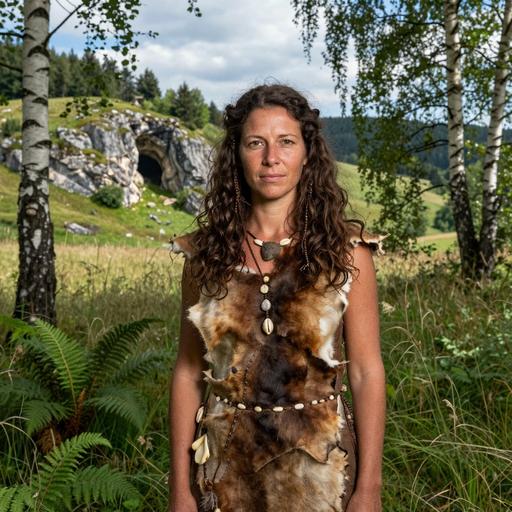
Portrait reconstruction of Bockstein
Ancient Individual

A woman buried in Germany in the Mesolithic era

Bockstein
6450 BCE - 6060 BCE
Female
Bockstein Cave, Germany
Germany
Scroll to begin
Chapter I

Identity

The biological and cultural markers that define this ancient individual

Sample ID

Bockstein

Date Range

6450 BCE - 6060 BCE

Biological Sex

Female

mtDNA Haplogroup

U5b1d1

Cultural Period

Bockstein Cave, Germany

Chapter II

Place

Where this individual was discovered

Country Germany
Locality Swabian Jura. Baden-Wurttemberg. Bockstein-Höhle. Lone valley
Coordinates 48.3300, 10.0900
Chapter III

Time

When this individual lived in the broader context of human history

Bockstein 6450 BCE - 6060 BCE
Chapter IV

Story

The narrative of this ancient life

The Bockstein Cave, located in the Swabian Jura of southwestern Germany, offers a fascinating glimpse into the era and culture of Western European hunter-gatherers during the Paleolithic period. This cave is part of a larger archaeological complex known as the Lone Valley, which includes several prehistoric sites that have yielded significant artifacts and remains essential to understanding early human life in Europe.

Geographical and Environmental Context

Bockstein Cave, like many other caves in the Swabian Jura, is situated in a limestone region characterized by rugged terrain, forested areas, and proximity to rivers. During the Paleolithic period, this area would have been rich in flora and fauna, providing abundant resources for hunter-gatherer communities. The cave itself offered a strategic vantage point, providing shelter as well as access to fresh water and animal trails, making it an ideal location for habitation and hunting activities.

Temporal Context

The Bockstein Cave sites date back to the Middle Paleolithic, roughly between 300,000 and 30,000 years ago, and encompass several distinct cultural phases including the Mousterian, Aurignacian, and Magdalenian. The site is particularly noted for its Mousterian layers, associated with Neanderthals, but it also provides evidence for later Upper Paleolithic Homo sapiens occupations.

Cultural and Technological Aspects

  1. Neanderthal Occupation (Middle Paleolithic):

    • Tools: The Mousterian tool industry is characterized by the production of flake tools using the Levallois technique. Tools found at Bockstein include scrapers, points, and denticulates, reflecting a technology focused on hunting and processing animal hides.
    • Subsistence: The Neanderthals inhabiting the cave were primarily big-game hunters, targeting species such as reindeer, horse, and mammoth. Evidence from faunal remains shows they had a diet supplemented by plant resources.
    • Social Structure: While direct evidence of social structures is scant, spatial organization within the cave suggests areas designated for different activities, indicative of complex social behaviors.
  2. Early Modern Human Occupation (Upper Paleolithic):

    • Aurignacian Phase: Associated with Homo sapiens, the Aurignacian phase marks significant advances in tool technology and symbolic behavior. Finds from this period include blade tools, bone points, and personal ornaments like beads fashioned from mammoth ivory.
    • Art and Symbolism: The Swabian Jura is renowned for early examples of figurative art, and although Bockstein has not yielded carved figurines like those from nearby sites, its cultural context suggests the presence of symbolic communication.
    • Advanced Hunting Techniques: Hunting strategies became more sophisticated, with evidence of organized group hunts and the use of tools like spearthrowers or bows.

Social and Cultural Dynamics

The transition from Neanderthal to modern human occupation at the Bockstein Cave reflects broader patterns of human migration and cultural evolution in Europe. This site, therefore, offers insights into the interactions between different hominin species, although there is still debate regarding the extent of direct contact between Neanderthals and Homo sapiens.

Cave sites like Bockstein were central to the social life of Paleolithic hunter-gatherers. They acted not only as shelters but also as hubs where groups would gather, share resources, exchange knowledge, and forge social bonds. The presence of decorative items and evidence of ritualistic activities, such as burials, hints at complex belief systems and a rich cultural life.

Conclusion

The Bockstein Cave serves as a vital archaeological resource that helps to illuminate the life ways of early European hunter-gatherers. By studying the material remains found within the cave, archaeologists and researchers continue to piece together the daily lives, technological advancements, and social structures of the Neanderthals and early modern humans who once called this region home. The ongoing exploration of the Bockstein and surrounding sites promises to further enrich our understanding of human history during the dynamic Paleolithic era.

Chapter V

Genetics

The genetic ancestry of this ancient individual

Ancient Genetic Admixture

This analysis compares the DNA profile of Bockstein with ancient reference populations, showing the genetic composition in terms of prehistoric ancestral groups.

Western Steppe Pastoralists 78.4%
European Hunter-Gatherers 14.9%
Neolithic Farmers 6.7%

Modern Genetic Admixture

This analysis compares the DNA profile with present-day reference populations, showing what percentage of genetic makeup resembles modern populations from different regions.

Europe 89.2%
Northwestern European 61.3%
Scandinavian 56.9%
English 3.4%
Finnish 1.0%
Eastern European 27.2%
Southern European 0.8%
Iberian 0.8%
Africa 5.8%
West African 5.8%
Senegambian & Guinean 2.9%
Ghanaian, Liberian, Sierra Leonean 2.9%
America 5.0%
America 5.0%
Native American 5.0%

Closest Modern Populations

These are the modern populations showing the closest statistical alignment to A woman buried in Germany in the Mesolithic era, ranked by genetic distance. Lower distance values indicate closer statistical similarity.

1
Cossack Ukrainian
3.5404
2
Polish
3.5874
3
Ukrainian Dnipro
3.6869
4
Russian Kursk
3.6981
5
Russian Tver
3.7237
6
Russian Orel
3.8054
7
Russian Ryazan
3.8276
8
Polish Kashubian
3.8291
9
Ukrainian Rivne
3.8371
10
Swedish
3.9218
Chapter VI

Context

Other ancient individuals connected to this sample

Sources

References

Scientific publications and genetic data

Scientific Publication

The genetic history of Ice Age Europe

Authors Fu Q, Posth C, Hajdinjak M
Abstract

Modern humans arrived in Europe ~45,000 years ago, but little is known about their genetic composition before the start of farming ~8,500 years ago. Here we analyse genome-wide data from 51 Eurasians from ~45,000-7,000 years ago. Over this time, the proportion of Neanderthal DNA decreased from 3-6% to around 2%, consistent with natural selection against Neanderthal variants in modern humans. Whereas there is no evidence of the earliest modern humans in Europe contributing to the genetic composition of present-day Europeans, all individuals between ~37,000 and ~14,000 years ago descended from a single founder population which forms part of the ancestry of present-day Europeans. An ~35,000-year-old individual from northwest Europe represents an early branch of this founder population which was then displaced across a broad region, before reappearing in southwest Europe at the height of the last Ice Age ~19,000 years ago. During the major warming period after ~14,000 years ago, a genetic component related to present-day Near Easterners became widespread in Europe. These results document how population turnover and migration have been recurring themes of European prehistory.

G25 Coordinates

The G25 coordinates for sample Bockstein can be used for detailed admixture analysis in our G25 Studio tool.

Bockstein,0.13228232,0.11085128,0.0747044,0.06640466,0.0345671,0.02767454,-0.00486364,-0.00467392,0.00336472,-0.01457328,-0.00664654,-0.00215292,0.00831844,0.01467258,0.00334574,0.00594896,-0.00468352,0.0025784,0.00346254,0.002475,0.00146718,-0.00211068,0.00807612,0.00206556,8.484E-05
Analyze in G25 Studio
Use code for 40% off Expires Feb 27