Menu
Store
Blog
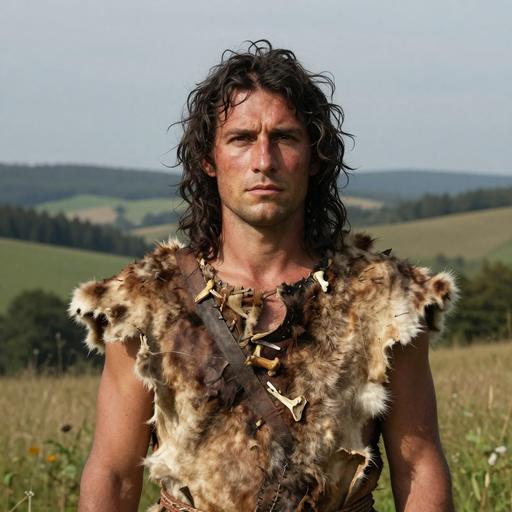
Portrait reconstruction of Brillenhohle
Ancient Individual

A man buried in Germany in the Pleistocene era

Brillenhohle
13167 BCE - 12525 BCE
Male
Brillenhohle Cave, Germany
Germany
Scroll to begin
Chapter I

Identity

The biological and cultural markers that define this ancient individual

Sample ID

Brillenhohle

Date Range

13167 BCE - 12525 BCE

Biological Sex

Male

mtDNA Haplogroup

U8a

Y-DNA Haplogroup

H-P96

Cultural Period

Brillenhohle Cave, Germany

Chapter II

Place

Where this individual was discovered

Country Germany
Locality Swabian Jura. Baden-Wurttemberg. Brillenhöhle. Ach Valley
Coordinates 48.2400, 9.4600
Chapter III

Time

When this individual lived in the broader context of human history

Brillenhohle 13167 BCE - 12525 BCE
Chapter IV

Story

The narrative of this ancient life

The Brillenhöhle Cave, located near the town of Blaubeuren in southwestern Germany, is a significant archaeological site that offers an insightful window into Paleolithic life. Situated in the Swabian Jura range, this cave has been a focal point for understanding prehistoric human habitation and culture in the region. The cave's name, \Brillenhöhle," translates to "Spectacles Cave" in English, which may derive from the shape of the entrance or some visual impression tied to its discovery.

Archaeological Significance

The Brillenhöhle Cave is part of a network of prehistoric caves in the region that have been extensively excavated, revealing a rich tapestry of artifacts and human activity that dates back to the Upper Paleolithic period, approximately 40,000 to 12,000 years ago. The Swabian Jura range, where the cave is located, is renowned for its wealth of Paleolithic sites and has been recognized by UNESCO for its importance to human prehistory.

The cave has yielded an array of archaeological finds, including stone tools, bone tools, and ornaments. These artifacts have been crucial in understanding the technological and cultural practices of the period. They suggest a sophisticated level of craftsmanship and a deep knowledge of the surrounding environment.

Cultural Importance

The region is closely associated with the Aurignacian culture, one of the earliest cultures in Europe known for its advancements in tool-making and art. The people of the Aurignacian culture are believed to have been among the first modern humans to spread into Europe from Africa, and they brought with them innovative techniques and cultural practices that marked a significant evolution in human history.

Artifacts from Brillenhöhle Cave include intricate carvings, decorated objects, and personal ornaments, which indicate a developed sense of aesthetics and possibly symbolic or cultural meaning. These artistic expressions are considered some of the earliest forms of figurative art and are crucial for understanding the cognitive and cultural development of early humans.

Subsistence and Lifestyle

The inhabitants of Brillenhöhle Cave were likely hunter-gatherers who relied on the rich resources of the Swabian Jura. The region offered a varied landscape, with forests, rivers, and open plains that provided an abundance of game, plant foods, and raw materials for tool-making. Faunal remains found at the site include those of mammoths, reindeer, and horses, suggesting a diet that included large mammals, complemented by smaller game and foraged plant foods.

Their subsistence strategies would have required detailed knowledge of migration patterns, seasonal changes, and ecological systems, reflecting a highly adaptive lifestyle suited to the challenges and opportunities of the Last Glacial Maximum.

Social and Cognitive Development

Findings from Brillenhöhle and nearby sites like Hohle Fels underscore significant milestones in social and cognitive development. The presence of art and musical instruments, such as flutes made from bird bones and mammoth ivory, suggests complex social structures and communal activities centered around art, music, and possibly ritual. These cultural practices likely played a role in social cohesion, identity, and communication, marking an important phase in the development of modern human behavior.

Conclusion

The Brillenhöhle Cave remains a critical site for understanding the Upper Paleolithic period in Europe. Its contribution to our knowledge includes insights into the technological innovations, cultural practices, and social structures of early modern humans. The discoveries from this cave, along with those from other sites in the Swabian Jura, continue to illuminate the narrative of human history, highlighting the adaptability and creative capacity of our ancestors during a dynamic period of climatic changes and migrations. As excavations and analyses continue, Brillenhöhle will undoubtedly yield further revelations about the dawn of human culture in prehistoric Europe."

Chapter V

Genetics

The genetic ancestry of this ancient individual

Ancient Genetic Admixture

This analysis compares the DNA profile of Brillenhohle with ancient reference populations, showing the genetic composition in terms of prehistoric ancestral groups.

Western Steppe Pastoralists 43.9%
European Hunter-Gatherers 27.9%
Ancient Asians 17.0%
Neolithic Farmers 8.7%
Ancient Native Americans 2.5%

Modern Genetic Admixture

This analysis compares the DNA profile with present-day reference populations, showing what percentage of genetic makeup resembles modern populations from different regions.

Europe 64.7%
Northwestern European 64.7%
Scandinavian 53.4%
English 11.3%
Asia 23.1%
Central Asian, Northern Indian & Pakistani 23.1%
Indian 23.1%
Africa 12.1%
African Hunter-Gatherer 9.1%
Northern East African 3.0%
Eastern African 3.0%

Closest Modern Populations

These are the modern populations showing the closest statistical alignment to A man buried in Germany in the Pleistocene era, ranked by genetic distance. Lower distance values indicate closer statistical similarity.

1
Roma Bilbao
8.5141
2
Roma Granada
8.9090
3
Roma Madrid
9.0169
4
Roma Porto
9.0907
5
Roma Barcelona
9.3067
6
Roma Balkans
10.1537
7
Tatar Mishar
10.5314
8
Tatar Kazan
10.9113
9
Tatar Lipka
11.1929
10
Turkish Rumeli
11.2666
Chapter VI

Context

Other ancient individuals connected to this sample

Sources

References

Scientific publications and genetic data

Scientific Publication

The genetic history of Ice Age Europe

Authors Fu Q, Posth C, Hajdinjak M
Abstract

Modern humans arrived in Europe ~45,000 years ago, but little is known about their genetic composition before the start of farming ~8,500 years ago. Here we analyse genome-wide data from 51 Eurasians from ~45,000-7,000 years ago. Over this time, the proportion of Neanderthal DNA decreased from 3-6% to around 2%, consistent with natural selection against Neanderthal variants in modern humans. Whereas there is no evidence of the earliest modern humans in Europe contributing to the genetic composition of present-day Europeans, all individuals between ~37,000 and ~14,000 years ago descended from a single founder population which forms part of the ancestry of present-day Europeans. An ~35,000-year-old individual from northwest Europe represents an early branch of this founder population which was then displaced across a broad region, before reappearing in southwest Europe at the height of the last Ice Age ~19,000 years ago. During the major warming period after ~14,000 years ago, a genetic component related to present-day Near Easterners became widespread in Europe. These results document how population turnover and migration have been recurring themes of European prehistory.

G25 Coordinates

The G25 coordinates for sample Brillenhohle can be used for detailed admixture analysis in our G25 Studio tool.

Brillenhohle,0.0566872,0.03407768,0.00403514,0.04250522,0.0329841,0.02988498,-0.00127014,0.00889104,0.0171066,0.01667822,0.0034394,0.00516842,-0.00655712,-0.00017094,0.0092576,-0.00110352,-0.00897816,0.0007416,-0.00073624,0.00259562,0.00248802,0.00337162,-0.00207408,-0.00065382,0.00395328
Analyze in G25 Studio
Use code for 40% off Expires Feb 27