Menu
Store
Blog
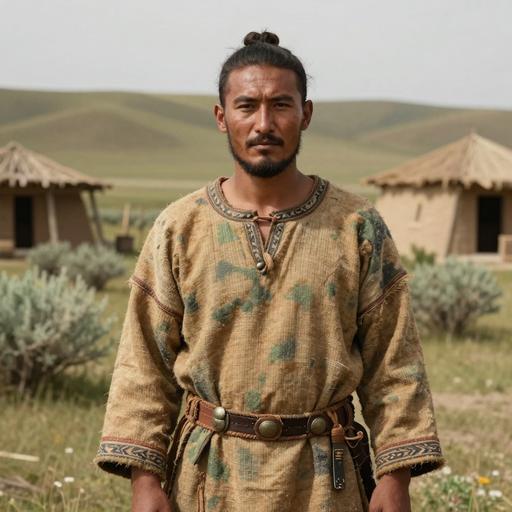
Portrait reconstruction of C1678
Ancient Individual

A man buried in China in the Iron Age era

C1678
393 BCE - 206 BCE
Male
Iron Age Simutasi, Xinjiang, China
China
Scroll to begin
Chapter I

Identity

The biological and cultural markers that define this ancient individual

Sample ID

C1678

Date Range

393 BCE - 206 BCE

Biological Sex

Male

mtDNA Haplogroup

U8b1a2a

Y-DNA Haplogroup

Not available

Cultural Period

Iron Age Simutasi, Xinjiang, China

Chapter II

Place

Where this individual was discovered

Country China
Locality Xinjiang. Yili Region. Zhaosu County. Simutasi
Coordinates 42.4500, 81.5000
Chapter III

Time

When this individual lived in the broader context of human history

C1678 393 BCE - 206 BCE
Chapter IV

Story

The narrative of this ancient life

The Iron Age Simutasi culture, found in the Xinjiang region of China, represents a significant chapter in the history of the Eurasian Steppe cultures. This culture thrived during the Iron Age, a period characterized by the widespread use of iron tools and weapons which marked substantial societal and technological advancements. As an integral part of the diverse peoples inhabiting the Steppes, the Simutasi culture provides a fascinating glimpse into a world that was both interconnected and distinct within the broader tapestry of ancient steppe societies.

Geographic and Environmental Context

The Xinjiang region, where the Simutasi culture was prominent, is located in the northwestern part of present-day China. The area is a crossroads that connects Central Asia, Eastern Asia, and the Indian subcontinent. The varied geography includes vast deserts, mountain ranges such as the Tianshan, and numerous oases which played critical roles in the settlement patterns of the peoples in this area. These geographic features made Xinjiang a key region on the ancient Silk Road, facilitating transactions and interactions between disparate cultures.

Cultural Characteristics and Lifestyle

  1. Nomadic and Sedentary Practices: Like many steppe cultures, the Simutasi people had a lifestyle that combined both nomadic and semi-sedentary practices. While nomadism played a significant role, allowing them to adapt to the harsh climates and take advantage of the steppe's vast grasslands for pastoral activities, they also established semi-permanent settlements near water sources for agriculture.

  2. Pastoralism: The culture relied heavily on livestock such as sheep, goats, cattle, and horses. Horses, in particular, were crucial for transportation, warfare, and as symbols of wealth and status. Pastoralism facilitated trade with neighboring cultures, exchanging animal products for grains, metal goods, and textiles.

  3. Metalwork and Tool Use: The Iron Age heralded advanced metallurgical techniques in the Simutasi culture. Iron tools and weapons not only improved agricultural productivity but also altered societal structures by enhancing military capabilities. The transition from bronze to iron marked a technological leap that had far-reaching effects on their economic and social systems.

  4. Burial Practices and Rituals: Archaeological evidence from burial sites suggests complex spiritual beliefs and social stratification. Graves often contained goods such as pottery, weaponry, and ornate jewelry, indicating the beliefs in an afterlife and the importance of social hierarchy. The presence of horse sacrifices further underscores the animal's central role in their mythology and daily life.

Art and Craftsmanship

Artistic expression in the Simutasi culture can be observed through their pottery, textiles, and metalwork. The pottery often featured geometric and zoomorphic patterns, indicative of both functional and ceremonial uses. Textile production, likely important due to the need for clothing adaptive to severe climates, shows an appreciation for patterns and dyes that would have distinguished tribal identity.

Social Structure and Interaction

  1. Clan-Based Society: The social organization of the Simutasi culture was likely clan-based, a common trait among steppe cultures. Each clan would have its leaders and warriors, exerting influence over large family groups and districts.

  2. Trade and Interaction: The Simutasi culture was not isolated, as their strategic location encouraged interaction with various cultures like the Sogdians, Tocharians, and even early Chinese states. This interaction led to an exchange of goods, ideas, and cultural practices, contributing to a rich tapestry of cultural evolution in the region.

Religious and Mythological Aspects

The spiritual life of the Simutasi culture was likely characterized by shamanistic practices, with a focus on the natural world and ancestral worship. Rituals and symbols prevalent in archaeological finds suggest that they had a complex mythos surrounding natural phenomena, animal spirits, and celestial bodies.

Conclusion

The Iron Age Simutasi culture in Xinjiang presents an intriguing landscape where technological innovation, nomadic resilience, and cultural interchange came together. As part of the larger steppe ecosystem, the Simutasi made significant contributions to the historical and cultural developments of nomadic societies in Central Asia. Their legacy, preserved through both material artifacts and the continuing influence on regional cultures, provides valuable insights into the intricate dynamics of Iron Age societies on the Eurasian steppes.

Chapter V

Genetics

The genetic ancestry of this ancient individual

Ancient Genetic Admixture

This analysis compares the DNA profile of C1678 with ancient reference populations, showing the genetic composition in terms of prehistoric ancestral groups.

Neolithic Farmers 28.3%
Ancient Asians 27.0%
Western Steppe Pastoralists 24.2%
European Hunter-Gatherers 15.9%
Ancient Oceanians 2.3%
Ancient Native Americans 2.2%

Modern Genetic Admixture

This analysis compares the DNA profile with present-day reference populations, showing what percentage of genetic makeup resembles modern populations from different regions.

Asia 59.2%
Central Asian, Northern Indian & Pakistani 34.3%
Pakistan 21.9%
Central Asian 9.2%
Indian 3.2%
Northern West Asian 20.5%
Caucasian 20.4%
Northern Asian 4.3%
Siberian 4.3%
Europe 39.1%
Eastern European 22.1%
Northwestern European 17.0%
Scandinavian 10.6%
Northwestern European 6.4%
America 1.4%
America 1.4%
Native American 1.4%

Closest Modern Populations

These are the modern populations showing the closest statistical alignment to A man buried in China in the Iron Age era, ranked by genetic distance. Lower distance values indicate closer statistical similarity.

1
Tajik Tajikistan Hisor
5.7987
2
Tajik Tajikistan Ayni
6.0078
3
Pamiri Rushan
6.3122
4
Pamiri Shugnan
6.3490
5
Tatar Kazan
6.3893
6
Tajik Tajikistan Kulob
6.4131
7
Pamiri Badakhshan
6.6088
8
Pamiri Sarikoli
6.8576
9
Pamiri Ishkashim
7.1772
10
Tatar Lipka
7.2262
Chapter VI

Context

Other ancient individuals connected to this sample

Sources

References

Scientific publications and genetic data

Scientific Publication

Bronze and Iron Age population movements underlie Xinjiang population history

Authors Kumar V, Wang W, Zhang J
Abstract

The Xinjiang region in northwest China is a historically important geographical passage between East and West Eurasia. By sequencing 201 ancient genomes from 39 archaeological sites, we clarify the complex demographic history of this region. Bronze Age Xinjiang populations are characterized by four major ancestries related to Early Bronze Age cultures from the central and eastern Steppe, Central Asian, and Tarim Basin regions. Admixtures between Middle and Late Bronze Age Steppe cultures continued during the Late Bronze and Iron Ages, along with an inflow of East and Central Asian ancestry. Historical era populations show similar admixed and diverse ancestries as those of present-day Xinjiang populations. These results document the influence that East and West Eurasian populations have had over time in the different regions of Xinjiang.

G25 Coordinates

The G25 coordinates for sample C1678 can be used for detailed admixture analysis in our G25 Studio tool.

C1678,0.09668088,0.01846268,0.01394122,0.04723112,-0.02743222,0.01217358,-0.00131578,-0.004623,-0.0185851,-0.0252599,0.0004479,-0.00072514,0.00296554,-0.00144664,0.00146058,-2.164E-05,-0.0046613,9.798E-05,0.00391622,-0.00167486,0.00075788,-0.00636056,0.00290628,0.005112,0.00356543
Analyze in G25 Studio
Use code for 40% off Expires Mar 01