Menu
Store
Blog
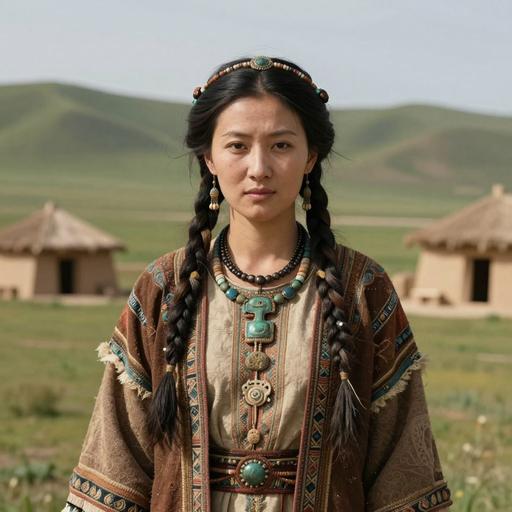
Portrait reconstruction of C3348
Ancient Individual

A woman buried in China in the Late Bronze Age era

C3348
1386 BCE - 1127 BCE
Female
Late Bronze Age Songshugou, Xinjiang, China
China
Scroll to begin
Chapter I

Identity

The biological and cultural markers that define this ancient individual

Sample ID

C3348

Date Range

1386 BCE - 1127 BCE

Biological Sex

Female

mtDNA Haplogroup

C4e

Cultural Period

Late Bronze Age Songshugou, Xinjiang, China

Chapter II

Place

Where this individual was discovered

Country China
Locality Xinjiang. Aletai Region. Jimunai County. Songshugou
Coordinates 47.4400, 85.8700
Chapter III

Time

When this individual lived in the broader context of human history

C3348 1386 BCE - 1127 BCE
Chapter IV

Story

The narrative of this ancient life

The Late Bronze Age period at Songshugou in Xinjiang, China, represents a fascinating era within the broader tapestry of ancient Chinese civilization. This region and its corresponding culture offer a unique glimpse into the transitional dynamics of the time, characterized by technological advancements, trade interactions, and evolving social structures.

Geographical and Environmental Context

Xinjiang, located in the northwestern frontier of China, is characterized by its diverse geography, which includes mountains, deserts, and steppe regions. Songshugou, situated in this expansive region, occupies a strategic position along ancient trade routes, notably the Silk Road, which facilitated cultural and material exchanges between East and West. The area's geography has also influenced local lifestyles, with communities adapting to both arid conditions and resource-rich mountain valleys.

Historical Background

The Late Bronze Age in China, roughly spanning 1600 BCE to 1046 BCE, marks a period of significant change and development following the earlier Shang Dynasty and preceding the Zhou Dynasty. Within this context, the Songshugou site provides evidence of localized societal developments influenced by broader regional changes. It's a period when metallurgy, particularly bronze casting and use, was crucial for both utilitarian and ritual purposes.

Cultural and Social Structure

Songshugou exhibits elements typical of Late Bronze Age cultures, with social hierarchies likely structured around kinship, status, and occupational roles. This period is marked by a complex interplay of indigenous cultural traditions and external influences due to its location along important trade and migration pathways.

  • Settlements and Architecture: The communities might have developed from small, semi-nomadic groups to more settled agrarian or pastoral societies. Archaeological evidence, such as remnants of dwellings or fortifications, suggests an adaptation to available resources and strategic priorities.

  • Social Hierarchy: The society likely exhibited a stratified structure, with elites emerging possibly through control of trade routes, land, or religious practices. Evidence of elite burials and specialized artisans points to this societal complexity.

Economy, Trade, and Technology

The economy of Songshugou during the Late Bronze Age was probably diverse, relying on a mix of agriculture, pastoralism, and trade.

  • Agriculture and Livestock: With arable lands along river valleys, agriculture would have been supplemented by pastoral activities in the surrounding steppe regions. This mix provided a stable subsistence base.

  • Metallurgy: The use of bronze significantly impacted both daily life and ritual practice. Bronze artifacts from this period, including tools, weapons, and ceremonial items, demonstrate advanced metallurgical skills.

  • Trade and Exchange: Strategically located on the fringes of Central Asia, Songshugou was part of early Silk Road networks. This facilitated exchanges of goods such as metals, textiles, and possibly ideologies, influencing local culture.

Religion, Art, and Cultural Expression

  • Religious Practices: Religious practices during this period likely involved ancestor worship and ritual activities, informed by natural and possibly shamanistic elements. Evidence from burial sites, such as grave goods or ceremonial bronze items, suggests complex belief systems.

  • Artistic Expression: Artistic output from the period can be seen in the detailed craftsmanship of bronze ware, pottery, and textiles. These items often served ritualistic purposes, signifying both artistic achievement and religious or social status.

Interactions and Influences

The Late Bronze Age Songshugou culture was not isolated; it was influenced by and contributed to a network of cross-cultural interactions.

  • Cultural Exchanges: Through trade and migration, Songshugou was in a dynamic interchange with neighboring cultures, leading to shared technologies and ideologies. These exchanges enriched local traditions with new ideas while retaining unique indigenous characteristics.

  • Influence of External Cultures: The influence of nomadic cultures to the north and west, as well as more settled agricultural societies to the east and south, would have created a melting pot of cultural innovation and adaptation.

Conclusion

The Late Bronze Age Songshugou culture in Xinjiang, China, offers insights into the processes of cultural development and exchange at a pivotal time in history. This era represents a blend of technological innovation, social stratification, and cultural synthesis, underpinned by a strategic geographic location that connected multiple ancient civilizations. Through archaeological discoveries and ongoing research, this fascinating cultural landscape continues to illuminate the complexities and richness of ancient China’s frontier regions.

Chapter V

Genetics

The genetic ancestry of this ancient individual

Ancient Genetic Admixture

This analysis compares the DNA profile of C3348 with ancient reference populations, showing the genetic composition in terms of prehistoric ancestral groups.

Western Steppe Pastoralists 29.8%
Neolithic Farmers 24.5%
European Hunter-Gatherers 23.6%
Ancient Asians 18.5%
Ancient Native Americans 3.6%

Modern Genetic Admixture

This analysis compares the DNA profile with present-day reference populations, showing what percentage of genetic makeup resembles modern populations from different regions.

Asia 51.4%
Northern West Asian 25.2%
Caucasian 25.2%
Central Asian, Northern Indian & Pakistani 20.5%
Pakistan 18.0%
Indian 2.5%
Northern Asian 5.7%
Siberian 5.7%
Europe 47.0%
Eastern European 24.1%
Northwestern European 22.9%
English 10.5%
Finnish 9.4%
Scandinavian 2.7%
America 1.7%
America 1.7%
Native American 1.7%

Closest Modern Populations

These are the modern populations showing the closest statistical alignment to A woman buried in China in the Late Bronze Age era, ranked by genetic distance. Lower distance values indicate closer statistical similarity.

1
Pamiri Rushan
6.1915
2
Tatar Mishar
6.7383
3
Pamiri Shugnan
6.7459
4
Tatar Kazan
7.0430
5
Tajik Yaghnobi
7.2884
6
Pamiri Badakhshan
7.6509
7
Tajik Tajikistan Kulob
7.9880
8
Pamiri Ishkashim
8.1592
9
Tajik Tajikistan Hisor
8.2277
10
Tajik Tajikistan Ayni
8.3216
Chapter VI

Context

Other ancient individuals connected to this sample

Sources

References

Scientific publications and genetic data

Scientific Publication

Bronze and Iron Age population movements underlie Xinjiang population history

Authors Kumar V, Wang W, Zhang J
Abstract

The Xinjiang region in northwest China is a historically important geographical passage between East and West Eurasia. By sequencing 201 ancient genomes from 39 archaeological sites, we clarify the complex demographic history of this region. Bronze Age Xinjiang populations are characterized by four major ancestries related to Early Bronze Age cultures from the central and eastern Steppe, Central Asian, and Tarim Basin regions. Admixtures between Middle and Late Bronze Age Steppe cultures continued during the Late Bronze and Iron Ages, along with an inflow of East and Central Asian ancestry. Historical era populations show similar admixed and diverse ancestries as those of present-day Xinjiang populations. These results document the influence that East and West Eurasian populations have had over time in the different regions of Xinjiang.

G25 Coordinates

The G25 coordinates for sample C3348 can be used for detailed admixture analysis in our G25 Studio tool.

C3348,0.10762934,0.05134882,0.01857178,0.0591817,-0.02150814,0.02177808,0.00114502,-0.00163082,-0.01506342,-0.02433172,-0.001652,-0.00173594,0.00334706,-0.00813752,0.00690788,-0.00155008,-0.00887686,-0.00109666,-0.0028744,-0.00431416,0.0008273,0.00058522,-0.00281526,0.00471092,-0.00149148
Analyze in G25 Studio
Use code for 40% off Expires Mar 01