Menu
Store
Blog
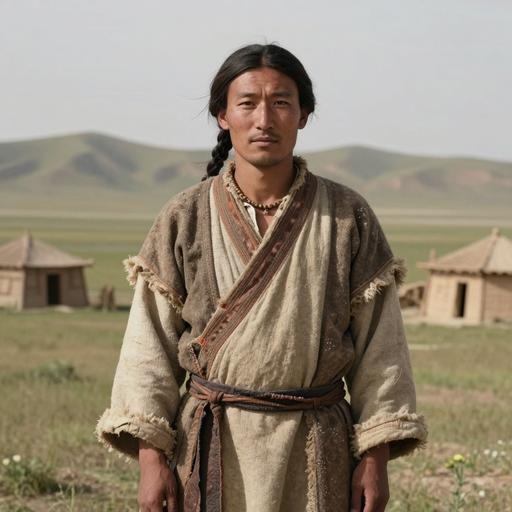
Portrait reconstruction of C4255
Ancient Individual

A man buried in China in the Iron Age era

C4255
728 BCE - 406 BCE
Male
Iron Age Eminhuojierte, Xinjiang, China
China
Scroll to begin
Chapter I

Identity

The biological and cultural markers that define this ancient individual

Sample ID

C4255

Date Range

728 BCE - 406 BCE

Biological Sex

Male

mtDNA Haplogroup

U4a2

Y-DNA Haplogroup

Not available

Cultural Period

Iron Age Eminhuojierte, Xinjiang, China

Chapter II

Place

Where this individual was discovered

Country China
Locality Xinjiang. Tacheng Region. Emin County. Eminhuojierte
Coordinates 46.3900, 83.8300
Chapter III

Time

When this individual lived in the broader context of human history

C4255 728 BCE - 406 BCE
Chapter IV

Story

The narrative of this ancient life

The Iron Age Eminhuojierte culture represents a significant phase in the ancient history of Xinjiang, China, part of the broader tapestry of early Chinese civilization. Situated in the westernmost region of present-day China, Xinjiang has long been a crossroads of cultural exchange, due in part to its strategic location along the ancient Silk Road. The Eminhuojierte culture, specifically, is reflective of this dynamic interchange between East and West, embodying a unique synthesis of indigenous traditions and influences from nomadic groups as well as more settled communities across Central Asia.

Geographic and Temporal Context

The Iron Age period in Xinjiang is roughly dated from 1200 BCE to 500 CE. Eminhuojierte is located in the modern-day Tacheng Prefecture, near the border with Kazakhstan. This area is characterized by its diverse geography, including mountainous regions, deserts, and oases, which significantly impacted the lifestyle and development of the culture that thrived there. The temperate to arid climate influenced the agricultural and pastoral practices of the Eminhuojierte people, who adapted to these conditions with innovative agricultural techniques and efficient use of local resources.

Cultural Influences and Interactions

The Eminhuojierte culture is notable for its integration of various cultural elements, largely due to its position as a juncture for multiple ethnic and cultural groups. The interactions with nomadic tribes, such as the Scythians to the north and west, introduced new forms of art, metalwork, and social organization. Meanwhile, interactions with neighboring settled cultures, including those of early Chinese states to the east and Indo-European groups to the south and west, further enriched Eminhuojierte society. Artifacts from this period exhibit a blend of these influences, combining traditional motifs with styles and techniques acquired through trade and cultural exchange.

Economy and Subsistence

Economically, the Eminhuojierte culture was primarily agrarian, supplemented by pastoralism and trade. The cultivation of grains such as wheat and barley formed the dietary staples, while livestock such as sheep, goats, and horses played significant roles in their economy and daily life. The presence of iron tools and weapons indicates advancements in agriculture and military capability. The Eminhuojierte were also engaged in trade along the Silk Road, exchanging locally produced goods for exotic items, such as silk and precious stones, which further fueled economic growth and cultural sophistication.

Social Structure and Daily Life

Eminhuojierte society likely had a hierarchical structure, though exact details remain elusive due to the limited archaeological data. Indications of social stratification are visible in burial practices, with more elaborate graves containing a wealth of goods, suggesting a class of elite or ruling individuals. Daily life was influenced by both utilitarian needs and cultural expressions, as evidenced by pottery, textiles, and metalworks, which display both functionality and artistic flair.

Religious Beliefs and Practices

The religious beliefs of the Eminhuojierte culture were likely animistic, with an emphasis on the worship of natural elements and ancestral spirits. However, the influx of new ideas through trade and cultural contact might have introduced elements of Zoroastrianism or early Buddhist practices. Ritual artifacts and burial goods suggest a belief in an afterlife, and possibly, the existence of ritual specialists or shamans who mediated between the physical and spiritual worlds.

Art and Craftsmanship

Art and craftsmanship flourished during this period, with impressive advances in metallurgy, embroidery, and pottery. Iron tools and weapons were highly developed, demonstrating significant skill in metalworking. Pottery styles reveal both functional and ceremonial uses, while intricate textile patterns offer insight into the cultural aesthetics and social values of the Eminhuojierte people.

Archaeological Findings and Legacy

Archaeological investigations in the Eminhuojierte region have uncovered a variety of artifacts, including tools, weapons, pottery, and textiles, all providing a glimpse into the life and times of this Iron Age culture. Excavations of burial mounds have been particularly revealing, offering insights into the social hierarchy, trade connections, and cultural practices of the time. These findings are crucial for understanding the broader context of Iron Age civilizations in Central Asia and their interactions with emerging Chinese states.

In conclusion, the Iron Age Eminhuojierte culture of Xinjiang represents a pivotal chapter in ancient Chinese civilization, characterized by cultural synthesis, economic innovation, and artistic achievement. It stands as a testament to the complex web of interactions that have shaped the region’s history, offering valuable lessons about the dynamics of cultural exchange and adaptation in ancient times.

Chapter V

Genetics

The genetic ancestry of this ancient individual

Ancient Genetic Admixture

This analysis compares the DNA profile of C4255 with ancient reference populations, showing the genetic composition in terms of prehistoric ancestral groups.

Ancient Asians 41.9%
Western Steppe Pastoralists 25.6%
European Hunter-Gatherers 19.6%
Neolithic Farmers 8.3%
Ancient Native Americans 4.7%

Modern Genetic Admixture

This analysis compares the DNA profile with present-day reference populations, showing what percentage of genetic makeup resembles modern populations from different regions.

Asia 56.4%
Central Asian, Northern Indian & Pakistani 24.1%
Central Asian 19.2%
Pakistan 4.9%
Northern Asian 21.9%
Siberian 18.9%
Mongolian 3.1%
Northern West Asian 5.7%
Caucasian 5.7%
Chinese & Southeast Asian 4.7%
Tibetan 1.8%
Indonesian Khmer Thai Myanma 1.5%
Chinese 1.4%
Europe 39.2%
Eastern European 25.6%
Northwestern European 13.7%
English 6.1%
Scandinavian 5.4%
Finnish 2.2%
America 4.4%
America 4.4%
Native American 4.4%

Closest Modern Populations

These are the modern populations showing the closest statistical alignment to A man buried in China in the Iron Age era, ranked by genetic distance. Lower distance values indicate closer statistical similarity.

1
Bashkir
3.2444
Chapter VI

Context

Other ancient individuals connected to this sample

Sources

References

Scientific publications and genetic data

Scientific Publication

Bronze and Iron Age population movements underlie Xinjiang population history

Authors Kumar V, Wang W, Zhang J
Abstract

The Xinjiang region in northwest China is a historically important geographical passage between East and West Eurasia. By sequencing 201 ancient genomes from 39 archaeological sites, we clarify the complex demographic history of this region. Bronze Age Xinjiang populations are characterized by four major ancestries related to Early Bronze Age cultures from the central and eastern Steppe, Central Asian, and Tarim Basin regions. Admixtures between Middle and Late Bronze Age Steppe cultures continued during the Late Bronze and Iron Ages, along with an inflow of East and Central Asian ancestry. Historical era populations show similar admixed and diverse ancestries as those of present-day Xinjiang populations. These results document the influence that East and West Eurasian populations have had over time in the different regions of Xinjiang.

G25 Coordinates

The G25 coordinates for sample C4255 can be used for detailed admixture analysis in our G25 Studio tool.

C4255,0.08570282,-0.10767076,0.06769296,0.03776606,-0.03054602,0.00085166,-0.00196994,-0.0013937,-0.00205112,-0.01700642,-0.00639058,-0.00101968,0.00718032,-0.01426464,0.00709198,0.00277858,-0.01005484,-0.00038612,0.00492658,0.00744308,-0.01394724,0.00203548,0.00021422,0.0051607,0.00059615
Analyze in G25 Studio
Use code for 40% off Expires Mar 01