Menu
Store
Blog
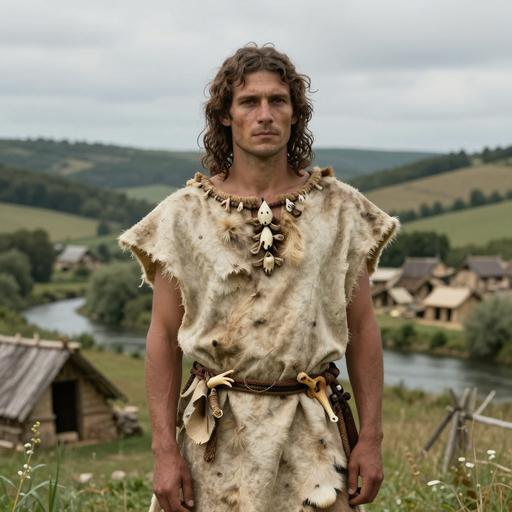
Portrait reconstruction of Chaudardes1
Ancient Individual

A man buried in France in the Mesolithic era

Chaudardes1
6400 BCE - 6086 BCE
Male
Chaudardes Site, France
France
Scroll to begin
Chapter I

Identity

The biological and cultural markers that define this ancient individual

Sample ID

Chaudardes1

Date Range

6400 BCE - 6086 BCE

Biological Sex

Male

mtDNA Haplogroup

U5b1b

Y-DNA Haplogroup

I

Cultural Period

Chaudardes Site, France

Chapter II

Place

Where this individual was discovered

Country France
Locality Chaudardes
Coordinates 49.2400, 3.4600
Chapter III

Time

When this individual lived in the broader context of human history

Chaudardes1 6400 BCE - 6086 BCE
Chapter IV

Story

The narrative of this ancient life

The Chaudardes site, situated in northern France, offers a fascinating glimpse into the life and culture of Western European hunter-gatherers. This site, dating back to the Mesolithic period, provides invaluable insights into their adaptation strategies, social organization, and interaction with the environment.

Environment and Geography

The Chaudardes site is located in a region characterized by varied landscapes, including rolling hills, dense forests, and water bodies. During the Mesolithic period, following the last Ice Age, the climate was warming, leading to significant environmental changes. This warmer climate led to the growth of extensive deciduous forests that supported a wide range of fauna and flora, providing abundant resources for the hunter-gatherers.

Subsistence Strategies

The hunter-gatherers at Chaudardes were highly adept at exploiting their environment. They practiced a mixed subsistence strategy that relied on hunting, fishing, and gathering. Faunal remains found at the site indicate that they hunted a variety of animals, including red deer, wild boar, and aurochs. The presence of fish bones, particularly from salmon and trout, suggests that fishing was a significant component of their diet. Additionally, the gathering of nuts, berries, and plant tubers would have supplemented their nutritional intake.

Tools and Technology

Archaeological findings at Chaudardes reveal a sophisticated tool-making tradition. Flint was the primary material used for crafting tools, reflecting the technological skills of the community. Microliths, small stone tools that were likely used as part of composite tools or weapons, are commonly found at the site. The craftsmanship evident in tools such as scrapers, blades, and arrowheads indicates a deep understanding of material properties and an adaptation to specific tasks and environments.

Settlement and Structures

The settlement patterns of the Chaudardes people indicate a semi-nomadic lifestyle, with evidence of temporary camps or seasonal dwellings. Excavations have uncovered structural remnants that suggest the use of wooden frameworks covered with animal hides or vegetation. These structures provided necessary shelter and protection from the elements as groups moved within their territorial range to exploit seasonal resources.

Social Organization

While detailed social structures are challenging to ascertain, the evidence suggests that the Chaudardes community, like other Mesolithic groups, likely had a flexible social organization. Bands usually consisted of several family groups, and social roles might have been based on age, gender, and skill. Cooperation within and between groups would have been essential for survival, particularly during larger game hunting or communal activities like fishing drives.

Art and Symbolism

Although direct evidence of artistic expression specifically at the Chaudardes site is limited, parallels with other contemporaneous sites indicate that symbolic thought and artistic activities were present in Mesolithic cultures. This could include personal adornments, carvings, and possibly the use of pigments for body painting or other decorative purposes. Such activities likely played a role in social cohesion and spiritual beliefs.

Interaction and Trade

The Chaudardes site suggests interaction with neighboring groups, reflected in the movement of materials like flint and possibly shells over considerable distances. This implies some form of trade or exchange network, facilitating not only resource acquisition but also cultural and technological exchange.

Conclusion

The Chaudardes site exemplifies the adaptability and resilience of Western European hunter-gatherers during the Mesolithic period. Their ability to exploit diverse environments, coupled with sophisticated tool-making skills and social strategies, highlights a dynamic culture capable of thriving amidst changing climatic and ecological conditions. As ongoing research continues to uncover new aspects of this intriguing site, our understanding of these early humans and their intricate relationship with the world around them deepens.

Chapter V

Genetics

The genetic ancestry of this ancient individual

Ancient Genetic Admixture

This analysis compares the DNA profile of Chaudardes1 with ancient reference populations, showing the genetic composition in terms of prehistoric ancestral groups.

Western Steppe Pastoralists 64.1%
European Hunter-Gatherers 27.8%
Ancient Asians 4.7%
Neolithic Farmers 3.4%

Modern Genetic Admixture

This analysis compares the DNA profile with present-day reference populations, showing what percentage of genetic makeup resembles modern populations from different regions.

Europe 97.4%
Northwestern European 82.5%
Finnish 34.5%
Scandinavian 20.2%
Northwestern European 19.1%
English 8.7%
Eastern European 14.9%
Africa 2.6%
West African 2.2%
Nigerian 2.2%

Closest Modern Populations

These are the modern populations showing the closest statistical alignment to A man buried in France in the Mesolithic era, ranked by genetic distance. Lower distance values indicate closer statistical similarity.

1
Finnish Southwest
2.4584
2
Finnish Central
3.1579
3
Ingrian
3.3499
4
Estonian
3.4237
5
Polish Kashubian
3.4864
6
Swedish
3.4970
7
Russian Yaroslavl
3.8279
8
Finnish Southeast
3.8841
9
Russian Tver
3.8986
10
Russian Kaluga
3.8995
Chapter VI

Context

Other ancient individuals connected to this sample

Sources

References

Scientific publications and genetic data

Scientific Publication

The genetic history of Ice Age Europe

Authors Fu Q, Posth C, Hajdinjak M
Abstract

Modern humans arrived in Europe ~45,000 years ago, but little is known about their genetic composition before the start of farming ~8,500 years ago. Here we analyse genome-wide data from 51 Eurasians from ~45,000-7,000 years ago. Over this time, the proportion of Neanderthal DNA decreased from 3-6% to around 2%, consistent with natural selection against Neanderthal variants in modern humans. Whereas there is no evidence of the earliest modern humans in Europe contributing to the genetic composition of present-day Europeans, all individuals between ~37,000 and ~14,000 years ago descended from a single founder population which forms part of the ancestry of present-day Europeans. An ~35,000-year-old individual from northwest Europe represents an early branch of this founder population which was then displaced across a broad region, before reappearing in southwest Europe at the height of the last Ice Age ~19,000 years ago. During the major warming period after ~14,000 years ago, a genetic component related to present-day Near Easterners became widespread in Europe. These results document how population turnover and migration have been recurring themes of European prehistory.

G25 Coordinates

The G25 coordinates for sample Chaudardes1 can be used for detailed admixture analysis in our G25 Studio tool.

Chaudardes1,0.13123536,0.1122945,0.08379732,0.07065784,0.0377475,0.02733836,0.00532766,0.01329526,0.00199398,-0.02267916,-0.00036544,-0.00518278,0.00600328,0.00547954,0.00544306,-0.00217144,-0.0088804,0.00044064,0.00212298,0.00062204,0.00312096,-0.00142352,-0.00269454,0.01034862,0.0038613
Analyze in G25 Studio
Use code for 40% off Expires Feb 27