Menu
Store
Blog
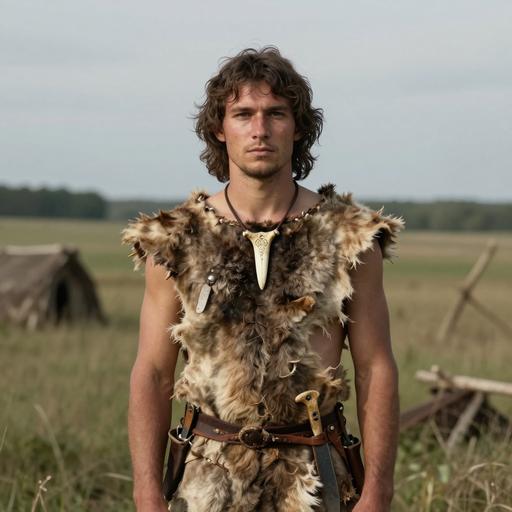
Portrait reconstruction of Donkalnis4
Ancient Individual

A man buried in Lithuania in the Mesolithic era

Donkalnis4
5991 BCE - 5736 BCE
Male
Mesolithic Lithuania
Lithuania
Scroll to begin
Chapter I

Identity

The biological and cultural markers that define this ancient individual

Sample ID

Donkalnis4

Date Range

5991 BCE - 5736 BCE

Biological Sex

Male

mtDNA Haplogroup

U5b2c1

Y-DNA Haplogroup

I-P215

Cultural Period

Mesolithic Lithuania

Chapter II

Place

Where this individual was discovered

Country Lithuania
Locality Donkalnis
Coordinates 55.8080, 24.4220
Chapter III

Time

When this individual lived in the broader context of human history

Donkalnis4 5991 BCE - 5736 BCE
Chapter IV

Story

The narrative of this ancient life

The Mesolithic era in Lithuania, a part of the broader Mesolithic period in Europe, represents a fascinating chapter in the prehistory of the region, spanning approximately from 10,000 to 5,000 BCE. During this time, the climate warmed following the end of the last Ice Age, leading to significant environmental and ecological transformations. This period is characterized by the adaptation of human communities to the post-glacial environment, the development of new tools and technologies, and changes in social organization.

Environment and Ecology

With the retreat of the glacial ice, Lithuania experienced substantial changes in its landscape. Dense forests began to spread across the region, interspersed with lakes, rivers, and wetlands. These forests were primarily composed of pine, birch, and hazel, gradually giving way to oak and alder as the climate continued to warm. The abundance of water bodies and the diverse ecosystems provided rich resources for human habitation. This setting fostered a range of plant and animal life, including large game like aurochs and elk, smaller animals such as beavers and otters, and a variety of fish and bird species.

Subsistence Strategies

The Mesolithic inhabitants of Lithuania were primarily hunter-gatherers, a lifestyle well-suited to the rich environment. They exploited both terrestrial and aquatic resources. Hunting was integral to their subsistence, with evidence suggesting the use of bows and arrows, spears, and later, domesticated dogs to track and hunt game. Fishing also played a critical role, supported by the development of fishing nets, traps, and dugout canoes. The region's rivers and lakes were teeming with fish, including species like pike, perch, and sturgeon. Gathering complemented these activities, with Mesolithic communities collecting nuts, berries, roots, and other plant materials provided by the bountiful forests.

Tools and Technology

Technological advancement during the Mesolithic period is marked by the development of microlithic tools. These small, often geometric flint blades and points were used to create composite tools. By hafting microliths onto wooden shafts or bone handles, a range of versatile tools for hunting, fishing, and processing food were produced. The Mesolithic toolkit also included axes and adzes for woodworking, an essential skill for constructing canoes and other wooden implements necessary for life in a forested and water-rich environment.

Settlements and Social Organization

Settlement patterns during the Mesolithic in Lithuania were typically semi-nomadic. Communities moved seasonally to exploit different resources, with winter camps close to reliable resources like fishing spots and summer camps situated to take advantage of migrating game and seasonal plant abundance. Archaeological sites from this period often reveal evidence of temporary structures, hearths, and refuse pits.

While definitive details of social organization are elusive, evidence suggests small, kin-based groups. The distribution of resources and cooperation likely necessitated some form of social hierarchy or leadership, though these communities were probably egalitarian in comparison to later Neolithic societies.

Art and Spiritual Life

Material culture from this period includes personal ornaments such as amber and bone pendants, which suggest a symbolic or aesthetic dimension to Mesolithic life. Rock carvings and portable art, although less prevalent than in the Upper Paleolithic, may have had ritualistic or communicative functions. Burial practices provide further insights, with some Mesolithic burials indicating the use of ochre and the inclusion of grave goods, hinting at complex belief systems surrounding death and an afterlife.

Legacy and Transition

The Mesolithic era laid crucial groundwork for the subsequent Neolithic period. The skills and practices developed during this time, such as fishing, woodworking, and tool-making, were vital for later agricultural societies. The gradual shift towards sedentism and farming in the Neolithic would transform these communities, but the Mesolithic period remains a foundational epoch in the history of human adaptation and survival in the post-glacial landscapes of Northern Europe.

In conclusion, Mesolithic Lithuania represents a dynamic period of human innovation and adaptation. Despite the challenges posed by a shifting environment, the people of this era effectively utilized the resources available to them, showcasing remarkable resilience and ingenuity.

Chapter V

Genetics

The genetic ancestry of this ancient individual

Ancient Genetic Admixture

This analysis compares the DNA profile of Donkalnis4 with ancient reference populations, showing the genetic composition in terms of prehistoric ancestral groups.

Western Steppe Pastoralists 63.0%
European Hunter-Gatherers 34.3%
Ancient Asians 2.7%

Modern Genetic Admixture

This analysis compares the DNA profile with present-day reference populations, showing what percentage of genetic makeup resembles modern populations from different regions.

Europe 96.0%
Northwestern European 96.0%
Scandinavian 28.1%
Finnish 24.8%
Northwestern European 22.1%
English 21.1%
America 4.0%
America 4.0%
Native American 4.0%

Closest Modern Populations

These are the modern populations showing the closest statistical alignment to A man buried in Lithuania in the Mesolithic era, ranked by genetic distance. Lower distance values indicate closer statistical similarity.

1
Polish Kashubian
2.3151
2
Polish
2.5949
3
Swedish
2.8267
4
Czech
2.8888
5
German Hamburg
3.2031
6
Polish Silesian
3.2996
7
German East
3.3210
8
Cossack Ukrainian
3.3444
9
Ukrainian Rivne
3.3447
10
Slovakian
3.3986
Chapter VI

Context

Other ancient individuals connected to this sample

Sources

References

Scientific publications and genetic data

Scientific Publication

The genetic prehistory of the Baltic Sea region

Authors Mittnik A, Wang CC, Pfrengle S
Abstract

While the series of events that shaped the transition between foraging societies and food producers are well described for Central and Southern Europe, genetic evidence from Northern Europe surrounding the Baltic Sea is still sparse. Here, we report genome-wide DNA data from 38 ancient North Europeans ranging from ~9500 to 2200 years before present. Our analysis provides genetic evidence that hunter-gatherers settled Scandinavia via two routes. We reveal that the first Scandinavian farmers derive their ancestry from Anatolia 1000 years earlier than previously demonstrated. The range of Mesolithic Western hunter-gatherers extended to the east of the Baltic Sea, where these populations persisted without gene-flow from Central European farmers during the Early and Middle Neolithic. The arrival of steppe pastoralists in the Late Neolithic introduced a major shift in economy and mediated the spread of a new ancestry associated with the Corded Ware Complex in Northern Europe.

G25 Coordinates

The G25 coordinates for sample Donkalnis4 can be used for detailed admixture analysis in our G25 Studio tool.

Donkalnis4,0.1366402,0.12710014,0.0712772,0.06588984,0.04018946,0.03017252,0.00766936,0.01003246,0.0028985,-0.01583586,-0.00708942,-0.00097426,0.00876168,0.0102889,0.0055447,0.00539126,-0.00552696,0.0025554,0.00266458,0.00230286,0.00232156,-0.00160764,0.00791134,0.00488166,-0.00013425
Analyze in G25 Studio
Use code for 40% off Expires Feb 26