Menu
Store
Blog
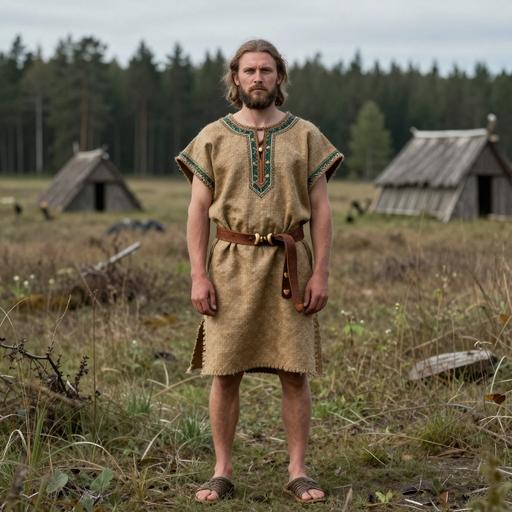
Portrait reconstruction of Kivisaare3
Ancient Individual

A man buried in Estonia in the Neolithic era

Kivisaare3
4776 BCE - 4542 BCE
Male
Early to Middle Neolithic Narva Culture, Estonia
Estonia
Scroll to begin
Chapter I

Identity

The biological and cultural markers that define this ancient individual

Sample ID

Kivisaare3

Date Range

4776 BCE - 4542 BCE

Biological Sex

Male

mtDNA Haplogroup

U5a2d

Y-DNA Haplogroup

R-P297

Cultural Period

Early to Middle Neolithic Narva Culture, Estonia

Chapter II

Place

Where this individual was discovered

Country Estonia
Locality Kivisaare
Coordinates 58.2720, 26.0520
Chapter III

Time

When this individual lived in the broader context of human history

Kivisaare3 4776 BCE - 4542 BCE
Chapter IV

Story

The narrative of this ancient life

The Early to Middle Neolithic Narva Culture represents a fascinating period in the prehistory of Estonia and the broader Eastern Baltic region. Occupying a temporal framework approximately between 5300 and 1750 BCE, the Narva Culture is named after the Narva River in eastern Estonia, symbolizing the influence and distribution of this unique archaeological culture. This era is marked by a gradual transition from Mesolithic hunter-gatherer lifestyles to more settled Neolithic ways of life, although it should be noted that Narva Culture communities retained many aspects of hunter-gatherer traditions even as they adopted new practices.

Geographical Spread and Environment

The Narva Culture primarily occupied the territories of modern-day Estonia, Latvia, and parts of Lithuania and the northwest Russian plain. This region features a diverse landscape including river valleys, coastal areas, and dense forests, which played a crucial role in shaping the subsistence and lifestyle of its inhabitants. The inhabitants exploited the rich natural resources available in these environments, demonstrating a masterful adaptation to a variety of ecological niches.

Subsistence and Economy

The Narva Culture had a mixed economy based on fishing, hunting, gathering, and an emerging but limited practice of agriculture. The proximity to large bodies of water, such as the Baltic Sea, rivers, and lakes, offered abundant fishing opportunities, which became a staple of their diet. These communities made extensive use of fishing traps, nets, and hooks. Hunting of terrestrial animals, gathering of wild plants, berries, and nuts supplemented their diet. There is evidence to suggest that late in the Narva period, some communities began cultivating plants like barley and wheat, indicating a gradual shift toward agricultural practices.

Material Culture

The Narva Culture is distinctive for its pottery, which is one of the hallmarks of their material culture. Their ceramic tradition includes primarily simple, robust, and functional pottery, often undecorated or with minimal ornamentation. The clay used was mixed with organic materials such as crushed shells or plant fibers to strengthen the pottery and enhance thermal resistance. This utilitarian approach reflects their functional needs over aesthetic considerations.

The tool assemblage includes a variety of bone, antler, and stone implements. Stone tools were predominantly made from locally available flint and sandstone, with a notable emphasis on functional tools such as axes, scrapers, and arrowheads. Artistic expression is less prominent, though some carved bone and antler artifacts suggest an aesthetic or symbolic dimension to their material culture.

Social Structure and Settlements

Narva settlements tended to be small and relatively mobile, likely organized around extended family groups or small clans. Evidence suggests these communities had seasonal campsites rather than permanent settlements, although some semi-permanent dwellings have been identified in areas with rich resources. The social structure likely involved communal cooperation, especially in activities like fishing and hunting.

Burial Practices and Spirituality

Narva Culture burial practices involved unique cairn-covered graves, sometimes indicating a belief system linked to ancestor worship or a concept of an afterlife. Grave goods were relatively sparse but occasionally included personal items or tools, possibly reflecting the social status or occupational role of the deceased. The presence of amber and other non-local materials in some graves suggests trade networks or exchange systems with neighboring cultures.

Connections and Influence

The Narva Culture did not exist in isolation; it was part of the broader tapestry of Late Mesolithic and Neolithic Europe, interacting with neighboring cultures such as the Comb Ceramic Culture. These interactions led to a degree of cultural exchange, influencing both material culture and subsistence practices.

In summary, the Narva Culture of Early to Middle Neolithic Estonia represents a complex and adaptive society transitioning from traditional hunter-gatherer lifestyles towards more settled and agriculturally-influenced practices while retaining significant elements of their ancestral way of life. Their adaptability to diverse environments, pragmatic approach to material culture, and evolving social structures underscore their significance in the prehistoric narrative of the Baltic region.

Chapter V

Genetics

The genetic ancestry of this ancient individual

Ancient Genetic Admixture

This analysis compares the DNA profile of Kivisaare3 with ancient reference populations, showing the genetic composition in terms of prehistoric ancestral groups.

Western Steppe Pastoralists 71.8%
European Hunter-Gatherers 16.6%
Neolithic Farmers 6.4%
Ancient Native Americans 2.8%
Ancient Asians 2.5%

Modern Genetic Admixture

This analysis compares the DNA profile with present-day reference populations, showing what percentage of genetic makeup resembles modern populations from different regions.

Europe 99.6%
Northwestern European 77.7%
Finnish 45.2%
Scandinavian 15.3%
Northwestern European 11.0%
English 6.3%
Eastern European 21.9%

Closest Modern Populations

These are the modern populations showing the closest statistical alignment to A man buried in Estonia in the Neolithic era, ranked by genetic distance. Lower distance values indicate closer statistical similarity.

1
Finnish Central
2.1908
2
Russian Kostroma
2.2128
3
Ingrian
2.3835
4
Russian Krasnoborsky
2.7572
5
Finnish Southwest
2.7658
6
Karelian
2.8362
7
Finnish North
2.9415
8
Moksha
2.9803
9
Mordovian
3.1499
10
Russian Yaroslavl
3.2089
Chapter VI

Context

Other ancient individuals connected to this sample

Sources

References

Scientific publications and genetic data

Scientific Publication

The genetic prehistory of the Baltic Sea region

Authors Mittnik A, Wang CC, Pfrengle S
Abstract

While the series of events that shaped the transition between foraging societies and food producers are well described for Central and Southern Europe, genetic evidence from Northern Europe surrounding the Baltic Sea is still sparse. Here, we report genome-wide DNA data from 38 ancient North Europeans ranging from ~9500 to 2200 years before present. Our analysis provides genetic evidence that hunter-gatherers settled Scandinavia via two routes. We reveal that the first Scandinavian farmers derive their ancestry from Anatolia 1000 years earlier than previously demonstrated. The range of Mesolithic Western hunter-gatherers extended to the east of the Baltic Sea, where these populations persisted without gene-flow from Central European farmers during the Early and Middle Neolithic. The arrival of steppe pastoralists in the Late Neolithic introduced a major shift in economy and mediated the spread of a new ancestry associated with the Corded Ware Complex in Northern Europe.

G25 Coordinates

The G25 coordinates for sample Kivisaare3 can be used for detailed admixture analysis in our G25 Studio tool.

Kivisaare3,0.12724712,0.0940108,0.0859192,0.07211508,0.02970792,0.02631076,0.00822472,0.01505392,-0.0026904,-0.030866,0.00440848,-0.00785868,0.01290348,0.00773524,-0.00272448,-0.00492388,-0.00396804,-0.0025622,-0.0002024,-0.0028914,0.00140572,-0.00150384,-0.00871228,0.0080534,0.00010127
Analyze in G25 Studio
Use code for 40% off Expires Feb 26