Menu
Store
Blog
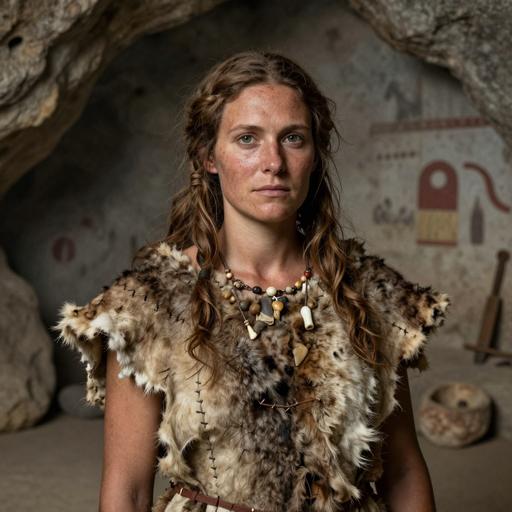
Portrait reconstruction of GoyetQ376-19
Ancient Individual

A woman buried in Belgium in the Pleistocene era

GoyetQ376-19
25771 BCE - 25348 BCE
Female
Upper Paleolithic Goyet Cave Q376-19, Belgium
Belgium
Scroll to begin
Chapter I

Identity

The biological and cultural markers that define this ancient individual

Sample ID

GoyetQ376-19

Date Range

25771 BCE - 25348 BCE

Biological Sex

Female

mtDNA Haplogroup

U2

Cultural Period

Upper Paleolithic Goyet Cave Q376-19, Belgium

Chapter II

Place

Where this individual was discovered

Country Belgium
Locality Troisieme caverne of Goyet cave
Coordinates 50.2600, 4.2800
Chapter III

Time

When this individual lived in the broader context of human history

GoyetQ376-19 25771 BCE - 25348 BCE
Chapter IV

Story

The narrative of this ancient life

The Upper Paleolithic era, which spanned from approximately 50,000 to 12,000 years ago, was a period marked by significant advancements in human technology and culture. The Goyet Caves, located in Belgium, notably Q376-19, provide valuable archaeological insights into this era, particularly concerning the European Paleolithic cultures.

Geographical and Environmental Context

The Goyet Caves are situated in the Meuse Basin of Belgium, an area characterized by a varied landscape of river valleys, limestone ridges, and forests. During the Upper Paleolithic, this region would have experienced fluctuating climatic conditions, from the cold, glacial environments of the Last Glacial Maximum to the milder, interglacial phases. These changes would have significantly influenced the availability of flora and fauna, thus affecting human subsistence strategies.

Cultural and Technological Aspects

Tool Industries

The Upper Paleolithic is distinguished by the emergence of diverse and sophisticated stone tool industries. In the Goyet Caves, assemblages from this period include tools from the Aurignacian, Gravettian, and Magdalenian cultures.

  • Aurignacian (circa 43,000-26,000 years ago): Characterized by the production of blade tools, bone, and antler implements, as well as ornamental items. The presence of split-based bone points and blades signifies advanced tool-making techniques.

  • Gravettian (circa 28,000-22,000 years ago): Known for its distinctive small bladelets and backed blades, indicating a high degree of specialization in hunting tools.

  • Magdalenian (circa 17,000-12,000 years ago): Features sophisticated harpoons, projectile points, and carvings, reflecting advanced hunting technologies and artistic expression.

Subsistence Strategies

The inhabitants of the Goyet Caves practiced a hunter-gatherer lifestyle, with evidence pointing toward a diet primarily composed of large mammals such as horse, reindeer, and mammoth, alongside smaller game, fish, and plant resources. Seasonal migration and hunting patterns likely dictated settlement in and around the cave sites.

Artistic and Symbolic Expression

The Upper Paleolithic is noted for a burgeoning of artistic output across Europe. While Goyet lacks the elaborate cave paintings found in regions like France and Spain, the site has yielded portable art objects and personal ornaments, indicating a complex symbolic culture.

Social Organization and Lifestyle

Paleolithic societies were typically organized into small, mobile bands of related individuals. The archaeological evidence from Goyet suggests the presence of seasonal encampments, indicating a level of social organization adapted to the climatic and environmental conditions of Ice Age Europe. Social structures would have been mediated by kinship ties, with cooperative hunting and foraging activities playing a central role.

Genetic and Anthropological Insights

Recent genetic studies, through the analysis of ancient DNA from remains found at Goyet, have provided fascinating insights into the population dynamics of the Upper Paleolithic. The findings have revealed gene flow between different Paleolithic groups and the possibility of some continuity between early modern humans and later populations in Europe.

Conclusion

The Goyet Caves, particularly Q376-19, offer a window into the complex world of Upper Paleolithic Europe. This period is highlighted by significant technological innovation, artistic endeavors, and adaptive strategies to environmental challenges. The archaeological record from this site continues to be a crucial source for understanding the cultural and biological evolution of modern humans in Europe.

Chapter V

Genetics

The genetic ancestry of this ancient individual

Ancient Genetic Admixture

This analysis compares the DNA profile of GoyetQ376-19 with ancient reference populations, showing the genetic composition in terms of prehistoric ancestral groups.

Western Steppe Pastoralists 44.7%
Ancient Asians 27.1%
Neolithic Farmers 17.3%
Ancient Africans 10.9%

Modern Genetic Admixture

This analysis compares the DNA profile with present-day reference populations, showing what percentage of genetic makeup resembles modern populations from different regions.

Europe 65.7%
Eastern European 53.0%
Northwestern European 12.7%
English 12.7%
Oceania 21.1%
Melanesian 21.1%
Papuan 21.1%
Africa 12.5%
West African 12.5%
Nigerian 12.5%
Asia 0.6%
Chinese & Southeast Asian 0.6%
Chinese 0.6%

Closest Modern Populations

These are the modern populations showing the closest statistical alignment to A woman buried in Belgium in the Pleistocene era, ranked by genetic distance. Lower distance values indicate closer statistical similarity.

1
Tatar Lipka
8.6579
2
Tatar Kazan
8.7804
3
Roma Bilbao
9.0803
4
Tatar Mishar
9.2010
5
Roma Granada
9.4380
6
Roma Porto
9.5577
7
Roma Balkans
9.6157
8
Tajik Tajikistan Ayni
9.9303
9
Tajik Tajikistan Hisor
9.9948
10
Roma Madrid
10.0410
Chapter VI

Context

Other ancient individuals connected to this sample

Sources

References

Scientific publications and genetic data

Scientific Publication

The genetic history of Ice Age Europe

Authors Fu Q, Posth C, Hajdinjak M
Abstract

Modern humans arrived in Europe ~45,000 years ago, but little is known about their genetic composition before the start of farming ~8,500 years ago. Here we analyse genome-wide data from 51 Eurasians from ~45,000-7,000 years ago. Over this time, the proportion of Neanderthal DNA decreased from 3-6% to around 2%, consistent with natural selection against Neanderthal variants in modern humans. Whereas there is no evidence of the earliest modern humans in Europe contributing to the genetic composition of present-day Europeans, all individuals between ~37,000 and ~14,000 years ago descended from a single founder population which forms part of the ancestry of present-day Europeans. An ~35,000-year-old individual from northwest Europe represents an early branch of this founder population which was then displaced across a broad region, before reappearing in southwest Europe at the height of the last Ice Age ~19,000 years ago. During the major warming period after ~14,000 years ago, a genetic component related to present-day Near Easterners became widespread in Europe. These results document how population turnover and migration have been recurring themes of European prehistory.

G25 Coordinates

The G25 coordinates for sample GoyetQ376-19 can be used for detailed admixture analysis in our G25 Studio tool.

GoyetQ376-19,0.08246258,0.01176396,0.00903148,0.0543044,-0.00646786,0.01652716,0.00456682,0.01611386,0.02624456,0.02019524,-5.342E-05,0.00274616,-0.0023247,0.01329102,0.00036528,-0.00341598,-0.00693688,-0.00157022,0.0005642,-0.00055852,0.00704778,0.00312164,0.00017478,-0.00448584,-0.0019035
Analyze in G25 Studio
Use code for 40% off Expires Feb 27