Menu
Store
Blog
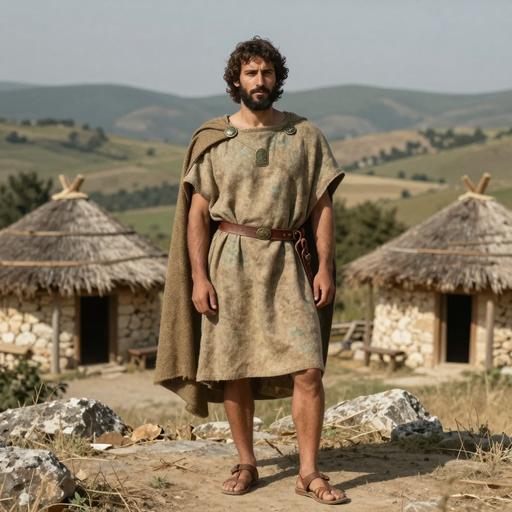
Portrait reconstruction of I10168
Ancient Individual

A man buried in North Macedonia in the Bronze Age era

I10168
1200 BCE - 1000 BCE
Male
Bronze Age Macedonia
North Macedonia
Scroll to begin
Chapter I

Identity

The biological and cultural markers that define this ancient individual

Sample ID

I10168

Date Range

1200 BCE - 1000 BCE

Biological Sex

Male

mtDNA Haplogroup

Not available

Y-DNA Haplogroup

Not available

Cultural Period

Bronze Age Macedonia

Chapter II

Place

Where this individual was discovered

Country North Macedonia
Locality Skopje. Skupi. East Necropolis
Coordinates 42.0100, 21.3900
Chapter III

Time

When this individual lived in the broader context of human history

I10168 1200 BCE - 1000 BCE
Chapter IV

Story

The narrative of this ancient life

The Bronze Age Macedonia, part of the broader Balkan Bronze Age, represents a fascinating period marked by significant cultural, technological, and social developments. The region of Macedonia, located in the southern Balkans, was influenced by its geographical position, acting as a crossroad between different cultures and civilizations.

Geographical Context

Macedonia, during the Bronze Age, was not a defined political entity as it would become in later historical periods. The region is characterized by its diverse geography, including mountain ranges, fertile plains, and access to the Aegean Sea. This geographical diversity provided an environment rich in resources such as metals, timber, and agricultural potential, essential for the development and sustainability of Bronze Age communities.

Cultural Interactions

The Bronze Age in Macedonia was heavily influenced by the movements and interactions of various Indo-European tribes and seafaring peoples. The region served as a melting pot where indigenous peoples interacted with influences from the Aegean, such as the Minoan and Mycenaean civilizations. This interaction facilitated the exchange of goods, technologies, and cultural practices.

Settlements and Society

Archaeological evidence indicates that settlements during this era were often strategically located on elevated terrains or near water sources, providing strategic defense and sustenance. Society was predominantly agrarian, with evidence of advanced agricultural practices including crop cultivation and animal husbandry.

Social hierarchy began to emerge during this period, characterized by a stratified society. The accumulation of wealth, often linked to control over land and resources, led to the emergence of local chieftains or elites. These leaders likely played crucial roles in organizing trade, warfare, and religious practices.

Technological and Artistic Developments

The Bronze Age was marked by the advent and widespread use of bronze, an alloy of copper and tin, which revolutionized tool-making and warfare. In Macedonia, the use of bronze tools and weapons facilitated agricultural productivity and improved military capabilities.

Artistic expression flourished, with pottery, textile production, and metallurgy showing significant advancements. Pottery styles from this period are distinguished by their intricate designs and varied shapes, reflecting both utilitarian and aesthetic purposes. Additionally, bronze and gold artifacts, including jewelry and ceremonial objects, suggest a developed sense of craftsmanship and artistic sophistication.

Trade and Economy

Trade networks during the Bronze Age expanded significantly. Macedonia's strategic location facilitated trade with neighboring regions, including the Aegean, Central Balkans, and beyond. Goods such as metals, textiles, and agricultural products were exchanged, contributing to economic prosperity and cultural exchange.

Religion and Rituals

While specific religious beliefs from this era are challenging to reconstruct due to the lack of written records, archaeological findings suggest a rich spiritual life. Burial practices, often involving tumuli (large burial mounds) and grave goods, indicate a belief in an afterlife and the importance of social status even in death. Rituals likely played an essential role in community cohesion and the reaffirmation of social hierarchies.

Conclusion

Bronze Age Macedonia, as part of the Balkan Bronze Age, was a dynamic and transformative era. It was a time of interaction and synthesis of cultures that laid the foundation for the historical developments that would follow in the Iron Age and classical antiquity. The legacy of this period is evident in the archaeological record, offering insights into the complexities and achievements of Bronze Age societies in the Balkans.

Chapter V

Genetics

The genetic ancestry of this ancient individual

Ancient Genetic Admixture

This analysis compares the DNA profile of I10168 with ancient reference populations, showing the genetic composition in terms of prehistoric ancestral groups.

Neolithic Farmers 48.9%
Western Steppe Pastoralists 27.0%
European Hunter-Gatherers 21.3%
Ancient Asians 2.8%

Modern Genetic Admixture

This analysis compares the DNA profile with present-day reference populations, showing what percentage of genetic makeup resembles modern populations from different regions.

Europe 74.5%
Southern European 41.0%
Italian 41.0%
Northwestern European 33.4%
English 33.4%
Asia 21.3%
Arab, Egyptian & Levantine 15.6%
Levantine 15.6%
Chinese & Southeast Asian 5.2%
Indonesian Khmer Thai Myanma 5.2%
Northern West Asian 0.5%
Caucasian 0.5%
Africa 4.3%
North African 4.3%
North African 4.3%

Closest Modern Populations

These are the modern populations showing the closest statistical alignment to A man buried in North Macedonia in the Bronze Age era, ranked by genetic distance. Lower distance values indicate closer statistical similarity.

1
Swiss Italian
5.7765
2
Turkish Deliorman
5.8756
3
Italian Trentino Alto Adige
6.0094
4
Italian Northeast
6.0742
5
Bulgarian
6.1093
6
Spanish Eivissa
6.1432
7
Turkish Rumeli
6.1625
8
Spanish Murcia
6.1673
9
Romanian
6.1683
10
Spanish Camp De Tarragona
6.1690
Chapter VI

Context

Other ancient individuals connected to this sample

Sources

References

Scientific publications and genetic data

Scientific Publication

The genetic history of the Southern Arc: A bridge between West Asia and Europe | Science

Authors Lazaridis I, Alpaslan-Roodenberg S, Acar A
Abstract

The period from the Copper Age to the Bronze Age marked major social and economic transformations in West Eurasia. To better understand these changes and their genetic impacts, we generated genome-wide data from 727 individuals who lived between 5000 and 1000 BCE in southeastern Europe and southwestern Asia.

G25 Coordinates

The G25 coordinates for sample I10168 can be used for detailed admixture analysis in our G25 Studio tool.

I10168,0.11366044,0.1009432,0.03907264,-0.00762176,0.02733566,-0.0131685,0.00480218,0.00996626,0.02001338,0.0246742,0.0055066,0.00189722,-0.00301196,-0.01200716,-0.0168509,-0.00456524,0.0031352,-0.00147436,-0.00630244,-0.00802904,-0.00071246,0.00621222,-0.0168004,-0.00972778,-0.00107914
Analyze in G25 Studio
Use code for 40% off Expires Feb 27