Menu
Store
Blog
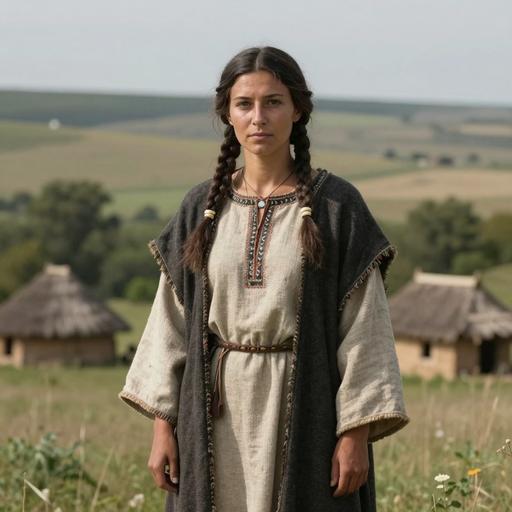
Portrait reconstruction of I10420
Ancient Individual

A woman buried in Moldova in the Bronze Age era

I10420
3000 BCE - 1000 BCE
Female
Bronze Age Moldova
Moldova
Scroll to begin
Chapter I

Identity

The biological and cultural markers that define this ancient individual

Sample ID

I10420

Date Range

3000 BCE - 1000 BCE

Biological Sex

Female

mtDNA Haplogroup

V7

Cultural Period

Bronze Age Moldova

Chapter II

Place

Where this individual was discovered

Country Moldova
Locality Crihana Veche
Coordinates 45.8458, 28.1947
Chapter III

Time

When this individual lived in the broader context of human history

I10420 3000 BCE - 1000 BCE
Chapter IV

Story

The narrative of this ancient life

Bronze Age Moldova is a fascinating period in the history of Eastern Europe characterized by significant cultural, technological, and social transformations as part of the broader Indo-European expansion. Situated between the Carpathian Mountains and the Dniester River, modern-day Moldova during the Bronze Age served as a crossroads for various influences and migrations, contributing to a rich and layered cultural tapestry.

Chronology and Geography: The Bronze Age in Moldova roughly spans from 3500 to 1200 BCE. This era is typically divided into the Early, Middle, and Late Bronze Age, each marked by distinct developments in metallurgy, settlement patterns, and social structures. The region's fertile plains and strategic location made it an attractive area for settlement and cultural exchanges, particularly for communities practicing agro-pastoral livelihoods.

Cultural and Technological Developments:

  1. Metallurgical Advances: The Bronze Age is characterized by the emergence and refinement of bronze metallurgy, a crucial technological advancement over the previous Neolithic period. This era witnessed the widespread use of bronze tools, weapons, and ornaments, which revolutionized agriculture, warfare, and daily life.

  2. Settlement Patterns: The period saw the establishment of more permanent and complex settlements, with some communities developing into proto-urban centers. Archaeological findings indicate a mixture of fortified and open settlements, reflecting a society that balanced agricultural production with defense mechanisms, likely due to increased competition and tensions with neighboring groups.

  3. Economic Activities: The economy during this time was predominantly based on agriculture, supplemented by animal husbandry. The cultivation of cereals and legumes alongside the domestication of cattle, sheep, and goats formed the backbone of subsistence. Additionally, trade networks expanded significantly, facilitated by the mobility of Indo-European groups and the exchange of metal goods, pottery, and other commodities.

  4. Art and Craftsmanship: Bronze Age Moldova is noted for its craftsmanship, particularly in pottery and metalwork. Pottery from this era often features intricate decorations and forms, signifying both aesthetic sensibilities and cultural exchanges with neighboring regions. Metal artifacts, such as jewelry and ceremonial items, reveal a high degree of skill and mark the status of their owners.

  5. Rituals and Beliefs: The spiritual and ritualistic practices of Bronze Age Moldova are not fully understood, but burial practices offer insights. Kurgan-type burial mounds, linked to Indo-European traditions, are common, indicating beliefs in an afterlife and the social importance of commemorating the dead. These mounds often contain grave goods, suggesting social stratification and wealth accumulation.

Linguistic and Cultural Dynamics: Moldova's Bronze Age culture was heavily influenced by the migrations and cultural dynamics of Indo-European groups, notably linked to the Yamna and Corded Ware cultures. These groups are believed to have introduced Indo-European languages and associated cultural practices to the region. This period marked a shift towards more hierarchical societies, with evidence of emerging chieftains or warrior elites.

Interaction with Neighboring Cultures: The Bronze Age in Moldova was marked by interactions with surrounding cultures, including those in the Balkans, the Pontic-Caspian steppe, and Central Europe. These connections facilitated the transfer of ideas, technologies, and goods, contributing to the cultural richness of the region. Trade with the Mycenaean and Minoan civilizations, for example, influenced local craftsmanship and economic practices.

Conclusion: Bronze Age Moldova represents a transformative era in the prehistoric development of Eastern Europe. Its strategic location and the influence of Indo-European migrations played a critical role in shaping the social, economic, and cultural landscape. The legacy of this period is evident in the archaeological record and continues to intrigue historians and archaeologists seeking to understand the complexities of early European societies.

Chapter V

Genetics

The genetic ancestry of this ancient individual

Ancient Genetic Admixture

This analysis compares the DNA profile of I10420 with ancient reference populations, showing the genetic composition in terms of prehistoric ancestral groups.

Western Steppe Pastoralists 46.4%
European Hunter-Gatherers 29.7%
Neolithic Farmers 19.1%
Ancient Asians 4.8%

Modern Genetic Admixture

This analysis compares the DNA profile with present-day reference populations, showing what percentage of genetic makeup resembles modern populations from different regions.

Europe 80.5%
Northwestern European 54.3%
English 30.1%
Scandinavian 20.0%
Finnish 3.8%
Eastern European 26.2%
Asia 17.3%
Northern West Asian 13.8%
Caucasian 13.8%
Central Asian, Northern Indian & Pakistani 3.5%
Pakistan 2.2%
Indian 1.4%
America 1.5%
America 1.5%
Native American 1.5%
Africa 0.7%
West African 0.7%
Nigerian 0.7%

Closest Modern Populations

These are the modern populations showing the closest statistical alignment to A woman buried in Moldova in the Bronze Age era, ranked by genetic distance. Lower distance values indicate closer statistical similarity.

1
Moksha
4.5055
2
Mordovian
4.8644
3
Moldovan O
4.8782
4
Erzya
4.9430
5
Russian Ryazan
5.0836
6
Russian Kostroma
5.1444
7
Ukrainian Zakarpattia
5.4356
8
Ukrainian Dnipro
5.4360
9
Russian Kursk
5.4773
10
Swedish
5.4801
Chapter VI

Context

Other ancient individuals connected to this sample

Sources

References

Scientific publications and genetic data

Scientific Publication

The genetic history of the Southern Arc: A bridge between West Asia and Europe | Science

Authors Lazaridis I, Alpaslan-Roodenberg S, Acar A
Abstract

The period from the Copper Age to the Bronze Age marked major social and economic transformations in West Eurasia. To better understand these changes and their genetic impacts, we generated genome-wide data from 727 individuals who lived between 5000 and 1000 BCE in southeastern Europe and southwestern Asia.

G25 Coordinates

The G25 coordinates for sample I10420 can be used for detailed admixture analysis in our G25 Studio tool.

I10420,0.1234272,0.09694994,0.04665344,0.0587561,0.01426374,0.02624298,0.00542806,0.0073029,-0.0078733,-0.0225388,-0.00226568,-3.44E-05,0.0051745,-0.00142172,0.00633934,0.00011046,-0.00588694,-0.00103646,-0.00099306,-0.0029977,0.00230462,0.00062312,-0.00263684,0.00794364,-0.00112198
Analyze in G25 Studio
Use code for 40% off Expires Feb 27