Menu
Store
Blog
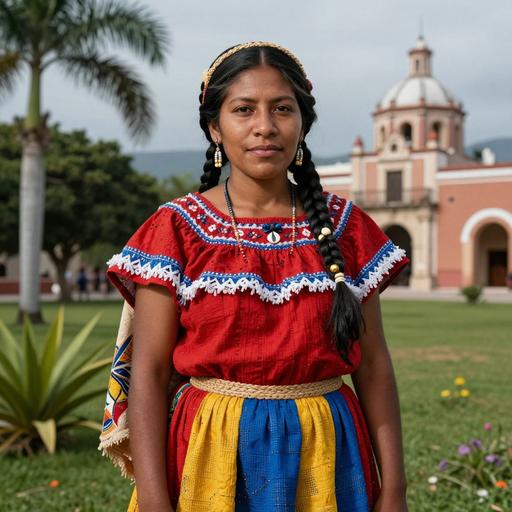
Portrait reconstruction of I10860
Ancient Individual

A woman buried in Mexico in the Modern era

I10860
1540 CE - 1680 CE
Female
Colonial African Mexico
Mexico
Scroll to begin
Chapter I

Identity

The biological and cultural markers that define this ancient individual

Sample ID

I10860

Date Range

1540 CE - 1680 CE

Biological Sex

Female

mtDNA Haplogroup

L3e2b+152

Cultural Period

Colonial African Mexico

Chapter II

Place

Where this individual was discovered

Country Mexico
Locality Campeche. Campeche
Chapter III

Time

When this individual lived in the broader context of human history

I10860 1540 CE - 1680 CE
Chapter IV

Story

The narrative of this ancient life

Colonial African Mexico, also referred to as the Afro-Mexican presence during the colonial era, marks a fascinating but often overlooked chapter in the history of Mexico. This era began in the early 16th century with the arrival of Africans as a result of the transatlantic slave trade, a process that profoundly shaped the cultural, social, and economic landscape of colonial Mexico.

Historical Context

The period began with Spanish colonization following Hernán Cortés’s conquest of the Aztec Empire, establishing New Spain in the lands that are part of present-day Mexico. With indigenous populations suffering from diseases, warfare, and harsh labor conditions, the Spanish colonizers turned to enslaved Africans to meet labor demands in mines, plantations, and urban centers.

The first Africans arrived in Mexico in the early 1500s, initially from Spain and Portugal, but increasingly from the African continent, primarily from West Africa. These Africans were subjected to the brutalities of slavery, yet they played an integral role in the colony's development. By the late 16th and early 17th centuries, Africans and their descendants, both enslaved and free, formed a significant portion of the population.

Cultural Influences

The confluence of African, Indigenous, and European cultures led to a rich tapestry of cultural expressions in Colonial Mexico. African traditions, religions, and art forms mingled with indigenous practices and Spanish colonial influences, fostering new cultural and social dynamics. Music and dance, in particular, bear strong Afro-Mexican influences, with rhythms, instruments, and movements that underscore the syncretic nature of Mexican culture.

Religion

Religious practices among Afro-Mexicans were particularly syncretic. While many Africans were converted to Christianity, they often blended Catholic worship with traditional African beliefs, resulting in unique religious expressions. This cultural syncretism is evidenced in religious festivals, oral traditions, and the formation of Afro-Mexican communities known as \palenques" or "cimarron communities," where African customs were preserved and adapted.

Language

Language, too, reflected this blend, with African linguistic elements integrating with Spanish and indigenous tongues. Although much of the African linguistic heritage was submerged under colonial pressures, traces can still be observed in regional dialects and colloquialisms.

Social and Economic Contributions

Africans and their descendants made significant contributions to the colonial economy. As skilled laborers, artisans, and agriculturalists, they played crucial roles in sectors such as mining, sugar production, and domestic services. These contributions were critical in sustaining the colony's economy and in developing the cultural and architectural landscapes of urban centers like Veracruz and Mexico City.

Social Structure

The social structure of Colonial Mexico was complex and hierarchical, with racial categories defining people's rights and opportunities. The "casta" system, a rigid racial classification system, often marginalized Afro-Mexicans. However, this did not prevent them from exercising agency; many secured manumission, while others formed self-sustained maroon societies that resisted colonial domination.

Resistance and Resilience

Resistance against the harsh conditions of slavery and racial discrimination was a hallmark of the Afro-Mexican experience. Maroon communities, acts of rebellion, and day-to-day acts of resistance highlight the resilience and agency of Afro-Mexicans. Figures such as Gaspar Yanga, who led a successful rebellion in Veracruz in 1609, symbolize the spirit of resistance.

Legacy

The legacy of Afro-Mexican communities in Colonial Mexico is manifest in various aspects of modern Mexican culture, from culinary traditions to music and art. The complexity and richness of this cultural heritage demonstrate a profound, albeit historically understated, impact on Mexico's development.

Modern Recognition

In recent years, there has been a growing recognition of the historical and cultural contributions of Afro-Mexicans, underscoring the necessity to reckon with this multifaceted heritage. Governmental and academic initiatives have sought to highlight and preserve the stories and cultural practices of Afro-descendants in Mexico, promoting a more inclusive understanding of the nation's history.

Understanding Colonial African Mexico is crucial to appreciating the diverse threads that weave the fabric of Mexican identity. Acknowledging this era allows for a more nuanced perspective on the historical processes that have shaped not only Mexico but the wider Latin American region."

Chapter V

Genetics

The genetic ancestry of this ancient individual

Modern Genetic Admixture

This analysis compares the DNA profile with present-day reference populations, showing what percentage of genetic makeup resembles modern populations from different regions.

Africa 98.4%
West African 61.4%
Nigerian 40.0%
Senegambian & Guinean 18.0%
Ghanaian, Liberian, Sierra Leonean 3.5%
Northern East African 20.0%
Eastern African 20.0%
African Hunter-Gatherer 9.3%
Congolese & Southern East African 7.7%
South East African 7.7%
Asia 0.7%
Oceania 0.6%
Melanesian 0.6%
Papuan 0.6%

Closest Modern Populations

These are the modern populations showing the closest statistical alignment to A woman buried in Mexico in the Modern era, ranked by genetic distance. Lower distance values indicate closer statistical similarity.

1
Bantu S.W.
2.2693
2
Bantu S.E.
4.0219
3
Makhuwa
4.1598
4
Nyaneka
4.2091
5
Ronga
4.4614
6
Yao
4.7580
7
Mwani
4.7879
8
Chopi
4.8187
9
Ngumba
4.9523
10
Tswa
5.0212
Chapter VI

Context

Other ancient individuals connected to this sample

Sources

References

Scientific publications and genetic data

G25 Coordinates

The G25 coordinates for sample I10860 can be used for detailed admixture analysis in our G25 Studio tool.

I10860,-0.62240424,0.05836026,0.01898084,0.0165975,0.0008795,0.00365808,0.01202402,-0.00012938,-0.02245556,0.0155917,0.0043412,-0.00649044,-0.00177056,0.00315548,-0.0062724,0.00082362,0.0009276,0.03385172,-0.01477702,0.00215194,0.000545,0.0017661,0.00067244,0.00253258,1.798E-05
Analyze in G25 Studio
Use code for 30% off Expires May 03