Menu
Store
Blog
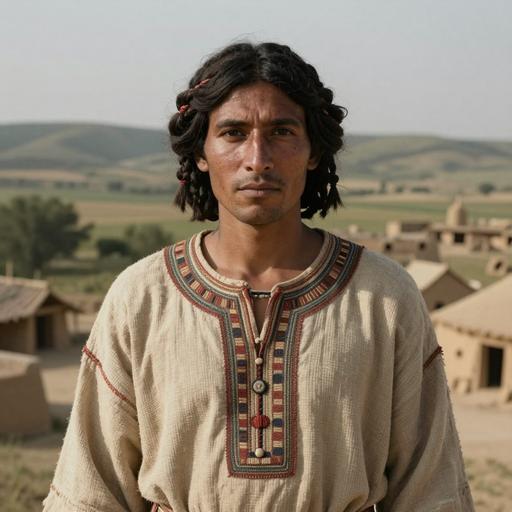
Portrait reconstruction of I12828
Ancient Individual

A man buried in Romania in the Bronze Age era

I12828
2135 BCE - 1941 BCE
Male
The Tei Culture
Romania
Scroll to begin
Chapter I

Identity

The biological and cultural markers that define this ancient individual

Sample ID

I12828

Date Range

2135 BCE - 1941 BCE

Biological Sex

Male

mtDNA Haplogroup

U4c1

Y-DNA Haplogroup

Not available

Cultural Period

The Tei Culture

Chapter II

Place

Where this individual was discovered

Country Romania
Locality Smeeni
Coordinates 44.9969, 26.8657
Chapter III

Time

When this individual lived in the broader context of human history

I12828 2135 BCE - 1941 BCE
Chapter IV

Story

The narrative of this ancient life

The Tei Culture, which flourished during the Bronze Age in what is now modern-day Romania, represents a significant episode in the prehistoric development of the region. This culture is part of the broader Indo-European cultural tapestry that spanned across Europe and parts of Asia. Below is a detailed description of the Tei Culture, exploring its archaeological findings, social structure, technological advancements, and cultural practices.

Archaeological Context

The Tei Culture is predominantly situated in the southern part of Romania, encompassing areas such as the Lower Danube Basin. It is considered to be successor to the earlier Glina Culture and shows influences from surrounding cultures like the Verbicioara and Otomani-Füzesabony cultures. Archaeological findings from settlements and burial sites offer a window into this culture's lifestyle and social structures.

Settlements

Tei settlements were typically established in strategic locations such as valleys and near water sources, facilitating agriculture and trade. These settlements suggest a semi-nomadic lifestyle, with evidence indicating both permanent and temporary dwelling structures. Houses were usually rectangular, constructed from wattle and daub, with wooden frameworks. The presence of palisades and ditches around some settlements implies a need for defense, possibly due to conflicts or raids.

Economy and Subsistence

The economy of the Tei Culture was primarily agrarian, supported by farming and animal husbandry. Crops such as wheat, barley, and millet were cultivated using primitive tools made of stone and bone, while domesticated animals included cattle, sheep, goats, and pigs. The presence of hunting tools and animal bones in archaeological layers indicates that hunting and gathering supplemented their diet.

Trade played a substantial role in Tei society, as evidenced by the discovery of exotic goods such as amber and metal artifacts that were not locally sourced. This implies that the Tei people engaged in long-distance trade, exchanging local goods like pottery and agricultural products for foreign commodities.

Technology and Craftsmanship

The Tei Culture is distinguished by its advancements in metalworking, particularly with bronze. Artifacts such as tools, weapons, and ornaments have been uncovered, showcasing sophisticated techniques in casting and metal shaping. Pottery from this culture is noted for its intricate designs and high-quality craftsmanship, often decorated with geometric patterns and incised motifs.

Social Structure

While specific details of the Tei social hierarchy are not definitively known, burial practices offer insights into their societal organization. Grave goods suggest a stratified society, where wealth and status were significant. Some burials contain elaborate goods like finely crafted weapons and jewelry, indicating the presence of a chieftain or warrior class. Additionally, the variation in burial styles and grave goods may reflect a society organized around kinship or clan groups.

Religion and Rituals

The spiritual and religious practices of the Tei Culture remain largely speculative; however, the burial customs have provided clues. The diversity in burial rites, including both cremation and inhumation, suggests a complex belief system. Decorative motifs on pottery and other artifacts may have religious or symbolic significance, and it is plausible that the Tei people practiced forms of ancestor worship or polytheism common among Indo-European cultures.

Cultural Interaction

As part of the Indo-European cultural matrix, the Tei people were influenced by their interactions with neighboring cultures. These interactions facilitated not only trade but also the exchange of ideas and technologies. Elements of pottery and metalworking techniques reflect this cross-cultural fertilization.

Conclusion

The Tei Culture represents an intriguing chapter in the prehistoric era of Southeastern Europe. Their advancements in metallurgy, complex social structures, and trade networks reflect a society that was both dynamic and adaptive. While much about the Tei Culture remains to be discovered, the archaeological findings thus far provide a valuable glimpse into their way of life and their place within the broader Indo-European context. As ongoing research continues to uncover more about this enigmatic culture, our understanding of its influence and legacy will undoubtedly expand.

Chapter V

Genetics

The genetic ancestry of this ancient individual

Ancient Genetic Admixture

This analysis compares the DNA profile of I12828 with ancient reference populations, showing the genetic composition in terms of prehistoric ancestral groups.

Neolithic Farmers 40.2%
European Hunter-Gatherers 30.2%
Western Steppe Pastoralists 22.0%
Ancient Asians 7.7%

Modern Genetic Admixture

This analysis compares the DNA profile with present-day reference populations, showing what percentage of genetic makeup resembles modern populations from different regions.

Asia 90.0%
Northern West Asian 89.7%
Caucasian 89.7%
Europe 9.0%
Northwestern European 9.0%
Finnish 9.0%
America 1.0%
America 1.0%
Native American 1.0%

Closest Modern Populations

These are the modern populations showing the closest statistical alignment to A man buried in Romania in the Bronze Age era, ranked by genetic distance. Lower distance values indicate closer statistical similarity.

1
Turkish Deliorman
5.8054
2
Kabardin
5.9428
3
Cherkes
6.2184
4
Kumyk
6.2410
5
Circassian
6.3583
6
Balkar
6.3785
7
Adygei
6.4154
8
Ingushian
6.4666
9
Turkish Rumeli
6.4923
10
Karachay
6.5166
Chapter VI

Context

Other ancient individuals connected to this sample

Sources

References

Scientific publications and genetic data

Scientific Publication

The genetic history of the Southern Arc: A bridge between West Asia and Europe | Science

Authors Lazaridis I, Alpaslan-Roodenberg S, Acar A
Abstract

The period from the Copper Age to the Bronze Age marked major social and economic transformations in West Eurasia. To better understand these changes and their genetic impacts, we generated genome-wide data from 727 individuals who lived between 5000 and 1000 BCE in southeastern Europe and southwestern Asia.

G25 Coordinates

The G25 coordinates for sample I12828 can be used for detailed admixture analysis in our G25 Studio tool.

I12828,0.1129181,0.11208026,0.00310706,-0.00469418,-0.00077786,0.00863238,0.00622776,0.0011113,-0.02735922,-0.00935638,-0.00470134,0.00875698,-0.02224122,0.0002712,0.01493902,-0.0212396,-0.00797646,-0.00330614,0.00138576,0.014642,0.0054479,0.00278578,-0.00272396,-0.00228262,-0.00203168
Analyze in G25 Studio
Use code for 40% off Expires Feb 27