Menu
Store
Blog
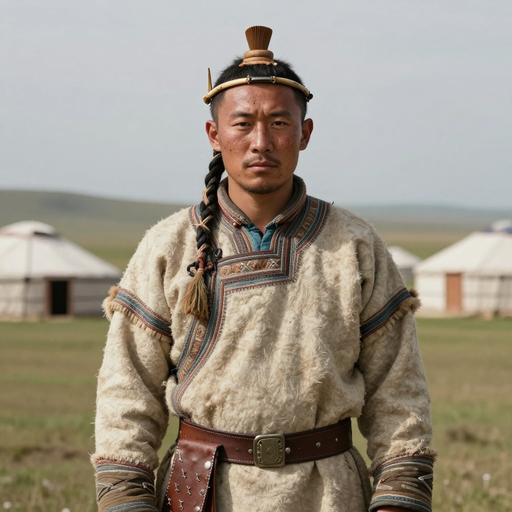
Portrait reconstruction of I13504
Ancient Individual

A man buried in Mongolia in the Early Iron Age era

I13504
512 BCE - 389 BCE
Male
Early Iron Age 3 Mongolia
Mongolia
Scroll to begin
Chapter I

Identity

The biological and cultural markers that define this ancient individual

Sample ID

I13504

Date Range

512 BCE - 389 BCE

Biological Sex

Male

mtDNA Haplogroup

W

Y-DNA Haplogroup

Q1b1b-Y5084

Cultural Period

Early Iron Age 3 Mongolia

Chapter II

Place

Where this individual was discovered

Country Mongolia
Locality Khovsgol aimag. Ulaan-Uul sum
Coordinates 50.7000, 99.2000
Chapter III

Time

When this individual lived in the broader context of human history

I13504 512 BCE - 389 BCE
Chapter IV

Story

The narrative of this ancient life

The Early Iron Age 3 period in Mongolia, situated within the broader Eurasian Steppe region, is a fascinating era characterized by dynamic cultural, technological, and socio-political transformations. This period, roughly dating from the late 1st millennium BCE to the early centuries CE, is often associated with significant developments in metallurgy, nomadic pastoralism, and increasing interactions among diverse cultures.

Geography and Environment

Mongolia, a land marked by vast steppes, mountains, and deserts, plays a crucial role in shaping the lifestyles of its inhabitants. The harsh climate and expansive landscapes foster a nomadic way of life, with communities continuously moving in search of pastures and water for their herds. The Eurasian Steppe, stretching from Eastern Europe to China, acts as a conduit for cultural exchange, trade, and military campaigns, influencing the cultures that emerge in this region.

Technological Advances

The hallmark of the Early Iron Age is the mastery of iron metallurgy. Iron tools and weapons begin to replace those made of bronze, providing several advantages. Iron is not only more abundant and accessible than copper and tin (the constituents of bronze), but also produces stronger and more durable implements. This technological shift revolutionizes agriculture, which relies on iron plows, and warfare, with robust iron weapons offering superiority in conflicts.

Nomadic Pastoralism and Economy

The Early Iron Age 3 in Mongolia is synonymous with a highly mobile, pastoral lifestyle. Nomadic groups raise livestock such as horses, cattle, sheep, and goats, which form the backbone of their economy. The horse, in particular, becomes a central element of life on the steppes, essential for transportation, herding, and as a formidable asset in warfare.

The economic system thrives on the trade networks that crisscross the Eurasian Steppe. These routes facilitate the exchange of goods, ideas, and technologies among various cultures, from the Scythians and Sarmatians in the west to the Chinese states in the east. Such interactions enable the spread of innovations like the chariot and mounted warfare tactics.

Social Structure and Lifestyle

Societal organization in Early Iron Age Mongolia is typically clan-based, with kinship networks playing a significant role in social and political life. Power is often decentralized, with tribes led by chieftains or councils of elders. Prestige and leadership are closely tied to martial prowess, the ability to protect and expand territory, and the accumulation of wealth in the form of livestock.

Housing consists of easily dismantled structures like yurts or gers, which are portable and well-suited to the nomadic lifestyle. The diet of these communities is largely based on animal products, including meat and dairy, supplemented by wild plants and traded goods.

Cultural and Spiritual Beliefs

The spiritual life of the Early Iron Age Mongolians is deeply connected to their environment. Animistic and shamanistic practices are prevalent, with a reverence for natural elements such as the sky, land, and ancestors. Shamans act as intermediaries between the human and spirit worlds, performing rituals to ensure harmony and success in hunting, herding, and warfare.

Artistic expression is manifested in various forms, including intricate metalwork, pottery, and textiles. These often feature motifs drawn from nature and mythology, reflecting the worldview and beliefs of the people.

Interactions and Conflicts

The Early Iron Age is also marked by significant intercultural interactions and conflicts. The nomadic groups of Mongolia are not isolated; they engage in both cooperation and conflict with neighboring sedentary and nomadic civilizations. This period sees the rise of powerful confederations and proto-states, such as the Xiongnu confederation, which exerts influence over a vast area and frequently clashes with the emerging Han dynasty of China.

These interactions are pivotal in shaping not only the political landscape but also the cultural and technological advancements throughout the region. Military campaigns often lead to the exchange of ideas and technologies, further blending cultures across the steppes.

Legacy

The Early Iron Age 3 in Mongolia is a critical period that sets the stage for future developments in the region. The innovations and cultural practices that emerge during this time lay the groundwork for the later rise of powerful empires such as the Xiongnu and eventually the Mongol Empire under Genghis Khan centuries later. This era’s blend of technological progress, intricate cultural interactions, and dynamic societal structures leave a lasting imprint on the history of the Eurasian Steppe.

Chapter V

Genetics

The genetic ancestry of this ancient individual

Ancient Genetic Admixture

This analysis compares the DNA profile of I13504 with ancient reference populations, showing the genetic composition in terms of prehistoric ancestral groups.

Ancient Asians 91.4%
Western Steppe Pastoralists 3.3%
Neolithic Farmers 2.9%
Ancient Native Americans 2.5%

Modern Genetic Admixture

This analysis compares the DNA profile with present-day reference populations, showing what percentage of genetic makeup resembles modern populations from different regions.

Asia 98.7%
Northern Asian 73.7%
Siberian 49.9%
Mongolian 23.8%
Japanese & Korean 16.1%
Japanese 16.1%
Central Asian, Northern Indian & Pakistani 7.1%
Central Asian 7.1%
Chinese & Southeast Asian 1.8%
Tibetan 1.8%
America 1.1%
America 1.1%
Native American 1.1%

Closest Modern Populations

These are the modern populations showing the closest statistical alignment to A man buried in Mongolia in the Early Iron Age era, ranked by genetic distance. Lower distance values indicate closer statistical similarity.

1
Khamnegan
4.8050
2
Tuvinian
5.5349
3
Evenk O
5.5944
4
Mogush
6.1047
5
Todzin
6.5266
6
Buryat
6.7088
7
Mongol
8.1751
8
Kalmyk
8.5421
9
Dolgan
8.8720
10
Mongolian
8.9316
Chapter VI

Context

Other ancient individuals connected to this sample

Sources

References

Scientific publications and genetic data

Scientific Publication

Genomic insights into the formation of human populations in East Asia

Authors Wang CC, Yeh HY, Popov AN
Abstract

The deep population history of East Asia remains poorly understood owing to a lack of ancient DNA data and sparse sampling of present-day people1,2. Here we report genome-wide data from 166 East Asian individuals dating to between 6000 BC and AD 1000 and 46 present-day groups. Hunter-gatherers from Japan, the Amur River Basin, and people of Neolithic and Iron Age Taiwan and the Tibetan Plateau are linked by a deeply splitting lineage that probably reflects a coastal migration during the Late Pleistocene epoch. We also follow expansions during the subsequent Holocene epoch from four regions. First, hunter-gatherers from Mongolia and the Amur River Basin have ancestry shared by individuals who speak Mongolic and Tungusic languages, but do not carry ancestry characteristic of farmers from the West Liao River region (around 3000 BC), which contradicts theories that the expansion of these farmers spread the Mongolic and Tungusic proto-languages. Second, farmers from the Yellow River Basin (around 3000 BC) probably spread Sino-Tibetan languages, as their ancestry dispersed both to Tibet-where it forms approximately 84% of the gene pool in some groups-and to the Central Plain, where it has contributed around 59-84% to modern Han Chinese groups. Third, people from Taiwan from around 1300 BC to AD 800 derived approximately 75% of their ancestry from a lineage that is widespread in modern individuals who speak Austronesian, Tai-Kadai and Austroasiatic languages, and that we hypothesize derives from farmers of the Yangtze River Valley. Ancient people from Taiwan also derived about 25% of their ancestry from a northern lineage that is related to, but different from, farmers of the Yellow River Basin, which suggests an additional north-to-south expansion. Fourth, ancestry from Yamnaya Steppe pastoralists arrived in western Mongolia after around 3000 BC but was displaced by previously established lineages even while it persisted in western China, as would be expected if this ancestry was associated with the spread of proto-Tocharian Indo-European languages. Two later gene flows affected western Mongolia: migrants after around 2000 BC with Yamnaya and European farmer ancestry, and episodic influences of later groups with ancestry from Turan.

G25 Coordinates

The G25 coordinates for sample I13504 can be used for detailed admixture analysis in our G25 Studio tool.

I13504,0.045791,-0.365938,0.09628552,-0.0127888,-0.07514626,-0.0437589,0.0186204,0.02375536,0.00956454,0.00941504,0.00971392,0.0003793,0.0004068,-0.00563498,-0.00977706,-0.01546402,-0.00863496,0.00999698,0.01546088,0.00839382,0.01014772,-0.01529716,0.00349508,0.0010222,0.00685549
Analyze in G25 Studio
Use code for 40% off Expires Feb 26