Menu
Store
Blog
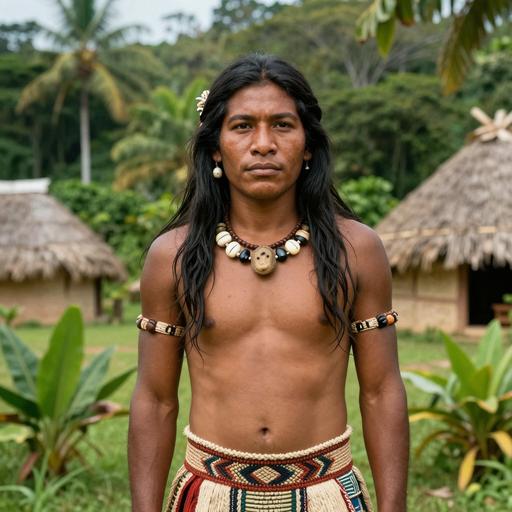
Portrait reconstruction of I14992
Ancient Individual

A man buried in Dominican Republic in the Pre-Columbian Caribbean era

I14992
1327 CE - 1433 CE
Male
Ceramic Period Los Muertos, Dominican Republic
Dominican Republic
Scroll to begin
Chapter I

Identity

The biological and cultural markers that define this ancient individual

Sample ID

I14992

Date Range

1327 CE - 1433 CE

Biological Sex

Male

mtDNA Haplogroup

C1b

Y-DNA Haplogroup

Q-M3

Cultural Period

Ceramic Period Los Muertos, Dominican Republic

Chapter II

Place

Where this individual was discovered

Country Dominican Republic
Locality Los Muertos
Chapter III

Time

When this individual lived in the broader context of human history

I14992 1327 CE - 1433 CE
Chapter IV

Story

The narrative of this ancient life

The Ceramic Period, specifically in the context of the Taíno culture in the Dominican Republic, is a fascinating era marked by the development and refinement of pottery techniques, alongside other significant cultural advancements. This period, often referred to as the Los Muertos phase in the Dominican context, provides a window into the sophisticated lives of the Taíno people, who were the principal indigenous culture of the Greater Antilles, including the modern-day Dominican Republic, before European contact.

Historical Context and Origins

The Ceramic Period in the Caribbean is generally dated from around 500 BCE to 1500 CE. It is characterized by the introduction and evolution of ceramic technology, signifying a shift from the earlier Archaic or Pre-Ceramic Period, where the indigenous peoples primarily relied on stone tools and had a rudimentary material culture. The Taíno people, a subgroup of the Arawakan-speaking population, migrated northward from South America, settling chiefly in the Greater Antilles, including the island of Hispaniola, which is today divided into the Dominican Republic and Haiti. By the Ceramic Period, they had established stable, agrarian societies with complex social structures.

Cultural Developments

  1. Pottery and Ceramic Arts: The most defining feature of the Ceramic Period is the advancement in pottery techniques. Taíno ceramics from this period often include intricate geometric designs, zoomorphic figures, and anthropomorphic motifs. These were not just utilitarian items but also held ritualistic significance. The ceramics were often painted in red, white, and black, using natural pigments.

  2. Societal Structure: The Taíno society during the Ceramic Period was stratified and organized into small chiefdoms. Each was led by a cacique (chief) who wielded both political and spiritual power. The society was also divided into naborias (commoners) and nitaínos (nobles), reflecting a hierarchical structure.

  3. Agriculture and Economy: The Taíno culture was predominantly agrarian, with cassava being the staple crop. They practiced conuco agriculture—a type of slash-and-burn technique—which was quite sophisticated and sustainable for the era. The Taíno also cultivated corn, sweet potatoes, peanuts, and various fruits. Fishing and trade with neighboring islands were also vital economic activities.

  4. Religion and Beliefs: Taíno spiritual life was rich with gods (zemis) believed to inhabit all parts of the natural world. Religious ceremonies often involved the use of cohoba, a hallucinogenic snuff, in rituals designed to communicate with these spirits.

  5. Architecture and Settlements: The Taíno villages were composed of circular huts called caneyes for the average people and rectangular houses known as bohíos for the caciques. The central part of the village usually included a batey, a ceremonial plaza used for ball games and community gatherings.

  6. Art and Symbolism: Beyond pottery, art in the Taíno Ceramic Period manifested in wood carvings, petroglyphs, and cave paintings. These artworks played crucial roles in religious ceremonies and served as status symbols within the community.

Archaeological Significance

The Los Muertos phase, as identified in the Dominican Republic, represents a period of rich cultural fluorescence and adaptation. Archaeological excavations have unearthed various ceramic artifacts, indicating a robust artistic tradition. The findings have provided insight into the daily life, social structures, and spiritual beliefs of the Taíno. Sites such as these offer compelling narratives about how the Taíno adapted to their environment, interacted within their communities, and laid the groundwork for their societies before the disruptive arrival of Europeans in the late 15th century.

Legacy

The Taíno culture, despite being nearly obliterated due to colonization, diseases, and enslavement following European contact, has left an indelible mark on the Caribbean, influencing the region's languages, religions, and cultural practices. The artistic and cultural innovations from the Ceramic Period are celebrated as a testament to the endurance and creativity of the Taíno people.

Chapter V

Genetics

The genetic ancestry of this ancient individual

Ancient Genetic Admixture

This analysis compares the DNA profile of I14992 with ancient reference populations, showing the genetic composition in terms of prehistoric ancestral groups.

Ancient Native Americans 81.8%
Ancient Asians 18.2%

Modern Genetic Admixture

This analysis compares the DNA profile with present-day reference populations, showing what percentage of genetic makeup resembles modern populations from different regions.

America 95.2%
America 95.2%
Native American 95.2%
Asia 4.5%
Northern Asian 3.6%
Siberian 2.4%
Mongolian 1.2%
Central Asian, Northern Indian & Pakistani 0.5%
Indian 0.5%

Closest Modern Populations

These are the modern populations showing the closest statistical alignment to A man buried in Dominican Republic in the Pre-Columbian Caribbean era, ranked by genetic distance. Lower distance values indicate closer statistical similarity.

1
Piapoco
1.8995
2
Aymara
2.0201
3
Wichi
2.2445
4
Yukpa
2.3055
5
Bolivian Lapaz
2.9427
6
Colla
3.4409
7
Karitiana
3.5499
8
Cachi
3.9270
9
Mixe
4.1928
10
Surui
4.6164
Chapter VI

Context

Other ancient individuals connected to this sample

Sources

References

Scientific publications and genetic data

Scientific Publication

A genetic history of the pre-contact Caribbean

Authors Fernandes DM, Sirak KA, Ringbauer H
Abstract

Humans settled the Caribbean about 6,000 years ago, and ceramic use and intensified agriculture mark a shift from the Archaic to the Ceramic Age at around 2,500 years ago1-3. Here we report genome-wide data from 174 ancient individuals from The Bahamas, Haiti and the Dominican Republic (collectively, Hispaniola), Puerto Rico, Curaçao and Venezuela, which we co-analysed with 89 previously published ancient individuals. Stone-tool-using Caribbean people, who first entered the Caribbean during the Archaic Age, derive from a deeply divergent population that is closest to Central and northern South American individuals; contrary to previous work4, we find no support for ancestry contributed by a population related to North American individuals. Archaic-related lineages were >98% replaced by a genetically homogeneous ceramic-using population related to speakers of languages in the Arawak family from northeast South America; these people moved through the Lesser Antilles and into the Greater Antilles at least 1,700 years ago, introducing ancestry that is still present. Ancient Caribbean people avoided close kin unions despite limited mate pools that reflect small effective population sizes, which we estimate to be a minimum of 500-1,500 and a maximum of 1,530-8,150 individuals on the combined islands of Puerto Rico and Hispaniola in the dozens of generations before the individuals who we analysed lived. Census sizes are unlikely to be more than tenfold larger than effective population sizes, so previous pan-Caribbean estimates of hundreds of thousands of people are too large5,6. Confirming a small and interconnected Ceramic Age population7, we detect 19 pairs of cross-island cousins, close relatives buried around 75 km apart in Hispaniola and low genetic differentiation across islands. Genetic continuity across transitions in pottery styles reveals that cultural changes during the Ceramic Age were not driven by migration of genetically differentiated groups from the mainland, but instead reflected interactions within an interconnected Caribbean world1,8.

G25 Coordinates

The G25 coordinates for sample I14992 can be used for detailed admixture analysis in our G25 Studio tool.

I14992,0.05610746,-0.31646384,0.11106918,0.10142604,-0.11623496,-0.01212222,-0.30341802,-0.35705538,-0.01458168,-0.01663764,0.00141304,-0.000502,-0.00131084,0.0255451,-0.00592796,0.0002904,0.00628242,0.0036267,0.00100306,-0.00183878,-0.00109946,0.00768734,-0.003065,-0.004533,-0.0052347
Analyze in G25 Studio
Use code for 40% off Expires Feb 27