Menu
Store
Blog
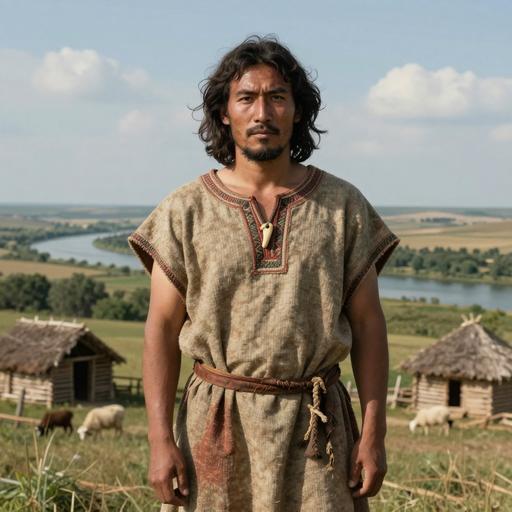
Portrait reconstruction of I20086
Ancient Individual

A man buried in Moldova in the Late Bronze Age era

I20086
928 BCE - 827 BCE
Male
Late Bronze Age Moldova
Moldova
Scroll to begin
Chapter I

Identity

The biological and cultural markers that define this ancient individual

Sample ID

I20086

Date Range

928 BCE - 827 BCE

Biological Sex

Male

mtDNA Haplogroup

T2b

Y-DNA Haplogroup

Not available

Cultural Period

Late Bronze Age Moldova

Chapter II

Place

Where this individual was discovered

Country Moldova
Locality Transnistria (Slobozia district. Hlinaia. left bank of the Lower Dniester)
Coordinates 46.6467, 29.8086
Chapter III

Time

When this individual lived in the broader context of human history

I20086 928 BCE - 827 BCE
Chapter IV

Story

The narrative of this ancient life

The Late Bronze Age in the region of what is now Moldova was a dynamic period characterized by significant cultural, technological, and societal developments. This era, broadly covering the second millennium BCE, saw the rise of complex societies and the spread of Indo-European cultures across Eastern Europe, including the Moldovan territory.

Geographic and Environmental Context

Moldova during the Late Bronze Age was located at a crossroads between the Eurasian steppes and the forested areas of Central Europe. This position made it a key area for cultural transmission and interaction. The landscape was primarily composed of rolling plains and river valleys, with the Dniester River playing a crucial role in trade and communication. The climate was temperate, supporting a mixed economy based on agriculture, animal husbandry, and trade.

Cultural Characteristics

The Late Bronze Age in Moldova is often associated with the Noua culture and its interaction with neighboring cultures like the Sabatinovka and Piliny cultures. This period saw the continuation and expansion of Indo-European languages and traditions, reflected in material culture, burial practices, and social organization.

Material Culture

  1. Settlement Patterns: Communities were typically small and semi-permanent, consisting of clusters of huts or pit-houses. Larger settlements were fortified, indicating the presence of social hierarchies and the need for defense.

  2. Agriculture and Economy: Agriculture was central, with evidence of cereal cultivation and domesticated animals such as cattle, sheep, and goats. The presence of pottery with grain impressions suggests the use and storage of agricultural produce.

  3. Craftsmanship: The Late Bronze Age was marked by significant advancements in metallurgy. The production of bronze tools, weapons, and ornaments increased, indicating both local production and trade with distant regions. The spread of socketed axes and other bronze artifacts demonstrates technological diffusion.

Burial Practices and Religion

Burial practices during this time often involved kurgans (mound burials) and flat graves, with varying richness of grave goods suggesting social stratification. The dead were usually interred with personal ornaments, weapons, and pottery, reflecting beliefs in an afterlife and the importance of status.

The religious practices are somewhat speculative due to the absence of written records; however, artifacts and burial rites suggest a pantheon of Indo-European deities and a possible focus on ancestor worship. The presence of ritualistic items like animal bones in burials hints at sacrificial practices.

Social Structure and Politics

The social organization during the Late Bronze Age was likely tribal, with clans led by chieftains or warrior elites. The evidence of fortified settlements points to organized defense mechanisms and a hierarchy within communities.

Trading networks were crucial, linking Moldova with the Black Sea regions, the Balkans, and Central Europe. This period saw the exchange of goods such as metals, pottery, textiles, and possibly ideas and cultural practices.

Legacy and Influence

The Indo-European cultures of the Late Bronze Age laid the groundwork for the subsequent Iron Age developments in Moldova. The continuity of certain cultural and linguistic traits provides valuable insights into the ethnogenesis of later historical populations in the region, including the Thracians and later Dacians.

Overall, the Late Bronze Age in Moldova was a vibrant period marked by cultural integration, technological innovation, and dynamic social structures, all of which played a vital role in the shaping of Eastern European prehistory.

Chapter V

Genetics

The genetic ancestry of this ancient individual

Ancient Genetic Admixture

This analysis compares the DNA profile of I20086 with ancient reference populations, showing the genetic composition in terms of prehistoric ancestral groups.

Western Steppe Pastoralists 36.6%
Ancient Asians 22.7%
European Hunter-Gatherers 21.8%
Neolithic Farmers 14.5%
Ancient Native Americans 4.4%

Modern Genetic Admixture

This analysis compares the DNA profile with present-day reference populations, showing what percentage of genetic makeup resembles modern populations from different regions.

Europe 54.4%
Eastern European 34.6%
Northwestern European 19.9%
English 11.7%
Finnish 8.2%
Asia 43.5%
Central Asian, Northern Indian & Pakistani 22.3%
Pakistan 10.5%
Central Asian 9.3%
Indian 2.5%
Northern West Asian 11.4%
Caucasian 11.4%
Northern Asian 7.6%
Siberian 7.6%
Chinese & Southeast Asian 1.3%
Tibetan 1.3%
Japanese & Korean 0.9%
Japanese 0.9%
America 1.2%
America 1.2%
Native American 1.2%
Oceania 0.7%
Melanesian 0.7%
Papuan 0.7%

Closest Modern Populations

These are the modern populations showing the closest statistical alignment to A man buried in Moldova in the Late Bronze Age era, ranked by genetic distance. Lower distance values indicate closer statistical similarity.

1
Tatar Kazan
3.0748
2
Tatar Mishar
4.3806
3
Besermyan
5.5211
4
Komi A
6.1850
5
Tatar Lipka
6.7499
6
Udmurt
7.4339
7
Chuvash
7.5339
8
Russian Leshukonsky
7.7261
9
Saami Kola
8.2904
10
Mordovian
9.0296
Chapter VI

Context

Other ancient individuals connected to this sample

Sources

References

Scientific publications and genetic data

Scientific Publication

The genetic history of the Southern Arc: A bridge between West Asia and Europe | Science

Authors Lazaridis I, Alpaslan-Roodenberg S, Acar A
Abstract

The period from the Copper Age to the Bronze Age marked major social and economic transformations in West Eurasia. To better understand these changes and their genetic impacts, we generated genome-wide data from 727 individuals who lived between 5000 and 1000 BCE in southeastern Europe and southwestern Asia.

G25 Coordinates

The G25 coordinates for sample I20086 can be used for detailed admixture analysis in our G25 Studio tool.

I20086,0.10906166,0.02705116,0.0498575,0.03513348,-0.00831422,0.00577372,0.0073241,0.00769344,-0.01019034,-0.01725042,0.00963486,-0.00236694,0.00623854,-0.01826062,-0.00783604,-0.00980804,-0.00505458,-0.0034106,-0.01183784,-0.00573958,0.00334654,0.00528408,-0.00845498,0.00032482,-0.00410951
Analyze in G25 Studio
Use code for 40% off Expires Feb 27