Menu
Store
Blog
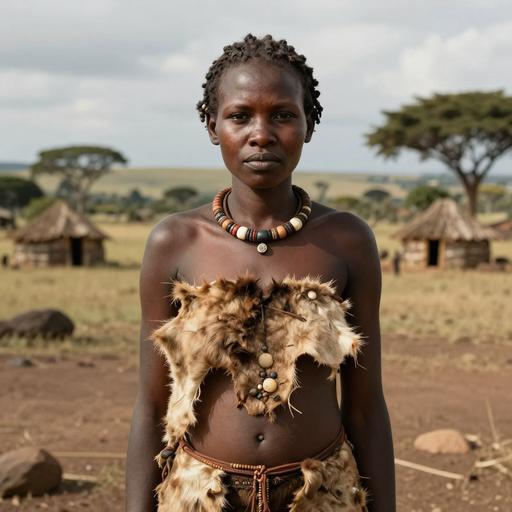
Portrait reconstruction of I2967
Ancient Individual

A woman buried in Malawi in the Bronze Age era

I2967
6222 BCE - 5925 BCE
Female
Hora Late Stone Age 8500BP in Malawi
Malawi
Scroll to begin
Chapter I

Identity

The biological and cultural markers that define this ancient individual

Sample ID

I2967

Date Range

6222 BCE - 5925 BCE

Biological Sex

Female

mtDNA Haplogroup

L0a2

Cultural Period

Hora Late Stone Age 8500BP in Malawi

Chapter II

Place

Where this individual was discovered

Country Malawi
Locality Mzimba District. Hora
Chapter III

Time

When this individual lived in the broader context of human history

I2967 6222 BCE - 5925 BCE
Chapter IV

Story

The narrative of this ancient life

The Hora Late Stone Age period, around 8500 BP (Before Present), marks a significant phase in the prehistory of Malawi and broader regions of sub-Saharan Africa. This era is situated within the latter part of the Stone Age, a time characterized by advanced stone tool technologies and the gradual shift towards more sophisticated forms of gathering and hunting societies.

Environmental and Climatic Context

During this period, the world was emerging from the last Ice Age, and for Malawi and other parts of sub-Saharan Africa, this meant a relatively stable and warmer climate compared to the frigid conditions of the preceding millennia. This climatic stability influenced the environmental landscape, leading to the expansion of savannahs, woodlands, and water bodies. Such conditions provided a more hospitable environment for human habitation, offering abundant resources such as game, plant materials, and raw materials for tool-making.

Technological Developments

The Hora Late Stone Age is marked by advancements in lithic technologies, derived from earlier Middle Stone Age methods but refined over time. Toolkits from this era typically include microliths—small, often retouched stone blades that could be hafted or used independently. These tools suggest an adaptation to the varied environments, used for hunting, processing plant materials, and possibly fishing, as evidenced by archaeological finds from sites across the region.

Subsistence Strategies

Communities of this era were predominantly foragers, employing a mixed strategy of hunting and gathering. The savanna and woodland ecosystems would have supported a diverse range of fauna, from smaller game like antelope to elephants, as well as a rich variety of edible plants. The presence of microliths and grinding stones in the archaeological record indicates a reliance on both hunting and plant processing, pointing to a broad-spectrum subsistence strategy.

Social and Cultural Aspects

The social structures of the Hora Late Stone Age people, while not well-documented due to the scarcity of direct evidence, can be inferred from ethnographic analogies with more recent hunter-gatherer societies. These groups likely operated in small, mobile bands, with social organization based on kinship ties. Mobility would have been a key factor in their survival strategy, allowing groups to follow seasonal patterns of resource availability.

Cultural aspects are primarily understood through material culture. Artifacts such as ostrich eggshell beads and other personal adornments suggest a level of social complexity and the importance of identity and status within these communities. Such items could also have played a role in trade and exchange networks, fostering connections between different groups across the region.

Symbolism and Art

There is limited direct evidence of symbolic behavior from this period in Malawi itself, but parallels can be drawn with contemporaneous cultures elsewhere in Africa. It is likely that these communities engaged in symbolic practices, potentially including rock art, body painting, or other forms of material expression. Unfortunately, organic materials that might have borne such symbolism rarely survive the archaeological record, necessitating cautious interpretation.

Conclusion

The Hora Late Stone Age around 8500 BP in Malawi represents a dynamic period of adaptation and innovation. As the climate became more favorable, human groups effectively exploited the resources available, using advanced stone tools and versatile subsistence strategies. While direct evidence of their beliefs and social organization remains elusive, the artifact record paints a picture of a culturally rich and resourceful society, laying down foundations for future developments in Africa's human story.

Chapter V

Genetics

The genetic ancestry of this ancient individual

Ancient Genetic Admixture

This analysis compares the DNA profile of I2967 with ancient reference populations, showing the genetic composition in terms of prehistoric ancestral groups.

Ancient Africans 91.7%
Neolithic Farmers 5.9%
Ancient Oceanians 2.4%

Modern Genetic Admixture

This analysis compares the DNA profile with present-day reference populations, showing what percentage of genetic makeup resembles modern populations from different regions.

Africa 99.2%
African Hunter-Gatherer 64.2%
West African 18.9%
Ghanaian, Liberian, Sierra Leonean 9.8%
Senegambian & Guinean 9.1%
Northern East African 16.1%
Ethiopian 11.0%
Eastern African 5.1%
Asia 0.8%
Chinese & Southeast Asian 0.8%
Tibetan 0.8%

Closest Modern Populations

These are the modern populations showing the closest statistical alignment to A woman buried in Malawi in the Bronze Age era, ranked by genetic distance. Lower distance values indicate closer statistical similarity.

1
Sudanese
12.6267
2
Hadza
12.7606
3
Ethiopian Anuak
12.7903
4
Dinka
13.1513
5
Ethiopian Gumuz
13.5433
6
Ethiopian Mursi
14.4447
7
Chad Dangaleat
15.1263
8
Sudan Nuba Koalib
15.3068
9
Chad Maba
15.8614
10
Luo
15.8630
Chapter VI

Context

Other ancient individuals connected to this sample

Sources

References

Scientific publications and genetic data

Scientific Publication

Reconstructing Prehistoric African Population Structure

Authors Skoglund P, Thompson JC, Prendergast ME
Abstract

We assembled genome-wide data from 16 prehistoric Africans. We show that the anciently divergent lineage that comprises the primary ancestry of the southern African San had a wider distribution in the past, contributing approximately two-thirds of the ancestry of Malawi hunter-gatherers ∼8,100-2,500 years ago and approximately one-third of the ancestry of Tanzanian hunter-gatherers ∼1,400 years ago. We document how the spread of farmers from western Africa involved complete replacement of local hunter-gatherers in some regions, and we track the spread of herders by showing that the population of a ∼3,100-year-old pastoralist from Tanzania contributed ancestry to people from northeastern to southern Africa, including a ∼1,200-year-old southern African pastoralist. The deepest diversifications of African lineages were complex, involving either repeated gene flow among geographically disparate groups or a lineage more deeply diverging than that of the San contributing more to some western African populations than to others. We finally leverage ancient genomes to document episodes of natural selection in southern African populations. PAPERCLIP.

G25 Coordinates

The G25 coordinates for sample I2967 can be used for detailed admixture analysis in our G25 Studio tool.

I2967,-0.58683682,0.05406584,0.0029069,0.00439766,-0.00187392,-0.00457042,0.07249406,-0.05355126,0.0633154,-0.06455434,-0.01393988,0.06782474,0.00017074,-0.0002675,0.00829926,-0.01109966,0.01844964,-0.02137712,0.01636578,-0.01686412,0.00137358,0.00233254,-0.00340022,-0.00152886,0.00354453
Analyze in G25 Studio
Use code for 40% off Expires Feb 27