Menu
Store
Blog
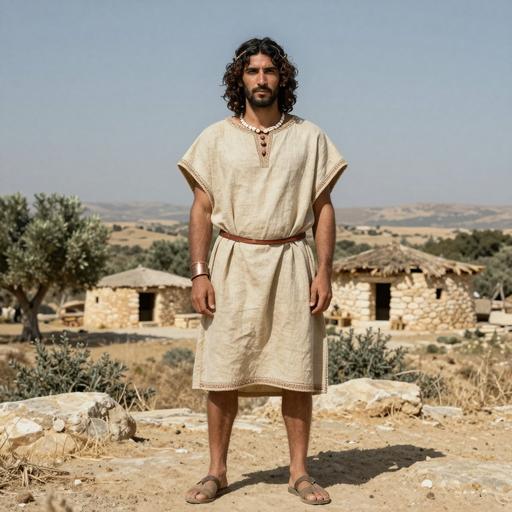
Portrait reconstruction of I4208
Ancient Individual

A man buried in Cyprus in the Copper Age era

I4208
3500 BCE - 3400 BCE
Male
Chalcolithic Cyprus
Cyprus
Scroll to begin
Chapter I

Identity

The biological and cultural markers that define this ancient individual

Sample ID

I4208

Date Range

3500 BCE - 3400 BCE

Biological Sex

Male

mtDNA Haplogroup

K1

Y-DNA Haplogroup

Not available

Cultural Period

Chalcolithic Cyprus

Chapter II

Place

Where this individual was discovered

Country Cyprus
Locality Kissonerga-Mylouthkia
Coordinates 34.8300, 32.4000
Chapter III

Time

When this individual lived in the broader context of human history

I4208 3500 BCE - 3400 BCE
Chapter IV

Story

The narrative of this ancient life

The Chalcolithic period in Cyprus, spanning roughly from 3900 to 2500 BCE, marks a significant transition in the island's prehistory from the Neolithic era toward the Bronze Age. This era, characterized by the use of both stone and metal (primarily copper), showcases early developments in metallurgy and sets the stage for the more technologically advanced societies that follow.

Geography and Environment:

Cyprus, located in the eastern Mediterranean, benefited from its strategic geographical position, which facilitated interactions with neighboring regions such as the Levant, Anatolia, and Egypt. The island’s natural resources, including abundant copper deposits, fertile land, and access to the sea, were crucial in shaping the Chalcolithic culture. The climate during this period was relatively stable, supporting agriculture and the development of settlements.

Settlements and Architecture:

During the Chalcolithic period, Cyprus saw the establishment of numerous settlements, mainly in lowland areas and close to resources such as water and arable land. These settlements varied in size from small hamlets to larger village complexes, with significant sites including Erimi, Kissonerga-Mosphilia, and Lemba. The architecture was primarily made up of circular or oval structures, constructed using mudbrick or stone foundations with superstructures of wood.

Economy and Subsistence:

The economy of Chalcolithic Cyprus was predominantly agricultural, with the cultivation of cereals, legumes, and other crops. The domestication of animals such as sheep, goats, pigs, and cattle played a vital role in subsistence. The presence of the sea provided opportunities for fishing and trade. The introduction of metalworking, particularly copper smelting, led to increased economic activity and trade both within the island and with external cultures.

Material Culture:

The Chalcolithic is marked by significant advancements in material culture. The use of copper begins to appear in the archaeological record, with evidence of tools, ornaments, and small artifacts. Pottery became more sophisticated, with painted ware and intricate designs reflecting social and cultural developments. Stone tools, although gradually declining in importance due to the advent of metallurgy, continued to be utilized, particularly for agricultural implements.

Social Structure:

The social organization of Chalcolithic Cyprus likely revolved around small, kin-based communities. The distribution of goods and the presence of prestige items, such as ivory and exotically sourced materials, suggest emerging social stratification, with certain individuals or groups possibly rising to prominence. The burials from this period, often accompanied by grave goods, further indicate differentiated social status.

Religion and Beliefs:

Religious and ritualistic practices in Chalcolithic Cyprus are evidenced by the presence of figurines, altars, and sanctuaries. Female figurines, often interpreted as fertility symbols or goddess representations, are particularly notable, signifying the probable centrality of fertility and agricultural cycles in local belief systems. The practice of burying the dead with offerings suggests a belief in an afterlife or spiritual continuation.

Interaction and Trade:

Cyprus's strategic location in the Mediterranean facilitated interaction and trade with neighboring regions. This is evidenced by the presence of Mycenaean and Minoan artifacts on the island and Cypriot goods found abroad. Trade likely included commodities such as copper, pottery, and agricultural products, which flowed to other emerging civilizations.

Technological Development:

The Chalcolithic period witnessed essential technological developments, primarily in metallurgy. The ability to work with copper symbolized a significant technological leap, offering new forms of tools and weapons that impacted society and economy. This innovation laid the groundwork for future advancements in the Bronze Age.

Challenges and Adaptations:

Chalcolithic communities had to adapt to various challenges, including environmental changes and resource management. The need for efficient land use and resource allocation led to innovations in agricultural techniques and settlement organization. The island's inhabitants displayed resilience in adapting their economic practices and social structures to navigate these challenges.

In conclusion, the Chalcolithic period in Cyprus was a dynamic era of transition and development. It was marked by significant innovations in metallurgy, agriculture, and trade, as well as evolving social and religious institutions. As a pivotal period in Cypriot prehistory, it set the stage for the subsequent complexities of the Bronze Age, leaving a lasting legacy on the island’s cultural and historical trajectory.

Chapter V

Genetics

The genetic ancestry of this ancient individual

Ancient Genetic Admixture

This analysis compares the DNA profile of I4208 with ancient reference populations, showing the genetic composition in terms of prehistoric ancestral groups.

Neolithic Farmers 91.4%
Western Steppe Pastoralists 8.6%

Modern Genetic Admixture

This analysis compares the DNA profile with present-day reference populations, showing what percentage of genetic makeup resembles modern populations from different regions.

Europe 72.9%
Southern European 72.9%
Italian 47.9%
Sardinian 25.0%
Asia 27.1%
Arab, Egyptian & Levantine 18.1%
Levantine 13.2%
Arabian 4.9%
Northern West Asian 9.0%
Cypriot 9.0%

Closest Modern Populations

These are the modern populations showing the closest statistical alignment to A man buried in Cyprus in the Copper Age era, ranked by genetic distance. Lower distance values indicate closer statistical similarity.

1
Turkish Sabbatean
5.3627
2
Algerian Jew
5.4965
3
Italian Jew
5.5875
4
Tunisian Jew
5.9175
5
Romaniote Jew
5.9187
6
Moroccan Jew
5.9789
7
Belmonte Jew
6.0629
8
Libyan Jew
6.0946
9
Ashkenazi Germany
6.1231
10
Turkish Jew
6.1325
Chapter VI

Context

Other ancient individuals connected to this sample

Sources

References

Scientific publications and genetic data

Scientific Publication

The genetic history of the Southern Arc: A bridge between West Asia and Europe | Science

Authors Lazaridis I, Alpaslan-Roodenberg S, Acar A
Abstract

The period from the Copper Age to the Bronze Age marked major social and economic transformations in West Eurasia. To better understand these changes and their genetic impacts, we generated genome-wide data from 727 individuals who lived between 5000 and 1000 BCE in southeastern Europe and southwestern Asia.

G25 Coordinates

The G25 coordinates for sample I4208 can be used for detailed admixture analysis in our G25 Studio tool.

I4208,0.09087726,0.1539906,-0.01229522,-0.07465264,0.02836742,-0.0351225,-0.0047971,0.00065386,0.04257648,0.04188738,0.00317418,-3.168E-05,0.00330538,-0.0071197,-0.00900312,0.0097877,-0.00110786,0.00186342,0.00401376,0.00385302,0.0069614,0.00976104,-0.01218518,-0.01216388,-0.00012686
Analyze in G25 Studio
Use code for 40% off Expires Feb 27