Menu
Store
Blog
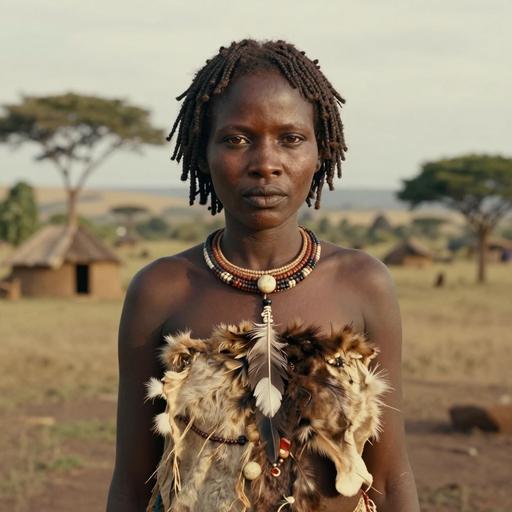
Portrait reconstruction of I4422
Ancient Individual

A woman buried in Malawi in the Bronze Age era

I4422
3351 BCE - 3032 BCE
Female
Chencherere Late Stone Age 5200BP in Malawi
Malawi
Scroll to begin
Chapter I

Identity

The biological and cultural markers that define this ancient individual

Sample ID

I4422

Date Range

3351 BCE - 3032 BCE

Biological Sex

Female

mtDNA Haplogroup

L0k1

Cultural Period

Chencherere Late Stone Age 5200BP in Malawi

Chapter II

Place

Where this individual was discovered

Country Malawi
Locality Chencherere
Chapter III

Time

When this individual lived in the broader context of human history

I4422 3351 BCE - 3032 BCE
Chapter IV

Story

The narrative of this ancient life

The Chencherere Late Stone Age (LSA) in Malawi, around 5200 BP (Before Present), represents a fascinating period of transition and adaptation. This era is characterized by significant changes in tool technology, subsistence strategies, and potentially the initial movements of populations that would later be associated with the Bantu expansions.

Cultural and Technological Aspects

  1. Tool Technology:

    • The tools from this period primarily indicate a microlithic industry, which involves the production of small, often geometric, stone implements. These tools were likely used in composite tools, such as arrows or spears, suggesting a reliance on hunting.
    • Tools were predominantly made from locally available quartz, which was shaped into scrapers, blades, and points using pressure flaking and other refined knapping techniques.
  2. Subsistence Strategies:

    • The inhabitants of the Chencherere LSA primarily relied on a mix of foraging, hunting, and gathering. Faunal remains from archaeological sites indicate they hunted a variety of game, possibly including small to medium-sized ungulates.
    • Evidence suggests the exploitation of local plant resources, such as tubers and wild fruits, indicating a broad-spectrum subsistence strategy.
  3. Settlement Patterns:

    • Sites from this period are often found in sheltered environments, such as rock shelters and cave locales, which provided natural protection from the elements.
    • The choice of settlement locations often reflects strategic advantages, such as proximity to water sources and elevated positions for monitoring game movement.

Societal and Cultural Developments

  1. Social Organization:

    • Social structures were likely based on small, mobile bands that required cooperation for hunting and gathering. Such social units were fluid and adaptive, allowing for flexibility in resource-scarce environments.
    • Evidence of trade networks is suggested by the presence of non-local materials, indicating interactions with distant groups.
  2. Artistic and Symbolic Expression:

    • Rock art, though not extensively documented in the Chencherere LSA specifically, is a common feature of southern African Later Stone Age cultures, suggesting possible spiritual or ritualistic activities.
  3. Bantu Connection:

    • While the major Bantu migrations are generally associated with later periods, the Chencherere LSA could represent a precursor phase with initial population movements and cultural exchanges that set the stage for subsequent Bantu expansions.
    • Genetic and linguistic analyses suggest there may have been interactions between these Late Stone Age populations and incoming Bantu-speaking groups.

Environmental Context

  1. Climate and Ecology:

    • The environment during the Chencherere LSA was likely variable, with ecological zones ranging from woodlands to savannas. Climatic conditions may have included marked seasonality, influencing resource availability.
    • Such environmental diversity required adaptive strategies for survival, including seasonal mobility and resource diversification.
  2. Impact on the Landscape:

    • There is limited evidence of significant landscape alteration by these hunter-gatherers, though their activities would have naturally influenced local ecologies through hunting practices and small-scale vegetation clearances for camps.

Legacy and Impact

While the Chencherere Late Stone Age culture of Malawi at 5200 BP represents a relatively localized cultural complex, it embodies the broader transitions occurring across southern and eastern Africa as communities adapted to new ecological niches and social dynamics. This era laid essential groundwork for the later and more pronounced cultural transformations associated with the spread of Bantu-speaking peoples, making it a pivotal phase in the region's prehistoric timeline.

Chapter V

Context

Other ancient individuals connected to this sample

Sources

References

Scientific publications and genetic data

Scientific Publication

Reconstructing Prehistoric African Population Structure

Authors Skoglund P, Thompson JC, Prendergast ME
Abstract

We assembled genome-wide data from 16 prehistoric Africans. We show that the anciently divergent lineage that comprises the primary ancestry of the southern African San had a wider distribution in the past, contributing approximately two-thirds of the ancestry of Malawi hunter-gatherers ∼8,100-2,500 years ago and approximately one-third of the ancestry of Tanzanian hunter-gatherers ∼1,400 years ago. We document how the spread of farmers from western Africa involved complete replacement of local hunter-gatherers in some regions, and we track the spread of herders by showing that the population of a ∼3,100-year-old pastoralist from Tanzania contributed ancestry to people from northeastern to southern Africa, including a ∼1,200-year-old southern African pastoralist. The deepest diversifications of African lineages were complex, involving either repeated gene flow among geographically disparate groups or a lineage more deeply diverging than that of the San contributing more to some western African populations than to others. We finally leverage ancient genomes to document episodes of natural selection in southern African populations. PAPERCLIP.

Use code for 40% off Expires Feb 27