Menu
Store
Blog
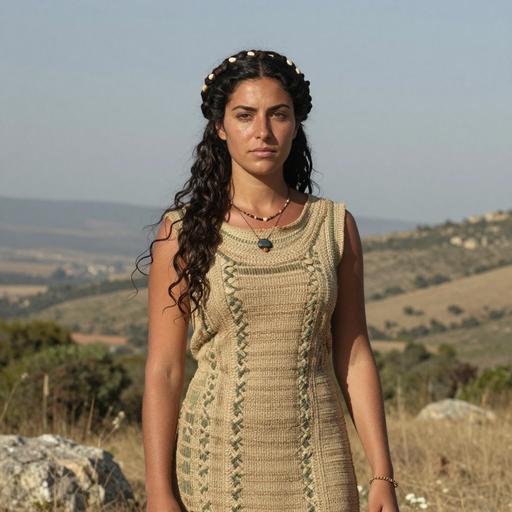
Portrait reconstruction of I4936
Ancient Individual

A woman buried in Italy in the Bronze Age era

I4936
2500 BCE - 1900 BCE
Female
Bell Beaker Culture Sicily, Italy
Italy
Scroll to begin
Chapter I

Identity

The biological and cultural markers that define this ancient individual

Sample ID

I4936

Date Range

2500 BCE - 1900 BCE

Biological Sex

Female

mtDNA Haplogroup

K1a-a4

Cultural Period

Bell Beaker Culture Sicily, Italy

Chapter II

Place

Where this individual was discovered

Country Italy
Locality Sicily. Salaputra. Partanna. Pergole 2
Coordinates 37.7350, 12.9619
Chapter III

Time

When this individual lived in the broader context of human history

I4936 2500 BCE - 1900 BCE
Chapter IV

Story

The narrative of this ancient life

The Bell Beaker Culture, which flourished approximately between 2800 and 1800 BCE, represents a fascinating era in the European Bronze Age, characterized by its distinctive pottery and widespread cultural influence across the continent. In Sicily, Italy, the Bell Beaker Culture integrates the local Neolithic traditions with new elements introduced by migrating or trading populations, resulting in a unique cultural synthesis.

Geographic Context

Sicily, the largest island in the Mediterranean, served as a crucial junction for cultural and commercial exchanges between Europe, Africa, and the Near East. During the Bell Beaker period, Sicily's strategic position facilitated the introduction of the Beaker phenomenon through maritime and overland routes. The presence of the Bell Beaker Culture in Sicily indicates the island's role in the broader network of trade and cultural exchange that characterized the Bronze Age.

Artifacts and Material Culture

The Bell Beaker Culture is named after its characteristic bell-shaped pottery, which was used across Europe for drinking and potentially ritual purposes. In Sicily, this pottery is often found alongside traditional island ceramics, reflecting a blend of indigenous and introduced styles. The beakers are usually made from fine clay and are adorned with intricate geometric designs achieved through techniques such as cord impressions or incised patterns.

In addition to pottery, the Bell Beaker assemblage in Sicily includes other artifacts such as lithic tools, metal objects, and personal ornaments. The introduction of metallurgy, most notably copper and later bronze, marked a significant technological advancement in the region, aligning Sicily with broader European trends.

Settlement Patterns and Architecture

Archaeological evidence suggests that Bell Beaker communities in Sicily were predominantly rural, with settlements often situated in defensible locations such as hilltops. These settlements were typically small, comprising a few structures likely used for habitation and storage. The buildings were constructed using locally available materials like wood, stone, and clay.

Some sites indicate the presence of communal structures, possibly serving social or ritual functions. These may include megalithic tombs or other forms of monumental architecture, echoing similar practices across the Bell Beaker sphere.

Economy and Subsistence

The economy of Bell Beaker Sicily was primarily based on agriculture, pastoralism, and fishing, supplemented by hunting and gathering. The fertile soils and favorable climate allowed for the cultivation of cereals, legumes, and pulses, which were staples of the diet. Animal husbandry focused on cattle, sheep, goat, and pigs, providing meat, milk, and other byproducts.

Trade played a significant role in the economy, with Sicily acting as an exchange hub for goods such as obsidian, salt, and metals. The introduction of new materials and technologies, including metallurgy, enhanced local craft specialization and economic diversification.

Social Organization and Beliefs

The Bell Beaker Culture in Sicily, like elsewhere in Europe, exhibits elements of social hierarchy, possibly indicated by the differential distribution of grave goods in burials. While there is limited evidence of centralized political structures, some degree of social stratification is likely.

The shared material culture, particularly the distinctive beaker pottery, may have played a role in forging group identity and cohesion. It is suggested that Bell Beaker societies participated in a network of shared beliefs and practices, possibly involving rites of passage or drinking rituals, as evidenced by the beakers.

Interactions and Legacy

The Sicilian Bell Beaker communities interacted with neighboring cultures through trade, migration, and communication. This period marks the island's increasing integration into the Mediterranean cultural sphere, culminating in subsequent influences from Aegean and Mycenaean civilizations.

The legacy of the Bell Beaker Culture in Sicily is evident in the continued development of metallurgy, pottery styles, and social organization. It laid the foundation for subsequent cultural innovations and interactions, bridging the transition from the late Neolithic to the early Bronze Age in the region.

In conclusion, the Bell Beaker Culture in Sicily reflects a dynamic period of cultural exchange and adaptation, characterized by the introduction of new technologies, artistic expressions, and social practices. As part of the broader Bell Beaker phenomenon, it highlights the interconnectedness of ancient Europe and the complex web of interactions shaping the prehistoric Mediterranean world.

Chapter V

Genetics

The genetic ancestry of this ancient individual

Ancient Genetic Admixture

This analysis compares the DNA profile of I4936 with ancient reference populations, showing the genetic composition in terms of prehistoric ancestral groups.

Neolithic Farmers 63.2%
European Hunter-Gatherers 20.0%
Western Steppe Pastoralists 16.8%

Modern Genetic Admixture

This analysis compares the DNA profile with present-day reference populations, showing what percentage of genetic makeup resembles modern populations from different regions.

Europe 92.2%
Southern European 75.5%
Iberian 35.1%
Sardinian 23.7%
Italian 16.8%
Northwestern European 16.7%
Northwestern European 12.4%
English 4.3%
Asia 7.8%
Northern West Asian 4.1%
Cypriot 4.1%
Chinese & Southeast Asian 3.7%
Chinese 3.7%

Closest Modern Populations

These are the modern populations showing the closest statistical alignment to A woman buried in Italy in the Bronze Age era, ranked by genetic distance. Lower distance values indicate closer statistical similarity.

1
French Corsica
2.2974
2
Italian Lombardy
3.4738
3
Italian Bergamo
3.6964
4
Spanish Menorca
3.8416
5
Spanish Murcia
3.9792
6
Italian Emilia
4.0197
7
Spanish Eivissa
4.0479
8
Spanish Castilla La Mancha
4.0604
9
Italian Piedmont
4.0693
10
Spanish Andalucia
4.0722
Chapter VI

Context

Other ancient individuals connected to this sample

Sources

References

Scientific publications and genetic data

Scientific Publication

The spread of steppe and Iranian-related ancestry in the islands of the western Mediterranean

Authors Fernandes DM, Mittnik A, Olalde I
Abstract

Steppe-pastoralist-related ancestry reached Central Europe by at least 2500 BC, whereas Iranian farmer-related ancestry was present in Aegean Europe by at least 1900 BC. However, the spread of these ancestries into the western Mediterranean, where they have contributed to many populations that live today, remains poorly understood. Here, we generated genome-wide ancient-DNA data from the Balearic Islands, Sicily and Sardinia, increasing the number of individuals with reported data from 5 to 66. The oldest individual from the Balearic Islands (~2400 BC) carried ancestry from steppe pastoralists that probably derived from west-to-east migration from Iberia, although two later Balearic individuals had less ancestry from steppe pastoralists. In Sicily, steppe pastoralist ancestry arrived by ~2200 BC, in part from Iberia; Iranian-related ancestry arrived by the mid-second millennium BC, contemporary to its previously documented spread to the Aegean; and there was large-scale population replacement after the Bronze Age. In Sardinia, nearly all ancestry derived from the island's early farmers until the first millennium BC, with the exception of an outlier from the third millennium BC, who had primarily North African ancestry and who-along with an approximately contemporary Iberian-documents widespread Africa-to-Europe gene flow in the Chalcolithic. Major immigration into Sardinia began in the first millennium BC and, at present, no more than 56-62% of Sardinian ancestry is from its first farmers. This value is lower than previous estimates, highlighting that Sardinia, similar to every other region in Europe, has been a stage for major movement and mixtures of people.

G25 Coordinates

The G25 coordinates for sample I4936 can be used for detailed admixture analysis in our G25 Studio tool.

I4936,0.11890622,0.14791928,0.02118514,-0.02634932,0.04304216,-0.01225418,-0.0018415,0.00410484,0.02368988,0.04561998,-0.00311528,0.01028392,-0.01963518,-0.01052792,-0.00433692,0.00289622,0.00556802,0.0012742,0.00016342,-0.00434596,-0.00031506,0.00379944,-0.00729662,-0.00891738,0.00417347
Analyze in G25 Studio
Use code for 40% off Expires Feb 26