Menu
Store
Blog
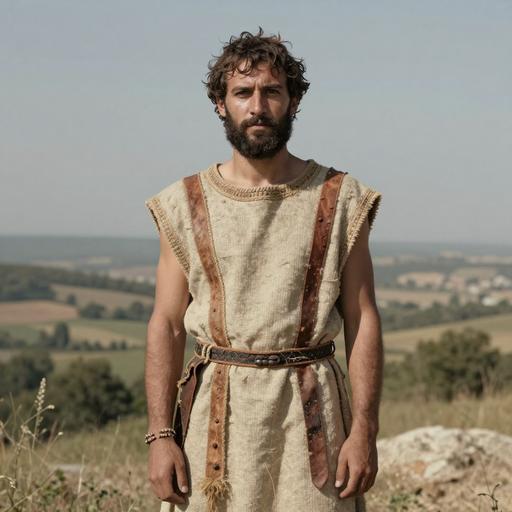
Portrait reconstruction of I5243
Ancient Individual

A man buried in Serbia in the Middle Bronze Age era

I5243
2458 BCE - 2238 BCE
Male
Middle Bronze Age Iron Gates, Serbia
Serbia
Scroll to begin
Chapter I

Identity

The biological and cultural markers that define this ancient individual

Sample ID

I5243

Date Range

2458 BCE - 2238 BCE

Biological Sex

Male

mtDNA Haplogroup

I3a

Y-DNA Haplogroup

Not available

Cultural Period

Middle Bronze Age Iron Gates, Serbia

Chapter II

Place

Where this individual was discovered

Country Serbia
Locality Padina
Coordinates 44.5959, 22.0106
Chapter III

Time

When this individual lived in the broader context of human history

I5243 2458 BCE - 2238 BCE
Chapter IV

Story

The narrative of this ancient life

The Middle Bronze Age Iron Gates culture, situated in what is now modern-day Serbia, is a fascinating period that reflects a complex tapestry of social, technological, and cultural changes influenced by broader Indo-European migrations and interactions. This era, approximately spanning from 1800 to 1300 BCE, is characterized by significant developments in metallurgy, settlement organization, subsistence strategies, and cultural exchanges.

Geographical Context

The Iron Gates is a gorge on the Danube River, forming a natural boundary between the Carpathian and Balkan Mountains. This strategic location served as a crucial corridor for migration and trade, linking Central and Southeast Europe. The region's fertile landscape, rich in natural resources and arable land, supported diverse communities and facilitated cultural interactions.

Sociocultural Dynamics

During the Middle Bronze Age, the Iron Gates region saw the convergence of local traditions and influences from the wider Indo-European cultural sphere. The communities were likely organized into tribal structures with emerging social hierarchies, as evidenced by differentiated burial practices and the presence of elite grave goods.

Settlements and Architecture

Settlements during this period were typically fortified, reflecting the need for defense and control over resources. These were often located on elevated terrains or river terraces, providing strategic oversight of the surrounding areas. Architectural remains suggest a transition from simple wattle-and-daub structures to more complex timber-framed buildings, indicative of increasing sedentism and social organization.

Economic and Subsistence Strategies

The economy was primarily agrarian, with communities engaging in mixed farming, including crop cultivation and animal husbandry. The proximity to the Danube River also enabled significant reliance on fishing. The region's mineral wealth, particularly in copper and tin ores, fueled advancements in metallurgy. The production of bronze tools and weapons not only improved agricultural productivity but also enhanced trade and warfare capabilities.

Metallurgical Developments

The Middle Bronze Age witnessed notable metallurgical advancements, with the Iron Gates region emerging as an important center for metalworking. The discovery of bronze artifacts, including swords, daggers, and ornamental items, highlights technological sophistication and widespread trade networks. Metalworking techniques such as casting and forging were refined during this period, facilitating the production of durable and intricate objects.

Burial Practices and Beliefs

Burial practices offer valuable insights into the spiritual and social dimensions of Iron Gates communities. Collective burial mounds, or tumuli, containing rich assemblages of grave goods suggest beliefs in an afterlife and the significance of status and wealth in both life and death. These practices underscore the influence of emerging Indo-European cultural and religious paradigms.

Artistic and Cultural Expression

Art and decoration during the Middle Bronze Age are represented by pottery, metalwork, and personal adornments. Pottery from this era is often elaborately decorated with geometric patterns and motifs, showcasing both local influences and cross-cultural exchanges. Additionally, the region may have served as a cultural crossroads for the transfer of artistic styles and techniques, reflecting the dynamic interactions between different Indo-European groups.

Interaction and Influence

The strategic location of the Iron Gates region facilitated extensive interactions with neighboring cultures, including the Carpathian Basin, the Balkans, and the Aegean. These interactions were driven by trade, migration, and possibly conflict, contributing to a vibrant exchange of goods, ideas, and technologies.

Conclusion

The Middle Bronze Age Iron Gates culture in Serbia represents a significant era of transition and development. It illustrates the emergence of complex social structures, technological advancements, and the integration of Indo-European cultural elements. The interplay between local traditions and external influences shaped a dynamic and resilient community that played a crucial role in the broader narrative of Bronze Age Europe. As archaeologists continue to explore this region, new discoveries are likely to further illuminate the intricate web of cultural interactions and developments characteristic of this fascinating period.

Chapter V

Genetics

The genetic ancestry of this ancient individual

Ancient Genetic Admixture

This analysis compares the DNA profile of I5243 with ancient reference populations, showing the genetic composition in terms of prehistoric ancestral groups.

Western Steppe Pastoralists 45.7%
European Hunter-Gatherers 30.5%
Neolithic Farmers 23.8%

Modern Genetic Admixture

This analysis compares the DNA profile with present-day reference populations, showing what percentage of genetic makeup resembles modern populations from different regions.

Europe 98.8%
Northwestern European 52.6%
English 23.6%
Finnish 21.8%
Northwestern European 7.2%
Southern European 28.9%
Balkan 26.2%
Sardinian 2.7%
Eastern European 17.3%
Africa 1.2%
Northern East African 0.7%
Eastern African 0.7%
African Hunter-Gatherer 0.5%

Closest Modern Populations

These are the modern populations showing the closest statistical alignment to A man buried in Serbia in the Middle Bronze Age era, ranked by genetic distance. Lower distance values indicate closer statistical similarity.

1
Polish
2.1054
2
Polish Kashubian
2.2669
3
Czech
2.3504
4
German East
2.5852
5
Polish Silesian
2.7069
6
Ukrainian Lviv
2.8332
7
Sorb Niederlausitz
2.8923
8
German Hamburg
2.9348
9
Ukrainian Rivne
2.9464
10
Slovakian
2.9803
Chapter VI

Context

Other ancient individuals connected to this sample

Sources

References

Scientific publications and genetic data

Scientific Publication

The genetic history of the Southern Arc: A bridge between West Asia and Europe | Science

Authors Lazaridis I, Alpaslan-Roodenberg S, Acar A
Abstract

The period from the Copper Age to the Bronze Age marked major social and economic transformations in West Eurasia. To better understand these changes and their genetic impacts, we generated genome-wide data from 727 individuals who lived between 5000 and 1000 BCE in southeastern Europe and southwestern Asia.

G25 Coordinates

The G25 coordinates for sample I5243 can be used for detailed admixture analysis in our G25 Studio tool.

I5243,0.13172104,0.1315043,0.07471792,0.05697608,0.04489746,0.02382754,0.00727064,0.0132033,0.0074993,-0.00959596,-0.00645346,-0.00190774,0.00677574,0.01519124,-0.00096052,0.00315972,-0.00452286,-0.00163464,0.00318364,0.00118026,0.00291724,-0.00077884,0.0007904,-0.00224856,0.00021231
Analyze in G25 Studio
Use code for 40% off Expires Feb 26