Menu
Store
Blog
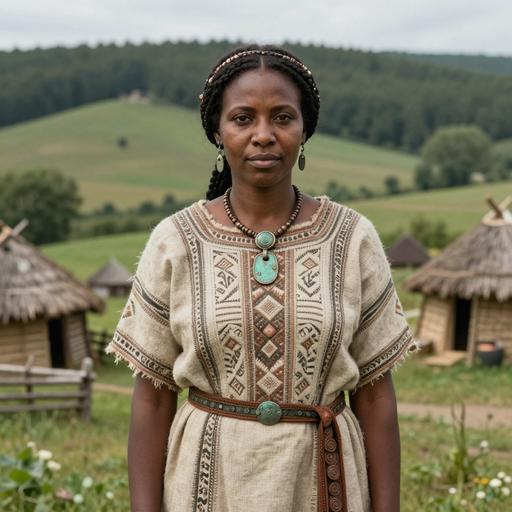
Portrait reconstruction of I7862
Ancient Individual

An individual buried in Moldova in the Middle Bronze Age era

I7862
1600 BCE - 1447 BCE
Not known
Middle Bronze Age Moldova
Moldova
Scroll to begin
Chapter I

Identity

The biological and cultural markers that define this ancient individual

Sample ID

I7862

Date Range

1600 BCE - 1447 BCE

Biological Sex

Not known

mtDNA Haplogroup

Not available

Cultural Period

Middle Bronze Age Moldova

Chapter II

Place

Where this individual was discovered

Country Moldova
Locality Crihana Veche
Coordinates 45.8458, 28.1947
Chapter III

Time

When this individual lived in the broader context of human history

I7862 1600 BCE - 1447 BCE
Chapter IV

Story

The narrative of this ancient life

The Middle Bronze Age in the region that today encompasses modern-day Moldova is a fascinating period that reflects broader Indo-European cultural and technological trends across Eastern Europe. This era, approximately spanning from 2000 BCE to 1500 BCE, was marked by significant cultural transformations, economic developments, and complex social structures influenced by Indo-European migrations and interactions.

Cultural and Social Structure

  1. Indo-European Influence: The Indo-European migrations significantly impacted the cultural landscape of Middle Bronze Age Moldova. These groups, characterized by their Proto-Indo-European language and shared cultural traits, introduced new practices and social structures. The spread of these peoples is often associated with the Yamnaya culture, which played a pivotal role in disseminating the Indo-European linguistic and cultural framework across Europe.

  2. Community and Social Organization: The Middle Bronze Age communities in Moldova were primarily agrarian, relying on crop cultivation and animal husbandry. Settlements were typically structured in small, kin-based groups with emerging social hierarchies. There was evidence of increasing social stratification, likely influenced by the control of resources and trade, which may have led to the emergence of a tribal or chiefdom organization.

  3. Housing and Settlement Patterns: Settlements were generally small, comprising semi-permanent structures crafted from wood and clay. These were strategically located near waterways or fertile plains, which provided essential resources for agriculture and livestock. The settlements were often fortified, suggesting a need for defense and control, possibly due to the competitive and interconnected nature of Bronze Age societies.

Technology and Economy

  1. Metallurgy: The Bronze Age is notably characterized by advancements in metallurgy, with bronze (an alloy of copper and tin) becoming the material of choice for tools and weapons. The people of Moldova during this era were skilled metalworkers, producing a variety of implements such as axes, knives, and ornamental items. This metallurgical expertise facilitated trade and interaction with neighboring regions, contributing to the exchange of ideas and technologies.

  2. Trade Networks: Moldova's geographical position as a nexus between the Carpathian Basin, the Pontic Steppe, and the Balkans enabled it to become a critical node in trade networks. These networks facilitated the exchange of goods such as metal, pottery, textiles, and salt, as well as the dissemination of cultural and technological innovations.

  3. Agriculture and Husbandry: The economy was predominantly based on agriculture, with crops such as wheat, barley, and rye being cultivated. Livestock, including cattle, sheep, and goats, were also vital, providing not only food but also materials such as leather and wool. The presence of horses, introduced by the Indo-European groups, added to the economic and military capabilities of these societies.

Religion and Rituals

  1. Spiritual Beliefs: The religious practices of this period were closely intertwined with nature, fertility, and the agrarian lifestyle. Evidence of burial rites and ritual objects suggests a belief in the afterlife and the spiritual significance of certain materials and artifacts.

  2. Burial Practices: Burial mounds, or kurgans, are one of the most distinctive archaeological features from this period, reflecting Indo-European traditions. These mounds often contained grave goods, including pottery, weapons, and ornaments, indicating beliefs in an afterlife where such items were needed or held symbolic value.

Art and Symbolism

  1. Pottery and Artistic Expression: Pottery from Middle Bronze Age Moldova is marked by distinctive styles and techniques, often decorated with geometric patterns and motifs, which may have held symbolic significance or denoted cultural identity. These artistic expressions provide insights into the aesthetic values and social connections of these communities.

  2. Symbols and Petroglyphs: The use of symbols and petroglyphs, possibly related to religious or clan affiliations, were part of the cultural expression. These artifacts, though not as abundant, offer a glimpse into the symbolic and communicative aspects of the culture.

In conclusion, the Middle Bronze Age in Moldova was a period of dynamic cultural interchange, technological innovation, and social evolution, deeply influenced by the broader currents of Indo-European migrations and interactions. This era laid the groundwork for future societal developments and contributed to the rich tapestry of European prehistory.

Chapter V

Genetics

The genetic ancestry of this ancient individual

Ancient Genetic Admixture

This analysis compares the DNA profile of I7862 with ancient reference populations, showing the genetic composition in terms of prehistoric ancestral groups.

Western Steppe Pastoralists 78.5%
Ancient Native Americans 14.1%
Neolithic Farmers 5.5%
Ancient Oceanians 2.0%

Modern Genetic Admixture

This analysis compares the DNA profile with present-day reference populations, showing what percentage of genetic makeup resembles modern populations from different regions.

Europe 88.7%
Northwestern European 88.7%
Finnish 45.0%
Northwestern European 35.9%
Scandinavian 7.8%
America 11.3%
America 11.3%
Native American 11.3%

Closest Modern Populations

These are the modern populations showing the closest statistical alignment to An individual buried in Moldova in the Middle Bronze Age era, ranked by genetic distance. Lower distance values indicate closer statistical similarity.

1
Komi A
5.4715
2
Tatar Mishar
5.4897
3
Tatar Kazan
5.5374
4
Besermyan
6.3949
5
Russian Leshukonsky
6.5412
6
Saami Kola
6.9488
7
Russian Pinezhsky
7.7707
8
Russian Pinega
7.8712
9
Udmurt
7.9585
10
Chuvash
8.2007
Chapter VI

Context

Other ancient individuals connected to this sample

Sources

References

Scientific publications and genetic data

Scientific Publication

The genetic history of the Southern Arc: A bridge between West Asia and Europe | Science

Authors Lazaridis I, Alpaslan-Roodenberg S, Acar A
Abstract

The period from the Copper Age to the Bronze Age marked major social and economic transformations in West Eurasia. To better understand these changes and their genetic impacts, we generated genome-wide data from 727 individuals who lived between 5000 and 1000 BCE in southeastern Europe and southwestern Asia.

G25 Coordinates

The G25 coordinates for sample I7862 can be used for detailed admixture analysis in our G25 Studio tool.

I7862,0.11668744,0.02964692,0.07560992,0.06196574,0.00071192,0.0073629,-0.01435194,-0.01619342,-0.00440488,-0.01970524,0.00784876,-0.00260178,0.0080405,-0.01113498,0.00096288,-0.01316998,-0.01551362,-0.0027458,-0.00899626,-0.01045378,0.0008647,0.00610462,-0.01702256,0.00436368,-0.00742032
Analyze in G25 Studio
Use code for 40% off Expires Feb 26