Menu
Store
Blog
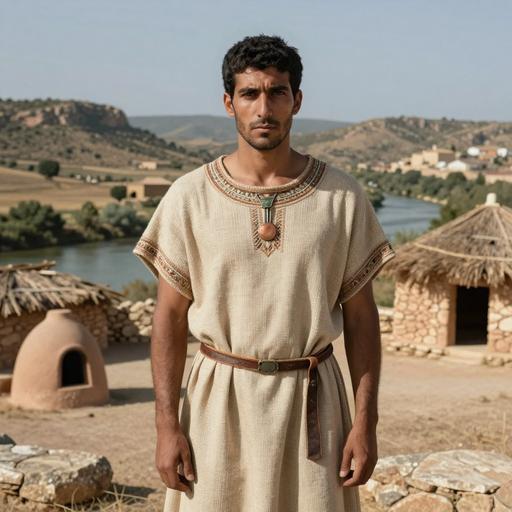
Portrait reconstruction of MDP003
Ancient Individual

A man buried in Spain in the Bronze Age era

MDP003
2197 BCE - 1983 BCE
Male
Early El Argar Culture Molinos de Papel, Spain
Spain
Scroll to begin
Chapter I

Identity

The biological and cultural markers that define this ancient individual

Sample ID

MDP003

Date Range

2197 BCE - 1983 BCE

Biological Sex

Male

mtDNA Haplogroup

HV0

Y-DNA Haplogroup

R1b1a1b1a1a2

Cultural Period

Early El Argar Culture Molinos de Papel, Spain

Chapter II

Place

Where this individual was discovered

Country Spain
Locality Murcia. Caravaca. Molinos del Papel
Coordinates 38.1023, -1.8640
Chapter III

Time

When this individual lived in the broader context of human history

MDP003 2197 BCE - 1983 BCE
Chapter IV

Story

The narrative of this ancient life

The Early El Argar Culture, particularly as observed at the archaeological site of Molinos de Papel in Spain, is a fascinating segment of the broader Iberian prehistory during the Bronze Age. This culture, which flourished approximately between 2200 and 1500 BCE, is recognized for its advanced societal structures and its significant contributions to the development of early European metallurgy and urbanization.

Geographical and Chronological Context

The El Argar civilization emerged in the southeastern part of the Iberian Peninsula, primarily in what is now the regions of Murcia and Almería in Spain. Molinos de Papel is one of several sites that provide valuable insights into the lifestyle, economy, and social organization of the Argaric people. The site, situated near the confluence of river systems and fertile lands, would have been conducive to agricultural activities and trade.

Settlement and Architecture

The Argaric settlements are known for their strategic locations, often on elevated terrains, which provided defensive advantages. The dwellings were typically constructed from stone and mud-brick, with some evidence suggesting the use of wooden elements in roofing. The architecture often included complex layouts with communal areas, dedicated workshops, and residential quarters, indicating a sophisticated understanding of urban planning.

Economy and Subsistence

Argaric society was agrarian, heavily relying on cereal cultivation, with evidence of wheat and barley being prominent staple crops. Additionally, they practiced animal husbandry, including cattle, sheep, goats, and pigs, which provided meat, milk, and other resources. The proximity to river systems facilitated fishing and contributed to a diverse diet. The economy was significantly bolstered by metallurgy, particularly the extraction and production of bronze tools and weapons, which played a crucial role in trade.

Social Structure and Burial Practices

The society was markedly hierarchical, as evidenced by burial customs and the distribution of grave goods. El Argar culture is noted for its use of large, communal graves, often in cists or stone tombs. High-status individuals were interred with ornate pottery, jewelry made from silver and gold, and bronze objects, indicating their wealth and social standing. This tiered social structure suggests the presence of leadership elites who controlled resources and trade networks.

Material Culture and Craftsmanship

The material culture of the Argarics was sophisticated, with a wide array of goods produced from locally sourced and imported materials. Pottery from this period often shows advanced techniques, with smooth finishes and geometric designs. Metalwork was advanced, with the development of bronze casting techniques that produced a variety of tools, weapons, and ornaments. Evidence of textile manufacturing has also been found, indicating the presence of weaving and spinning activities.

Trade and External Connections

The El Argar society engaged in trade both locally and with distant communities, as demonstrated by the variety of non-local materials found at archaeological sites such as Molinos de Papel. This includes the exchange of metals, pottery, and possibly textiles, suggesting a level of socio-economic interaction across the broader Mediterranean region.

Influence and Legacy

The El Argar culture is considered a crucial precursor to later Iberian cultures due to its advancements in metallurgy and urban development. Its decline around 1500 BCE, possibly due to environmental changes, social unrest, or external pressures, marked the end of a significant phase in Iberian prehistory. However, its influence can be seen in subsequent cultures in the region that continued to develop complex societies and technologies.

In summary, the Early El Argar Culture at sites like Molinos de Papel represents a period of innovation and complexity in prehistoric Iberia. Its contributions to metallurgy, urbanization, and societal organization provide important insights into the evolution of European prehistoric civilizations.

Chapter V

Genetics

The genetic ancestry of this ancient individual

Ancient Genetic Admixture

This analysis compares the DNA profile of MDP003 with ancient reference populations, showing the genetic composition in terms of prehistoric ancestral groups.

Neolithic Farmers 44.5%
European Hunter-Gatherers 26.4%
Western Steppe Pastoralists 23.6%
Ancient Asians 5.5%

Modern Genetic Admixture

This analysis compares the DNA profile with present-day reference populations, showing what percentage of genetic makeup resembles modern populations from different regions.

Europe 97.5%
Southern European 83.8%
Iberian 49.2%
Italian 17.9%
Sardinian 16.7%
Northwestern European 13.8%
Northwestern European 7.6%
English 6.2%
Asia 1.1%
Japanese & Korean 1.1%
Japanese 1.1%
America 1.1%
America 1.1%
Native American 1.1%

Closest Modern Populations

These are the modern populations showing the closest statistical alignment to A man buried in Spain in the Bronze Age era, ranked by genetic distance. Lower distance values indicate closer statistical similarity.

1
Spanish La Rioja
2.7154
2
Spanish Burgos
3.1091
3
Spanish Pirineu
3.1308
4
Spanish Castilla La Mancha
3.1405
5
Spanish Cantabria
3.1470
6
Spanish Aragon
3.1492
7
Spanish Castello
3.1682
8
Spanish Navarra
3.1900
9
Spanish Terres De L'ebre
3.2204
10
Spanish Valencia
3.2504
Chapter VI

Context

Other ancient individuals connected to this sample

Sources

References

Scientific publications and genetic data

Scientific Publication

Genomic transformation and social organization during the Copper Age-Bronze Age transition in southern Iberia

Authors Villalba-Mouco V, Oliart C, Rihuete-Herrada C
Abstract

The emerging Bronze Age (BA) of southeastern Iberia saw marked social changes. Late Copper Age (CA) settlements were abandoned in favor of hilltop sites, and collective graves were largely replaced by single or double burials with often distinctive grave goods indirectly reflecting a hierarchical social organization, as exemplified by the BA El Argar group. We explored this transition from a genomic viewpoint by tripling the amount of data available for this period. Concomitant with the rise of El Argar starting ~2200 cal BCE, we observe a complete turnover of Y-chromosome lineages along with the arrival of steppe-related ancestry. This pattern is consistent with a founder effect in male lineages, supported by our finding that males shared more relatives at sites than females. However, simple two-source models do not find support in some El Argar groups, suggesting additional genetic contributions from the Mediterranean that could predate the BA.

G25 Coordinates

The G25 coordinates for sample MDP003 can be used for detailed admixture analysis in our G25 Studio tool.

MDP003,0.12060992,0.15309392,0.03803472,-0.0115811,0.05471354,-0.01034694,-0.00112352,0.00453892,0.03012582,0.04949398,-0.0066594,0.01336326,-0.0233512,-0.01178886,0.00194106,0.00038682,-0.00202842,-0.00084652,-0.0005128,-0.0028079,0.00348084,0.00457068,-0.01124654,-0.01157712,0.00235835
Analyze in G25 Studio
Use code for 40% off Expires Feb 27