Menu
Store
Blog
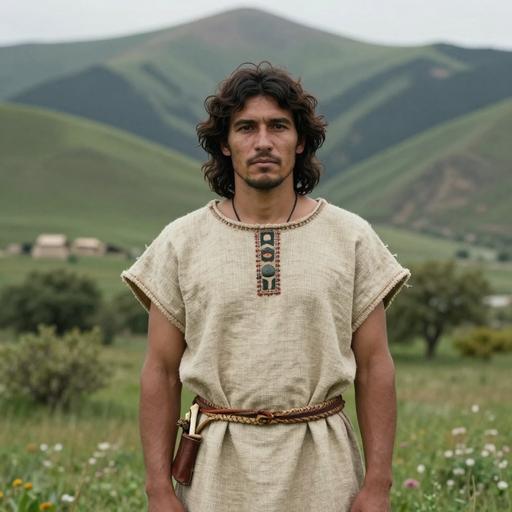
Portrait reconstruction of MK5004
Ancient Individual

A man buried in Russia in the Copper Age era

MK5004
3400 BCE - 3000 BCE
Male
Late Maikop Culture, Caucasus, Russia
Russia
Scroll to begin
Chapter I

Identity

The biological and cultural markers that define this ancient individual

Sample ID

MK5004

Date Range

3400 BCE - 3000 BCE

Biological Sex

Male

mtDNA Haplogroup

T2a1

Y-DNA Haplogroup

L-L595

Cultural Period

Late Maikop Culture, Caucasus, Russia

Chapter II

Place

Where this individual was discovered

Country Russia
Locality Piedmont. Mar'inskaja 5
Coordinates 43.9054, 43.5219
Chapter III

Time

When this individual lived in the broader context of human history

MK5004 3400 BCE - 3000 BCE
Chapter IV

Story

The narrative of this ancient life

The Late Maikop culture represents a significant archaeological phenomenon located in the Caucasus region of southern Russia, primarily spanning the late fourth to early third millennium BCE. As a prominent part of the broader Maikop culture, it is nested within the timeline that potentially intersects with the spread and influence of Proto-Indo-Europeans, although direct linguistic or ethnic connections remain speculative.

Geographical and Chronological Context

The Maikop culture, with its origins in the earlier phase around the late 4th millennium BCE, is primarily centered in the North Caucasus, covering areas of the Kuban River basin and extending into the plains and foothills of the region. The Late Maikop phase is characterized by a continuation and development of cultural practices, likely influenced by interactions both within the Caucasus and with neighboring regions, including the Caspian Sea and possibly Anatolia and the steppes.

Archaeological Evidence

Settlements and Architecture

The Late Maikop culture is noted for its settlements, which were typically small and composed of semi-subterranean houses with timber frameworks. These residences were often clustered into villages that showcased sophisticated planning, with evidence of communal structures indicating some form of social organization.

Burial Traditions

Burial practices of the Late Maikop are particularly telling, often involving kurgans—burial mounds that can be quite elaborate. These burials often contain rich assemblages, including pottery, metalwork, and ornamental items. The items found within these kurgans suggest a complex social hierarchy and indicate that wealth and status were significant in Maikop society.

Artifacts and Material Culture

Artifacts associated with the Late Maikop culture are diverse, with pottery being a significant component. The pottery is typically hand-made and features intricate decorations such as chiselled or stamped motifs. The culture is renowned for its metallurgical skills; objects made from gold, silver, and bronze, including exquisitely crafted weapons and jewelry, have been unearthed. Such items highlight the technological advancements and possible trade connections they possessed.

Economic Activities

Agriculture and Animal Husbandry

The Late Maikop people practiced mixed farming, as evidenced by agricultural tools and remains of domesticated animals such as cattle, sheep, and goats. This combination of agriculture and pastoralism was well-suited to the diverse North Caucasian environment, allowing for a subsistence economy that could support both settled and semi-nomadic lifestyles.

Trade and Interactions

There is substantial evidence that the Maikop culture engaged in trade, facilitated by their strategic location between the Black Sea and Caspian Sea, bridging Europe and Asia. Materials such as lapis lazuli, derived from distant regions like Badakhshan (modern-day Afghanistan), points to wide-reaching trade connections.

Social and Political Structure

The Late Maikop culture exhibits signs of increasing social stratification. The complexity of burial structures and the differentiation in goods and their distribution among graves suggest the existence of a hierarchical society with leaders possibly exerting control over trade, religion, or territory.

Cultural and Linguistic Considerations

While there is no concrete evidence directly linking the Maikop culture to the Proto-Indo-European language speakers, the chronological and geographical positioning suggests interactions or shared influences might have occurred. The transition observed in cultural practices and material goods during this period echoes broader migratory and transformative patterns hypothesized for Proto-Indo-European dispersal.

Conclusion

The Late Maikop culture stands as a testament to the intricate tapestry of prehistoric societies in the Caucasus, marked by advancements in metallurgy, complex social structures, and significant trade networks. While the precise nature of their connections to the Proto-Indo-Europeans remains debated, the influence of this culture on subsequent societies in the region and beyond is undeniable. Ongoing archaeological research continues to uncover new insights, further enriching our understanding of these ancient people.

Chapter V

Genetics

The genetic ancestry of this ancient individual

Ancient Genetic Admixture

This analysis compares the DNA profile of MK5004 with ancient reference populations, showing the genetic composition in terms of prehistoric ancestral groups.

Neolithic Farmers 61.3%
European Hunter-Gatherers 20.1%
Western Steppe Pastoralists 12.9%
Ancient Asians 5.6%

Modern Genetic Admixture

This analysis compares the DNA profile with present-day reference populations, showing what percentage of genetic makeup resembles modern populations from different regions.

Asia 92.7%
Northern West Asian 85.5%
Caucasian 56.9%
Mesopotamian 21.9%
Anatolian 4.4%
Cypriot 2.3%
Arab, Egyptian & Levantine 7.2%
Levantine 7.2%
Europe 6.4%
Southern European 6.4%
Italian 4.8%
Balkan 1.6%
Africa 0.9%
North African 0.9%
Egyptian 0.9%

Closest Modern Populations

These are the modern populations showing the closest statistical alignment to A man buried in Russia in the Copper Age era, ranked by genetic distance. Lower distance values indicate closer statistical similarity.

1
Andian A
2.3416
2
Georgian Khevs
2.7339
3
Azerbaijani Republic Shaki
2.9027
4
Georgian Tush
2.9177
5
Tat Azerbaijan
3.0645
6
Georgian Kart
3.1560
7
Azerbaijani Republic Gabala
3.1883
8
Georgian Kakh
3.3384
9
Azerbaijani Dagestan
3.3488
10
Georgian Northeast
3.3888
Chapter VI

Context

Other ancient individuals connected to this sample

Sources

References

Scientific publications and genetic data

Scientific Publication

Ancient human genome-wide data from a 3000-year interval in the Caucasus corresponds with eco-geographic regions

Authors Wang CC, Reinhold S, Kalmykov A
Abstract

Archaeogenetic studies have described the formation of Eurasian 'steppe ancestry' as a mixture of Eastern and Caucasus hunter-gatherers. However, it remains unclear when and where this ancestry arose and whether it was related to a horizon of cultural innovations in the 4th millennium BCE that subsequently facilitated the advance of pastoral societies in Eurasia. Here we generated genome-wide SNP data from 45 prehistoric individuals along a 3000-year temporal transect in the North Caucasus. We observe a genetic separation between the groups of the Caucasus and those of the adjacent steppe. The northern Caucasus groups are genetically similar to contemporaneous populations south of it, suggesting human movement across the mountain range during the Bronze Age. The steppe groups from Yamnaya and subsequent pastoralist cultures show evidence for previously undetected farmer-related ancestry from different contact zones, while Steppe Maykop individuals harbour additional Upper Palaeolithic Siberian and Native American related ancestry.

G25 Coordinates

The G25 coordinates for sample MK5004 can be used for detailed admixture analysis in our G25 Studio tool.

MK5004,0.10203578,0.10909128,-0.05042006,-0.03281928,-0.04352708,-0.0054465,0.01001454,-0.00646096,-0.04901098,-0.02311062,-0.00137114,0.00503916,-0.01183928,0.00039552,0.00616066,-0.00547144,0.00932212,-0.00235752,-0.00393312,0.0052858,0.00643826,0.00010416,0.00643058,-0.0018892,-0.00209451
Analyze in G25 Studio
Use code for 40% off Expires Feb 27