Menu
Store
Blog
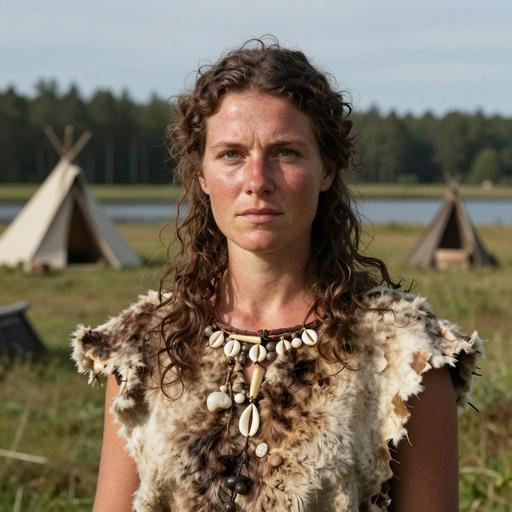
Portrait reconstruction of NEO679
Ancient Individual

A woman buried in Sweden in the Mesolithic era

NEO679
5198 BCE - 4715 BCE
Female
Late Mesolithic Ertebølle Culture of Sweden
Sweden
Scroll to begin
Chapter I

Identity

The biological and cultural markers that define this ancient individual

Sample ID

NEO679

Date Range

5198 BCE - 4715 BCE

Biological Sex

Female

mtDNA Haplogroup

U5b2a1a

Cultural Period

Late Mesolithic Ertebølle Culture of Sweden

Chapter II

Place

Where this individual was discovered

Country Sweden
Locality Skateholm-1 (Skåne län, Trelleborg)
Coordinates 55.3860, 13.4810
Chapter III

Time

When this individual lived in the broader context of human history

NEO679 5198 BCE - 4715 BCE
Chapter IV

Story

The narrative of this ancient life

The Late Mesolithic Ertebølle culture, which thrived approximately between 5400 BCE and 3950 BCE, represents a significant phase in prehistoric Scandinavia's cultural evolution. This culture primarily stretched across present-day Denmark and southern Sweden, particularly around the coastal regions, and is named after the Ertebølle site in Denmark. It marked a transitional period towards the Neolithic era and provides critical insights into the region's prehistoric lifestyles before the advent of agriculture.

Geographical Context

The Ertebølle culture flourished primarily in the coastal areas of the southern Scandinavian Peninsula. The proximity to abundant marine resources profoundly influenced their way of life, fostering a culture deeply intertwined with the sea. The landscape during the Late Mesolithic was characterized by dense forests interspersed with freshwater lakes and rivers, offering diverse resources for subsistence.

Subsistence and Economy

The Ertebølle people were primarily hunter-gatherers, but their economic strategies were marked by a complexity that foreshadowed the agricultural revolution. Their subsistence strategy included hunting terrestrial animals such as deer and wild boar, fishing, and gathering. Archaeological evidence suggests that they utilized dugout canoes and advanced fishing tools like fish hooks and nets, indicating a sophisticated understanding of marine resources. The shell middens, large heaps of discarded shells and refuse, found across their settlements are testimonies to their extensive shellfish consumption.

Technology and Tool-Making

The Ertebølle culture is notable for its technological advances, particularly in pottery. Their ceramics were primarily utilitarian and typically undecorated, used for storage and cooking. Stone tools also played a crucial role in their daily activities. Flint was the material of choice for crafting tools, resulting in a wide array of implements ranging from arrowheads and blades to sophisticated woodworking tools. The presence of bone and antler tools further highlights their resourcefulness and adaptive strategies.

Settlements and Society

Settlements were primarily located near the coastlines, facilitating easy access to marine resources. These were usually seasonal camps rather than permanent villages, reflecting a semi-nomadic lifestyle dictated by seasonal availability of resources. Nonetheless, certain strategic locations like those near rich fishing areas or fertile foraging grounds may have been occupied for extended periods.

The social structure of the Ertebølle people, while not fully understood, likely revolved around extended family groups or bands. These groups operated as small, autonomous units adept at exploiting the varied resources of their environment. Social bonds within these communities might have been reinforced through shared responsibilities, gatherings, and the exchange of goods and information.

Cultural and Ritual Aspects

While concrete evidence of spiritual or religious practices is sparse, certain artifacts, such as elaborately carved amber pendants and talismans, suggest a layer of symbolic thinking and possibly spiritual beliefs. Burial practices in the Ertebølle culture were diverse, with evidence of both inhumations and cremations. The careful placement of grave goods, such as tools and ornaments, with the deceased indicates some belief in an afterlife or the significance of the individual’s role in society.

Transition to Neolithic

The Late Mesolithic Ertebølle culture laid the groundwork for the eventual transition to the Neolithic Funnelbeaker culture, marking the shift to farming and more sedentary lifestyles. This transition was a gradual process influenced by cultural exchanges with neighboring regions and the introduction of agriculture and domestic animals.

Conclusion

The Ertebølle culture represents a dynamic and adaptive society that thrived in the challenging environments of prehistoric Scandinavia. By understanding their way of life, technology, and social structures, we gain valuable insights into the broader narrative of human adaptation and cultural development during the Late Mesolithic era. This period is a testament to human resilience and ingenuity in the face of changing environmental and social landscapes, setting the stage for subsequent cultural transformations in northern Europe.

Chapter V

Context

Other ancient individuals connected to this sample

Sources

References

Scientific publications and genetic data

Scientific Publication

Population genomics of post-glacial western Eurasia

Authors Allentoft ME, Sikora M, Refoyo-Martínez A
Abstract

Western Eurasia witnessed several large-scale human migrations during the Holocene1-5. Here, to investigate the cross-continental effects of these migrations, we shotgun-sequenced 317 genomes-mainly from the Mesolithic and Neolithic periods-from across northern and western Eurasia. These were imputed alongside published data to obtain diploid genotypes from more than 1,600 ancient humans. Our analyses revealed a 'great divide' genomic boundary extending from the Black Sea to the Baltic. Mesolithic hunter-gatherers were highly genetically differentiated east and west of this zone, and the effect of the neolithization was equally disparate. Large-scale ancestry shifts occurred in the west as farming was introduced, including near-total replacement of hunter-gatherers in many areas, whereas no substantial ancestry shifts happened east of the zone during the same period. Similarly, relatedness decreased in the west from the Neolithic transition onwards, whereas, east of the Urals, relatedness remained high until around 4,000 BP, consistent with the persistence of localized groups of hunter-gatherers. The boundary dissolved when Yamnaya-related ancestry spread across western Eurasia around 5,000 BP, resulting in a second major turnover that reached most parts of Europe within a 1,000-year span. The genetic origin and fate of the Yamnaya have remained elusive, but we show that hunter-gatherers from the Middle Don region contributed ancestry to them. Yamnaya groups later admixed with individuals associated with the Globular Amphora culture before expanding into Europe. Similar turnovers occurred in western Siberia, where we report new genomic data from a 'Neolithic steppe' cline spanning the Siberian forest steppe to Lake Baikal. These prehistoric migrations had profound and lasting effects on the genetic diversity of Eurasian populations.

Use code for 40% off Expires Feb 27