Menu
Store
Blog
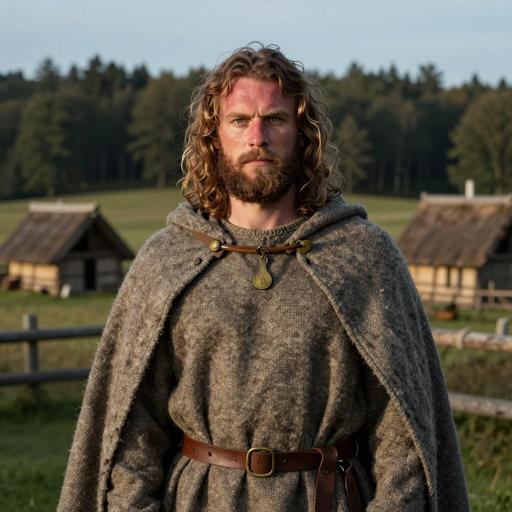
Portrait reconstruction of RISE21
Ancient Individual

A man buried in Denmark in the Bronze Age era

RISE21
1426 BCE - 1272 BCE
Male
Bronze Age Denmark
Denmark
Scroll to begin
Chapter I

Identity

The biological and cultural markers that define this ancient individual

Sample ID

RISE21

Date Range

1426 BCE - 1272 BCE

Biological Sex

Male

mtDNA Haplogroup

N1a1a1a2

Y-DNA Haplogroup

Not available

Cultural Period

Bronze Age Denmark

Chapter II

Place

Where this individual was discovered

Country Denmark
Locality Karlstrup
Coordinates 55.5500, 12.2090
Chapter III

Time

When this individual lived in the broader context of human history

RISE21 1426 BCE - 1272 BCE
Chapter IV

Story

The narrative of this ancient life

The Nordic Bronze Age, which occurs roughly between 1700 and 500 BCE, marks a significant era in the prehistoric societies of what is today Denmark as well as parts of Sweden and Norway. This period is characterized by remarkable cultural, social, and technological developments that laid the groundwork for subsequent periods in Scandinavian prehistory.

Geography and Environment

Denmark during the Bronze Age was characterized by a temperate climate, with abundant natural resources such as forests, water bodies, and fertile soils, which supported a thriving agricultural society. The landscape mainly consisted of oak woodland interspersed with areas of open heath, providing a diverse environment for a range of agricultural and pastoral activities.

Social Structure

The society in Denmark during the Nordic Bronze Age appears to have been organized into tribal communities, with increasing levels of social stratification over time. Evidence suggests the emergence of an elite class, likely composed of chieftains or leaders, who held control over trade, precious resources, and religious practices. Burial mounds, rich with grave goods such as bronze weapons, tools, and ornaments, often indicate the high status of individuals interred within, suggesting a society with distinct social hierarchies.

Economic Practices

Agriculture and animal husbandry formed the economic backbone of Bronze Age Denmark. Farming practices included the cultivation of barley, wheat, and other cereal crops, alongside the raising of livestock such as cattle, sheep, and pigs. Technological innovations such as the plough improved agricultural output.

Trade played a crucial role in the Nordic Bronze Age economy. Denmark was a part of a widespread trading network that facilitated the exchange of goods like amber, tin, and bronze. Amber from Scandinavia was particularly prized, traded across Europe and even reaching the Mediterranean.

Technological and Artistic Developments

Bronze metallurgy fundamentally transformed the material culture of the era, as it was used to produce tools, weapons, and ornaments. The adoption of bronze smelting and casting marks a technological leap forward compared to the earlier use of stone and flint tools. This includes the production of distinctive objects like the lurs, long, curved bronze horns used in ceremonies.

Art and decoration in the Nordic Bronze Age were marked by intricate designs, often featuring spirals, concentric circles, and stylized figures, primarily found on bronze items and rock carvings. These motifs are thought to reflect both aesthetic preferences and possibly religious beliefs.

Religious Beliefs and Practices

The people of Bronze Age Denmark are believed to have practiced a form of animism, with particular reverence for the natural world. This is evidenced by numerous rock carvings and petroglyphs depicting sun symbols, boats, and human figures, often interpreted as scenes of religious or mythological significance.

Burial practices varied greatly, with the construction of large burial mounds and the deposition of grave goods indicating a belief in an afterlife. The placement and richness of these items often reflected the social status of the deceased individual.

Cultural Connections

Nordic Bronze Age societies were not isolated but were part of a broader network of European Bronze Age cultures, evidenced by shared artistic styles and trade links. The cultural exchanges facilitated by trade routes likely contributed to the diffusion of technologies, styles, and social ideas across regions.

Legacy

The Nordic Bronze Age left a substantial legacy in terms of the archaeological record, with abundant remains such as tools, weapons, jewelry, and monumental stone arrangements like dolmens and passage graves. These artifacts and structures provide critical insights into the society's economy, social structure, and belief systems.

Overall, the Nordic Bronze Age in Denmark represents a vibrant period characterized by significant social, technological, and artistic developments. The era set important precedents for the cultural and historical trajectory of the region leading into the Iron Age and beyond.

Chapter V

Genetics

The genetic ancestry of this ancient individual

Ancient Genetic Admixture

This analysis compares the DNA profile of RISE21 with ancient reference populations, showing the genetic composition in terms of prehistoric ancestral groups.

Western Steppe Pastoralists 46.4%
European Hunter-Gatherers 32.5%
Neolithic Farmers 21.1%

Modern Genetic Admixture

This analysis compares the DNA profile with present-day reference populations, showing what percentage of genetic makeup resembles modern populations from different regions.

Europe 86.8%
Northwestern European 70.6%
English 45.0%
Northwestern European 25.6%
Southern European 16.2%
Iberian 16.2%
Asia 8.4%
Northern West Asian 6.0%
Mesopotamian 6.0%
Central Asian, Northern Indian & Pakistani 2.4%
Indian 2.4%
Africa 2.5%
Congolese & Southern East African 2.5%
South East African 2.5%
America 2.3%
America 2.3%
Native American 2.3%

Closest Modern Populations

These are the modern populations showing the closest statistical alignment to A man buried in Denmark in the Bronze Age era, ranked by genetic distance. Lower distance values indicate closer statistical similarity.

1
Orcadian
4.0424
2
Irish
4.1760
3
Scottish
4.1788
4
Afrikaner
4.1886
5
Norwegian
4.3895
6
Icelandic
4.4747
7
Dutch
4.4885
8
English
4.5542
9
Shetlandic
4.5628
10
Welsh
4.6747
Chapter VI

Context

Other ancient individuals connected to this sample

Sources

References

Scientific publications and genetic data

Scientific Publication

Population genomics of Bronze Age Eurasia

Authors Allentoft ME, Sikora M, Sjögren KG
Abstract

The Bronze Age of Eurasia (around 3000-1000 BC) was a period of major cultural changes. However, there is debate about whether these changes resulted from the circulation of ideas or from human migrations, potentially also facilitating the spread of languages and certain phenotypic traits. We investigated this by using new, improved methods to sequence low-coverage genomes from 101 ancient humans from across Eurasia. We show that the Bronze Age was a highly dynamic period involving large-scale population migrations and replacements, responsible for shaping major parts of present-day demographic structure in both Europe and Asia. Our findings are consistent with the hypothesized spread of Indo-European languages during the Early Bronze Age. We also demonstrate that light skin pigmentation in Europeans was already present at high frequency in the Bronze Age, but not lactose tolerance, indicating a more recent onset of positive selection on lactose tolerance than previously thought.

G25 Coordinates

The G25 coordinates for sample RISE21 can be used for detailed admixture analysis in our G25 Studio tool.

RISE21,0.12311508,0.10658972,0.0455395,0.05777766,0.02492034,0.0177793,-0.0009636,0.00046688,0.00604308,0.00280498,-0.00447936,0.0076928,-0.00760956,-0.01176764,0.02786144,-0.0022355,-0.01695946,-0.00038658,0.0016357,-0.00343876,0.00545366,0.00196848,-0.00623102,0.00596838,-0.00634391
Analyze in G25 Studio
Use code for 40% off Expires Feb 26