Menu
Store
Blog
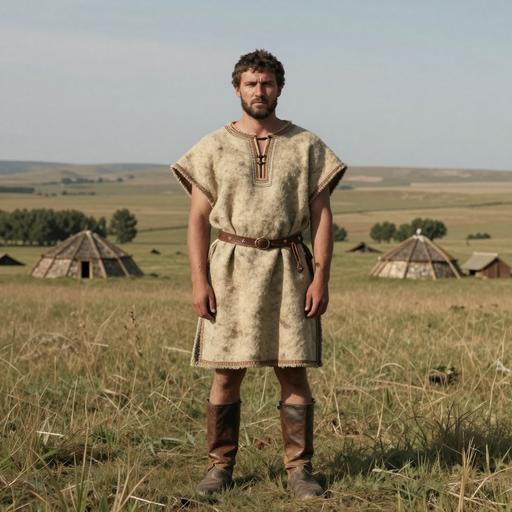
Portrait reconstruction of RK1001
Ancient Individual

A man buried in Russia in the Early Bronze Age era

RK1001
2881 BCE - 2639 BCE
Male
Early Bronze Age Yamnaya Culture, Caucasus, Russia
Russia
Scroll to begin
Chapter I

Identity

The biological and cultural markers that define this ancient individual

Sample ID

RK1001

Date Range

2881 BCE - 2639 BCE

Biological Sex

Male

mtDNA Haplogroup

U5a1d

Y-DNA Haplogroup

R-Z2103

Cultural Period

Early Bronze Age Yamnaya Culture, Caucasus, Russia

Chapter II

Place

Where this individual was discovered

Country Russia
Locality Kuban steppe. Rasshevatskij 1
Coordinates 45.5372, 41.1165
Chapter III

Time

When this individual lived in the broader context of human history

RK1001 2881 BCE - 2639 BCE
Chapter IV

Story

The narrative of this ancient life

The Yamnaya Culture, also known as the Pit Grave Culture, is a significant prehistoric culture of the Early Bronze Age, which emerged around 3300–2600 BCE. Emerging from the Pontic-Caspian steppes, this culture spanned across a vast region that encompasses present-day southern Russia, Ukraine, and parts of the Caucasus. The Yamnaya Culture is often identified as a crucial stage in the spread of Proto-Indo-European languages, which form the basis of many languages spoken across Europe and Asia today.

Geography and Environment

The Yamnaya Culture flourished in the Pontic-Caspian steppe, a rich and expansive grassland that provided a robust environment for pastoralism. This region stretches from the northern shore of the Black Sea to the Caspian Sea, bordered by the Ural Mountains to the east and the Carpathians to the west. The climate and geography were conducive to the nomadic herding lifestyle of the Yamnaya people, supporting large herds of cattle, sheep, and horses.

Economy and Subsistence

The economic foundation of the Yamnaya Culture was primarily pastoralism, supplemented by some degree of agriculture. The Yamnaya people are particularly known for their advanced livestock management, which included cattle, sheep, and goats. Horses played a significant role, not only in transport but also in shaping the Yamnaya's mobile lifestyle. They likely practised limited agriculture, cultivating crops in the more fertile areas of their territory, but their subsistence relied heavily on animal husbandry.

Social Structure and Lifestyle

Yamnaya society was predominantly nomadic, characterized by seasonal movement across the steppe in search of pastures for their herds. This mobility facilitated the exchange of goods, ideas, and cultural practices with neighboring cultures. Their social structure was likely hierarchical, with tribal chiefs or leaders wielding significant influence. This is inferred from burial practices, where some individuals were interred with more opulent grave goods, suggesting social stratification and the presence of a warrior elite.

Burial Practices and Artefacts

The Yamnaya Culture is distinguished by its burial practices, which involved the construction of kurgans, or burial mounds. These structures, sometimes several meters high, were often accompanied by grave goods, including pottery, weapons, and ornaments made from metals like copper and gold. The use of ochre, a red pigment, to cover the deceased, is a notable funerary rite. The Yamnaya graves provide critical insights into their belief systems, which likely included notions of an afterlife, given the care invested in these burial sites.

Technological Innovations

The Yamnaya people were adept metalworkers, contributing to the wider dissemination of bronze tools and weapons. They were involved in the early development of metallurgy in the region, demonstrating skills in smelting and casting. Moreover, their mastery of horseback riding and the introduction of wheeled vehicles are seen as revolutionary. These innovations played a substantial role in their expansion across the steppes and their interaction with other cultures.

Language and Cultural Impact

The Yamnaya Culture is often associated with the early stages of the Proto-Indo-European language family, given its geographic and temporal context. Linguistic and genetic studies suggest that migrations from this culture contributed to the spread of Indo-European languages across Europe and parts of Asia. Their interactions and merging with local Neolithic populations facilitated the development of diverse Indo-European-speaking societies.

Genetic Legacy

Recent genetic studies have reinforced the Yamnaya's role in shaping the genetic landscape of Europe and Asia. Genetic markers associated with the Yamnaya have been identified in a substantial portion of the modern European gene pool, supporting the theory of significant migration and intermingling with other populations. These studies highlight the expansive reach and influence of the Yamnaya during the Bronze Age.

Influence and Legacy

The Yamnaya Culture’s influence extended far beyond their chronological and geographical boundaries. Their technological advancements, social structures, and linguistic contributions significantly shaped the subsequent cultures of the Eurasian steppe and beyond. By facilitating the spread of Indo-European languages and practices, the Yamnaya laid foundational elements for many ancient and modern societies. Their rich cultural and genetic legacies endure, making them a pivotal component in the study of ancient civilizations and human history.

Chapter V

Genetics

The genetic ancestry of this ancient individual

Ancient Genetic Admixture

This analysis compares the DNA profile of RK1001 with ancient reference populations, showing the genetic composition in terms of prehistoric ancestral groups.

Western Steppe Pastoralists 53.9%
European Hunter-Gatherers 25.4%
Neolithic Farmers 13.2%
Ancient Asians 5.1%
Ancient Native Americans 2.5%

Modern Genetic Admixture

This analysis compares the DNA profile with present-day reference populations, showing what percentage of genetic makeup resembles modern populations from different regions.

Europe 70.2%
Eastern European 37.2%
Northwestern European 33.0%
English 20.4%
Scandinavian 12.6%
Asia 28.4%
Northern West Asian 15.4%
Caucasian 15.4%
Central Asian, Northern Indian & Pakistani 13.1%
Pakistan 13.1%
America 1.4%
America 1.4%
Native American 1.4%

Closest Modern Populations

These are the modern populations showing the closest statistical alignment to A man buried in Russia in the Early Bronze Age era, ranked by genetic distance. Lower distance values indicate closer statistical similarity.

1
Tatar Mishar
6.3938
2
Pamiri Rushan
7.4055
3
Turkish Deliorman
7.4447
4
Tatar Kazan
7.6067
5
Tajik Yaghnobi
7.6398
6
Moksha
7.6756
7
Mordovian
7.7251
8
Erzya
7.8102
9
Turkish Rumeli
8.1447
10
Pamiri Shugnan
8.2661
Chapter VI

Context

Other ancient individuals connected to this sample

Sources

References

Scientific publications and genetic data

Scientific Publication

Ancient human genome-wide data from a 3000-year interval in the Caucasus corresponds with eco-geographic regions

Authors Wang CC, Reinhold S, Kalmykov A
Abstract

Archaeogenetic studies have described the formation of Eurasian 'steppe ancestry' as a mixture of Eastern and Caucasus hunter-gatherers. However, it remains unclear when and where this ancestry arose and whether it was related to a horizon of cultural innovations in the 4th millennium BCE that subsequently facilitated the advance of pastoral societies in Eurasia. Here we generated genome-wide SNP data from 45 prehistoric individuals along a 3000-year temporal transect in the North Caucasus. We observe a genetic separation between the groups of the Caucasus and those of the adjacent steppe. The northern Caucasus groups are genetically similar to contemporaneous populations south of it, suggesting human movement across the mountain range during the Bronze Age. The steppe groups from Yamnaya and subsequent pastoralist cultures show evidence for previously undetected farmer-related ancestry from different contact zones, while Steppe Maykop individuals harbour additional Upper Palaeolithic Siberian and Native American related ancestry.

G25 Coordinates

The G25 coordinates for sample RK1001 can be used for detailed admixture analysis in our G25 Studio tool.

RK1001,0.11292854,0.07055024,0.02337418,0.0457935,-0.01166696,0.01881104,0.0100427,0.00733304,-0.02061016,-0.02853556,0.00153616,-0.00120892,0.00445434,-0.00556332,0.0019063,-0.00278862,-0.00716322,-0.00116494,-0.0043631,-0.0071548,-0.00036842,0.002165,-0.00464746,0.00739584,-0.00244731
Analyze in G25 Studio
Use code for 40% off Expires Feb 27