Menu
Store
Blog
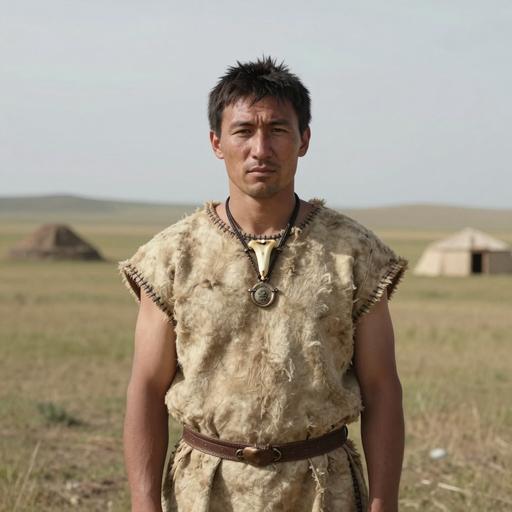
Portrait reconstruction of SA6010
Ancient Individual

A man buried in Russia in the Early Bronze Age era

SA6010
2886 BCE - 2671 BCE
Male
Russian Yamnaya
Russia
Scroll to begin
Chapter I

Identity

The biological and cultural markers that define this ancient individual

Sample ID

SA6010

Date Range

2886 BCE - 2671 BCE

Biological Sex

Male

mtDNA Haplogroup

U5a1g

Y-DNA Haplogroup

R-V1636

Cultural Period

Russian Yamnaya

Chapter II

Place

Where this individual was discovered

Country Russia
Locality Kaspi steppe. Šarachalsun 6
Coordinates 45.7257, 43.9869
Chapter III

Time

When this individual lived in the broader context of human history

SA6010 2886 BCE - 2671 BCE
Chapter IV

Story

The narrative of this ancient life

The Yamnaya culture, also known as the Yamna culture or Pit Grave culture, is an archaeological culture that flourished during the late Copper Age and early Bronze Age around 3300-2600 BCE. Named after the Russian word \yama," meaning "pit," due to their distinctive burial practices, the Yamnaya culture is primarily associated with the Pontic-Caspian steppe, which stretches across modern-day Russia, Ukraine, and Kazakhstan. The culture is characterized by its lifestyle, technological advancements, and its substantial impact on later European populations through migration and genetic contribution.

Geographic and Environmental Context

The Yamnaya people inhabited the vast, expansive plains of the Pontic-Caspian steppe, an area conducive to pastoralism due to its grassy plains, moderate climate, and open landscapes. The environment of the steppes was perfectly suited for nomadic herding societies, offering abundant pastureland for cattle, sheep, goats, and horses, which were central to the Yamnaya economy and way of life.

Lifestyle and Economy

The Yamnaya culture was predominantly nomadic-pastoralist, relying heavily on animal husbandry. The use and domestication of horses were particularly significant, likely contributing to their mobility and ability to expand across vast territories. Horses may have been used for riding and possibly for pulling early forms of wheeled vehicles, such as carts or wagons, facilitating the movement of people, goods, and livestock.

Burial Practices

The Yamnaya are renowned for their burial rites, which involved constructing large burial mounds, known as kurgans, over individual graves. These kurgans were typically marked by a central pit where the deceased was placed often on a wooden platform. The bodies were generally interred in a supine position with bent knees, occasionally with ochre spread over them, possibly for ritualistic purposes. Grave goods accompanying the deceased included pottery, stone tools, weapons, and ornaments, indicating belief in an afterlife and a social structure where individuals possessed varying levels of status and wealth.

Material Culture and Technology

Artifacts associated with the Yamnaya culture include polished stone tools, weapons, ceramics, and jewelry. Their pottery was generally simple, undecorated, and utilitarian, reflecting their mobile lifestyle. Technological advancements attributed to the Yamnaya include the use of metalworking, with evidence of copper tools and weapons being part of their assemblage. The introduction and dissemination of wheeled vehicles—carts and wagons—around this period are often associated with the Yamnaya people.

Social Structure and Organization

The social structure of the Yamnaya culture is somewhat speculative, but archaeological evidence from burial mounds suggests the existence of social stratification. The size and richness of grave goods varied considerably, indicating differences in social status, possibly reflecting a hierarchical society with leaders or chiefs at the top.

Influence and Legacy

The Yamnaya culture is considered highly influential in the context of Eurasian prehistory. They are often credited as early Indo-European speakers, with a significant portion of their population contributing genetically and culturally to the Corded Ware culture in central and northern Europe, among others. This movement likely dispersed Indo-European languages and practices across Europe and parts of Asia.

Genetic studies conducted in recent years have played a pivotal role in understanding the Yamnaya's impact. Analysis of ancient DNA has revealed a significant genetic influx from the Yamnaya into European populations, supporting theories of massive migrations during the Bronze Age and their role in shaping the genetic landscape of contemporary Europe.

Cultural Significance

The Yamnaya culture represents a pivotal era in the development of prehistoric societies on the Eurasian steppes. Their advancements in mobility, pastoral economy, and possible linguistic influence laid the foundational stones for the rise of subsequent cultures and arguably the spread of Indo-European languages throughout much of Europe and parts of Asia. Their legacy continues to intrigue archaeologists, linguists, and geneticists as they piece together the vast mosaic of prehistoric human migration, interaction, and evolution."

Chapter V

Genetics

The genetic ancestry of this ancient individual

Ancient Genetic Admixture

This analysis compares the DNA profile of SA6010 with ancient reference populations, showing the genetic composition in terms of prehistoric ancestral groups.

Western Steppe Pastoralists 45.4%
Neolithic Farmers 24.3%
European Hunter-Gatherers 19.3%
Ancient Asians 11.0%

Modern Genetic Admixture

This analysis compares the DNA profile with present-day reference populations, showing what percentage of genetic makeup resembles modern populations from different regions.

Asia 53.9%
Northern West Asian 30.3%
Caucasian 30.3%
Central Asian, Northern Indian & Pakistani 23.5%
Pakistan 18.7%
Indian 4.8%
Europe 44.0%
Eastern European 28.3%
Northwestern European 15.7%
Finnish 11.5%
Scandinavian 3.3%
English 0.9%
America 2.2%
America 2.2%
Native American 2.2%

Closest Modern Populations

These are the modern populations showing the closest statistical alignment to A man buried in Russia in the Early Bronze Age era, ranked by genetic distance. Lower distance values indicate closer statistical similarity.

1
Tajik Yaghnobi
5.0818
2
Pamiri Rushan
5.2751
3
Pamiri Shugnan
5.9373
4
Tajik Tajikistan Kulob
6.0176
5
Tajik Tajikistan Hisor
6.4467
6
Tajik Tajikistan Ayni
6.4486
7
Pamiri Badakhshan
6.8164
8
Lezgin
6.8914
9
Kumyk
7.0986
10
Lak
7.4247
Chapter VI

Context

Other ancient individuals connected to this sample

Sources

References

Scientific publications and genetic data

Scientific Publication

Ancient human genome-wide data from a 3000-year interval in the Caucasus corresponds with eco-geographic regions

Authors Wang CC, Reinhold S, Kalmykov A
Abstract

Archaeogenetic studies have described the formation of Eurasian 'steppe ancestry' as a mixture of Eastern and Caucasus hunter-gatherers. However, it remains unclear when and where this ancestry arose and whether it was related to a horizon of cultural innovations in the 4th millennium BCE that subsequently facilitated the advance of pastoral societies in Eurasia. Here we generated genome-wide SNP data from 45 prehistoric individuals along a 3000-year temporal transect in the North Caucasus. We observe a genetic separation between the groups of the Caucasus and those of the adjacent steppe. The northern Caucasus groups are genetically similar to contemporaneous populations south of it, suggesting human movement across the mountain range during the Bronze Age. The steppe groups from Yamnaya and subsequent pastoralist cultures show evidence for previously undetected farmer-related ancestry from different contact zones, while Steppe Maykop individuals harbour additional Upper Palaeolithic Siberian and Native American related ancestry.

G25 Coordinates

The G25 coordinates for sample SA6010 can be used for detailed admixture analysis in our G25 Studio tool.

SA6010,0.10484614,0.05011228,0.00456132,0.02775594,-0.03316994,0.00946568,0.00839724,-0.0011655,-0.03499762,-0.03323896,0.00416658,-0.00064458,0.00219752,-0.00783598,-0.00095306,-0.00462864,-0.00674876,-0.00029446,-0.00608574,-0.0090506,-0.00172564,0.003796,-0.00384958,0.00799576,-0.00297709
Analyze in G25 Studio
Use code for 40% off Expires Feb 27