Menu
Store
Blog
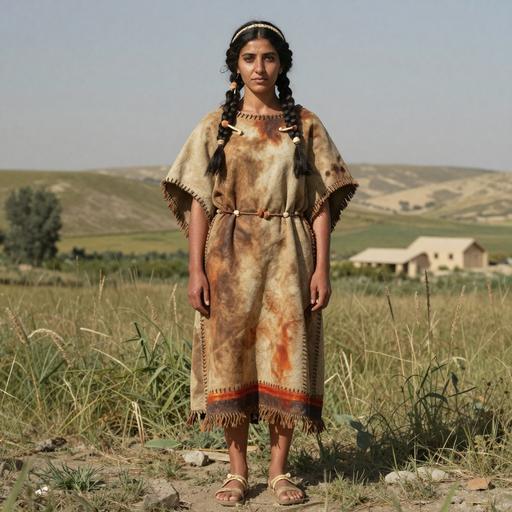
Portrait reconstruction of AKT16
Ancient Individual

A woman buried in Turkey in the Neolithic era

AKT16
6687 BCE - 6512 BCE
Female
Late Neolithic Turkey
Turkey
Scroll to begin
Chapter I

Identity

The biological and cultural markers that define this ancient individual

Sample ID

AKT16

Date Range

6687 BCE - 6512 BCE

Biological Sex

Female

mtDNA Haplogroup

K1a3

Cultural Period

Late Neolithic Turkey

Chapter II

Place

Where this individual was discovered

Country Turkey
Locality Aktopraklık
Coordinates 40.1730, 28.7720
Chapter III

Time

When this individual lived in the broader context of human history

AKT16 6687 BCE - 6512 BCE
Chapter IV

Story

The narrative of this ancient life

The Late Neolithic period in Turkey, particularly at sites like Aktopraklık, is a fascinating era that provides significant insights into the development of early settled communities and agricultural practices in the ancient Near East. This period, roughly dated between 7000 and 6000 BCE, marks a crucial transitional phase characterized by profound social, economic, and technological transformations.

Geographical and Environmental Context

Aktopraklık is located in northwestern Anatolia, an area that offered fertile lands and a favorable climate for agriculture. The region features a diverse landscape with access to forests, rivers, and hills, which provided abundant resources for early settlers. The proximity to resources like timber and water likely contributed to the area's attraction for Neolithic communities.

Settlement Patterns

The settlements during the Late Neolithic era in this region were typically small to medium-sized villages. These villages were composed of clusters of rectangular or circular mud-brick houses, often with plastered floors and walls, demonstrating advancements in architectural techniques. The organization of these villages suggests a community-oriented lifestyle, with shared spaces for communal activities.

Economy and Subsistence

Agriculture was the cornerstone of the economy in Aktopraklık during the Late Neolithic period. The inhabitants cultivated a range of crops, including wheat, barley, lentils, and peas, contributing to a more settled and sustainable lifestyle. Additionally, the domestication of animals such as sheep, goats, and cattle played a crucial role in the community’s subsistence strategy, providing meat, milk, and hides.

The emphasis on agriculture and animal husbandry indicates a significant shift from the preceding hunter-gatherer economy, leading to more stable food supplies and supporting population growth.

Social Structure and Organization

The Late Neolithic period in this region suggests the development of more complex social structures. Although evidence does not indicate strict social hierarchies, there are signs of emerging social differentiation. This can be inferred from the variation in house sizes and the types of goods produced or accumulated by different households.

The community likely operated on a cooperative basis, with shared labor for tasks such as farming, construction, and food production. This collective approach fostered strong communal bonds and facilitated the development of shared cultural and religious practices.

Technological and Cultural Advances

Technologically, the period experienced developments such as improved stone tool production, pottery, and textile weaving. The production of pottery became more sophisticated, with a variety of shapes and decorations appearing. Pottery served both functional and symbolic purposes, indicating dietary habits and cultural expressions.

Art and symbolic expression were significant aspects of this period, with evidence of figurative art, which may have played a role in religious or cultural practices. Rituals and ceremonies likely formed an integral part of communal life, focusing on themes of fertility, life, and death.

Trade and Interaction

The Late Neolithic communities in northwestern Anatolia were not isolated; evidence points to interactions with other regions through trade and cultural exchange. Materials such as obsidian and various artifacts found at Aktopraklık suggest long-distance trade networks, linking these communities to a broader cultural and economic web.

Conclusion

The Late Neolithic period at Aktopraklık in Turkey is a testament to the dynamic and transformative processes that shaped early human societies. This era laid the groundwork for subsequent developments in social complexity, technological innovation, and cultural evolution, marking a pivotal chapter in the history of human civilization in the ancient Near East. The archaeological findings from this period continue to provide valuable insights into the intricate and interconnected world of Neolithic communities.

Chapter V

Context

Other ancient individuals connected to this sample

Sources

References

Scientific publications and genetic data

Scientific Publication

The genomic origins of the world's first farmers

Authors Marchi N, Winkelbach L, Schulz I
Abstract

The precise genetic origins of the first Neolithic farming populations in Europe and Southwest Asia, as well as the processes and the timing of their differentiation, remain largely unknown. Demogenomic modeling of high-quality ancient genomes reveals that the early farmers of Anatolia and Europe emerged from a multiphase mixing of a Southwest Asian population with a strongly bottlenecked western hunter-gatherer population after the last glacial maximum. Moreover, the ancestors of the first farmers of Europe and Anatolia went through a period of extreme genetic drift during their westward range expansion, contributing highly to their genetic distinctiveness. This modeling elucidates the demographic processes at the root of the Neolithic transition and leads to a spatial interpretation of the population history of Southwest Asia and Europe during the late Pleistocene and early Holocene.

Use code for 35% off Expires Apr 16