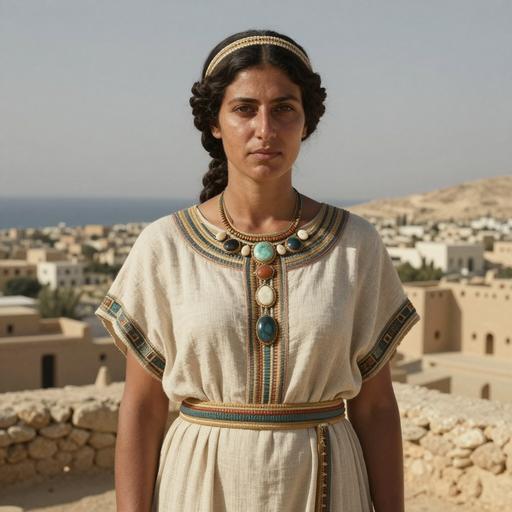
The Late Bronze Age (LBA) in the region known today as Israel, specifically in areas such as Ashkelon, was a dynamic and transformative period in the history of ancient Canaan, roughly dating between 1550–1200 BCE. During this time, the region was characterized by a complex tapestry of cultural interactions and socio-political structures influenced by both indigenous developments and external forces.
Overview of Late Bronze Age Israel/Canaan:
Geopolitical Landscape:
- The region was not a unified nation-state but a patchwork of city-states, each with its own king or ruler. These city-states included prominent settlements like Megiddo, Hazor, and Lachish, in addition to Ashkelon.
- Canaan was under the influence of several major powers, primarily Egypt, which maintained hegemony over the area through a series of military campaigns and diplomatic relations. The Amarna Letters, a collection of correspondences between Egyptian pharaohs and Canaanite rulers, provide insights into these diplomatic interactions.
Society and Culture:
- The Canaanites were a Semitic-speaking people known for their urbanized lifestyle. City-states were fortified with walls, featuring palaces and temples that signified both economic power and religious devotion.
- Canaanite culture was highly influenced by neighboring civilizations, including the Egyptians, Hittites, and Mesopotamians, which is evident in their art, religion, and writing systems.
- Religion played a central role, with a pantheon of gods including El, Baal, Asherah, and Anat. Temples were central to cities, and religious practices involved elaborate ceremonies and offerings.
Economy and Trade:
- The economy was agrarian-based but heavily supplemented by trade. Canaan was a pivotal link in the trade networks connecting Egypt to the south and the civilizations of Mesopotamia and the Aegean to the north and west.
- Maritime trade boomed, with the coast of Canaan, including cities like Ashkelon, serving as important ports facilitating the exchange of goods such as oil, wine, pottery, and precious metals.
Art and Technology:
- Artisans produced intricate pottery, tools, and weapons. Canaanite ceramic styles from this period are distinctive and widely studied for their decorative techniques and shapes.
- Metallurgy advanced significantly, with extensive use of bronze—an alloy of copper and tin—for tools, weapons, and ceremonial items.
Archaeological Evidence:
- Excavations in Ashkelon and other sites have uncovered substantial remnants of the Late Bronze Age, including city walls, palatial structures, storage facilities, and evidence of destruction layers, hinting at wars or invasions during this turbulent era.
- The discovery of luxury items, such as imported Mycenaean pottery, suggests a high level of sophistication and connectivity with broader Mediterranean cultures.
Decline and Transition:
- The end of the Late Bronze Age is marked by significant upheaval, including the invasions by the so-called Sea Peoples, whom scholars suggest included the Philistines.
- This period saw the eventual decline of Egyptian control and the destruction or abandonment of many Canaanite cities, leading into the transitional phase of the Early Iron Age, where new cultural entities like Ancient Israel and Philistine cities began to emerge.
In summary, the Late Bronze Age in Canaan, including places like Ashkelon, was a rich and complex era showcasing interconnectivity, cultural syncretism, and significant geopolitical shifts. It laid the groundwork for the cultural and political landscapes of the succeeding ages.