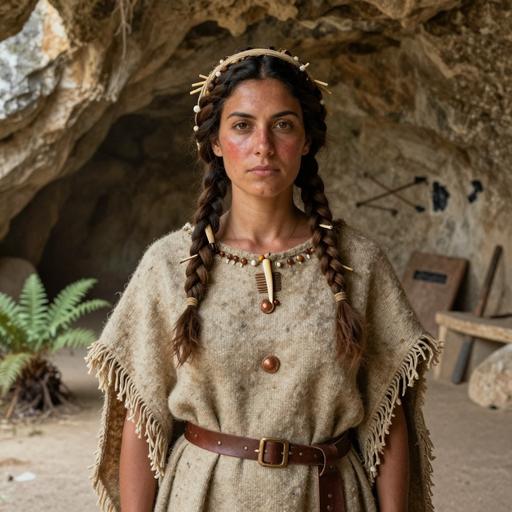
The Bronze Age in the Iberian Peninsula, including what is now modern-day Spain, is a fascinating and complex period that roughly spans from 2300 BCE to 700 BCE. This era marks significant advancements in metallurgy, societal structuring, and cultural development, influenced by various interactions between local and foreign cultures.
Geography and Environment
Bronze Age Spain was characterized by diverse geographical zones including the Mediterranean coastal areas, the interior Meseta, the northern mountainous regions, and the western areas along the Atlantic. These diverse landscapes influenced settlement patterns and economic activities, with coastal regions engaging more in trade while inland areas focused on agriculture and metallurgy.
Social Structure and Settlements
Society during this era was predominantly agricultural, with evidence of small, scattered villages and some larger fortified settlements, particularly in southern Spain. The emergence of such settlements suggests a stratified society, likely with chieftains or tribal leaders who controlled local resources and trade. The presence of fortified sites indicates concerns about security and possibly conflicts or rivalries among different groups or tribes.
Economy and Trade
The economy of Bronze Age Spain was primarily based on agriculture, supplemented by hunting and gathering. The introduction of metallurgy, particularly bronze working, was transformative. Copper ore was widespread, and tin, although less abundant, could be sourced or traded for, allowing for the production of bronze tools and weapons. Trade networks extended across the Mediterranean, connecting Iberian communities with those in the eastern Mediterranean, North Africa, and Europe. This trade was facilitated by the region's coastal access, which played a crucial role in the exchange of goods and cultural influences.
Cultural Influences and Developments
Bronze Age Spain was a melting pot of various cultures. Indigenous cultures such as the Los Millares and El Argar in the southeast were integral to the cultural landscape. The Los Millares culture, in particular, is noted for its significant advancements in fortifications and burial practices, while El Argar culture is known for its social stratification and sophisticated metalworking. These cultures developed distinctive pottery styles and burial practices, including tholos tombs and pit graves.
Contact with other Mediterranean cultures such as the Phoenicians and Mycenaeans likely influenced local Iberian cultures, leading to technological advancements and the adoption of new customs and social structures. The Phoenicians, who settled on the southern coast, significantly impacted local cultures through trade and cultural exchange, introducing new technologies and artistic styles.
Religion and Burial Practices
Religious beliefs during the Bronze Age in Spain are inferred from archaeological finds, including sanctuaries and burial sites. There was a variety of burial practices, which included individual and collective tombs. Megalithic structures, such as dolmens and standing stones, remained significant throughout this period. These structures often served as communal burial sites and possibly as territorial markers or places of worship.
Technological Innovations
The major technological advancement of this era was the development and refinement of metallurgy. The ability to create bronze from copper and tin allowed for the production of stronger and more durable tools and weapons, spurring advancements in agriculture, warfare, and craftsmanship. Artifacts such as swords, axes, and jewelry from this period demonstrate high levels of skill and artistry.
Conclusion
Bronze Age Spain was a dynamic and formative period in the history of the Iberian Peninsula, characterized by technological innovation, increasing social complexity, and cultural exchanges. These developments laid the groundwork for the subsequent Iron Age cultures and the eventual Romanization of the region. The archaeological record from this period, consisting of settlements, artifacts, and burial sites, provides valuable insights into the lives of the people who lived in prehistoric Iberia.