Menu
Currency
Main
Store
Blog

Loading Report

Preparing your ancestry journey

Connecting to ancient matches...

Preparing your report

Skip to main content
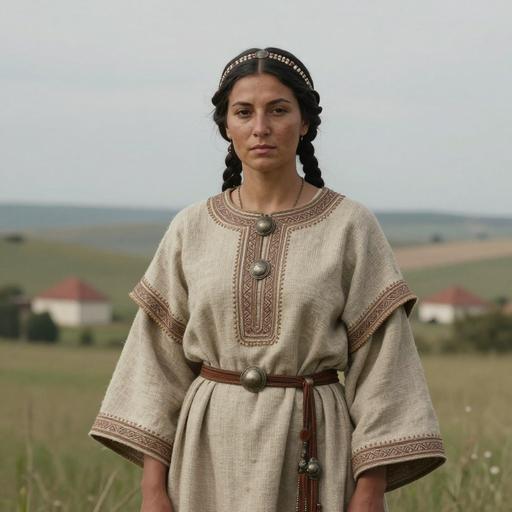
Portrait reconstruction of A woman buried in Hungary in the Late Antiquity era
Ancient Individual

A woman buried in Hungary in the Late Antiquity era

A woman buried in Hungary during the Avar Period 5 Hungary

A fragment of the ancient world, preserved across millennia in strands of DNA.

AV2
560 CE - 645 CE
Female
Hungary
Scroll to begin
Chapter I

Identity

The biological and cultural markers that define this ancient individual

Sample ID

AV2

Date Range

560 CE - 645 CE

Cultural Period

Avar Period 5 Hungary

Biological Sex

Female

mtDNA Haplogroup

X2m'n

Y-DNA Haplogroup

N/A (Female)

Chapter II

Place

Where this individual was discovered

Country Hungary
Locality Szólád
Coordinates 46.2833, 17.8500
Chapter III

Time

When this individual lived in the broader context of human history

AV2 560 CE - 645 CE
Chapter IV

Story

The narrative of this ancient life

The Avar Period in Hungary, specifically identified as Hungary_Avar_5, refers to an era in the history of the Avar Khaganate, a nomadic empire that spanned parts of Central and Eastern Europe from the late 6th to the early 9th century. The Avars were a confederation of various nomadic groups of Eurasian origin, often associated with the Huns, Turks, and other steppe peoples.

Historical Background

The Avars first appeared in Europe in the mid-6th century, having migrated from the steppes of Central Asia. They established the Avar Khaganate, which became a dominant power in the Carpathian Basin and surrounding regions. Their political and military might was maintained through an effective network of alliances and tributary states, as well as a well-organized system of governance.

Social Structure and Culture

The social structure of the Avar society was hierarchical and heavily militarized, reflecting their nomadic and warrior culture. At the top of this hierarchy was the Khagan, the supreme ruler who held both spiritual and temporal authority. The Avars were organized into clans, each led by noble families whose status was determined by their military prowess and loyalty to the Khagan.

Culturally, the Avars were influenced by their interactions with various peoples they encountered, including the Byzantines, Slavs, and Franks. This contact facilitated a degree of cultural exchange, seen in their art, clothing, and metallurgical practices. Avar art often featured intricate metalwork, especially in the form of belt buckles, horse tack, and weapon embellishments. They are noted for their use of gold and precious stones in their artistry.

Economy and Lifestyle

The Avar economy was diverse, integrating both pastoral nomadic and settled agricultural elements. While the Avars were primarily known for their nomadic lifestyle, relying heavily on horse breeding and livestock, they also engaged in agriculture, trade, and craft production. Their strategic location in the Carpathian Basin allowed them to control significant trade routes between Europe and Asia, which they used to their advantage.

Trade goods included furs, wool, textiles, and metal goods, which were exchanged with neighboring regions and distant empires. The Avars were also known for their skills in metallurgy, producing high-quality weapons and armor that were valued in both local and long-distance trade.

Military and Warfare

The Avars were formidable warriors, renowned for their cavalry and tactics that combined speed, mobility, and surprise. Their military organization borrowed heavily from other nomadic cultures, emphasizing the role of the mounted archer. They engaged in numerous raids and military campaigns across Europe, often clashing with the Byzantine Empire and later with the Frankish Empire under Charlemagne.

The Avars utilized a sophisticated system of fortifications called \rings" or "rundels," which were strategic defensive structures used to protect their settlements and livestock from enemy attacks.

Decline and Legacy

The decline of the Avar Khaganate began in the late 8th century, primarily due to internal strife, pressure from external forces like the Franks, and the rise of the neighboring Slavic peoples. By the early 9th century, the Avars had largely disappeared as a dominant political entity, although their cultural and genetic legacy persisted in the region.

The conquest by Charlemagne and subsequent incorporation into the Carolingian Empire marked the end of Avar autonomy. Despite their eventual decline, the Avars left a lasting imprint on the cultural and demographic landscape of Central Europe, influencing the formation of successor states and identities in the region.

In summary, Hungary_Avar_5 symbolizes a period of Eurasian nomadic influence characterized by a powerful, albeit ephemeral empire that played a pivotal role in shaping the historical trajectories of early medieval Central Europe through its military prowess, cultural exchanges, and economic activities."

Context

Related Samples

This individual exists within a broader network of ancient samples. No ancient genome stands alone.

Sample ID Culture/Period Date Location Action
AV1 Avar Period 5 Hungary 549 CE Szólád, Hungary View
AV2 Avar Period 5 Hungary 560 CE Szólád, Hungary View
CL102 Early Medieval Langobards, Northern Italy 580 CE Piedmont. Collegno, Italy View
CL121 Early Medieval Langobards, Northern Italy 580 CE Piedmont. Collegno, Italy View
CL145 Early Medieval Langobards, Northern Italy 580 CE Piedmont. Collegno, Italy View
CL146 Early Medieval Langobards, Northern Italy 580 CE Piedmont. Collegno, Italy View
CL151 Early Medieval Langobards, Northern Italy 580 CE Piedmont. Collegno, Italy View
CL23 Early Medieval Langobards, Northern Italy 580 CE Piedmont. Collegno, Italy View
CL25 Early Medieval Langobards, Northern Italy 580 CE Piedmont. Collegno, Italy View
CL30 Early Medieval Langobards, Northern Italy 580 CE Piedmont. Collegno, Italy View
CL31 Early Medieval Langobards, Northern Italy 580 CE Piedmont. Collegno, Italy View
CL36 Early Medieval Langobards, Northern Italy 580 CE Piedmont. Collegno, Italy View
CL38 Early Medieval Langobards, Northern Italy 580 CE Piedmont. Collegno, Italy View
CL47 Early Medieval Langobards, Northern Italy 580 CE Piedmont. Collegno, Italy View
CL53 Early Medieval Langobards, Northern Italy 580 CE Piedmont. Collegno, Italy View
CL57 Early Medieval Langobards, Northern Italy 580 CE Piedmont. Collegno, Italy View
CL63 Early Medieval Langobards, Northern Italy 580 CE Piedmont. Collegno, Italy View
CL83 Early Medieval Langobards, Northern Italy 580 CE Piedmont. Collegno, Italy View
CL84 Early Medieval Langobards, Northern Italy 580 CE Piedmont. Collegno, Italy View
CL87 Early Medieval Langobards, Northern Italy 580 CE Piedmont. Collegno, Italy View
CL92 Early Medieval Langobards, Northern Italy 580 CE Piedmont. Collegno, Italy View
CL93 Early Medieval Langobards, Northern Italy 580 CE Piedmont. Collegno, Italy View
CL94 Early Medieval Langobards, Northern Italy 580 CE Piedmont. Collegno, Italy View
CL97 Early Medieval Langobards, Northern Italy 580 CE Piedmont. Collegno, Italy View
SZ12 Langobard Period Hungary 412 CE Szólád, Hungary View
SZ13 Langobard Period Hungary 424 CE Szólád, Hungary View
SZ14 Langobard Period Hungary 412 CE Szólád, Hungary View
SZ16 Langobard Period Hungary 412 CE Szólád, Hungary View
SZ18 Langobard Period Hungary 412 CE Szólád, Hungary View
SZ19 Langobard Period Hungary 430 CE Szólád, Hungary View
SZ20 Langobard Period Hungary 412 CE Szólád, Hungary View
SZ22 Langobard Period Hungary 412 CE Szólád, Hungary View
SZ23 Langobard Period Hungary 412 CE Szólád, Hungary View
SZ24 Langobard Period Hungary 412 CE Szólád, Hungary View
SZ25 Langobard Period Hungary 412 CE Szólád, Hungary View
SZ27 Langobard Period Hungary 419 CE Szólád, Hungary View
SZ28 Langobard Period Hungary 412 CE Szólád, Hungary View
SZ30 Langobard Period Hungary 412 CE Szólád, Hungary View
SZ31 Langobard Period Hungary 412 CE Szólád, Hungary View
SZ32 Langobard Period Hungary 412 CE Szólád, Hungary View
SZ35 Langobard Period Hungary 412 CE Szólád, Hungary View
SZ37 Langobard Period Hungary 433 CE Szólád, Hungary View
SZ38 Langobard Period Hungary 412 CE Szólád, Hungary View
SZ40 Langobard Period Hungary 412 CE Szólád, Hungary View
SZ42 Langobard Period Hungary 412 CE Szólád, Hungary View
SZ44 Langobard Period Hungary 412 CE Szólád, Hungary View
SZ6 Langobard Period Hungary 412 CE Szólád, Hungary View
SZ7 Langobard Period Hungary 412 CE Szólád, Hungary View
SZ8 Langobard Period Hungary 412 CE Szólád, Hungary View
SZ9 Langobard Period Hungary 412 CE Szólád, Hungary View
SZ11 Langobard Period Hungary 412 CE Szólád, Hungary View
SZ15 Langobard Period Hungary 412 CE Szólád, Hungary View
SZ1 Bronze Age Hungary 3000 BCE Szólád, Hungary View
SZ2 Langobard Period Hungary 412 CE Szólád, Hungary View
SZ36 Langobard Period Hungary 412 CE Szólád, Hungary View
SZ3 Langobard Period Hungary 412 CE Szólád, Hungary View
SZ43 Langobard Period Hungary 438 CE Szólád, Hungary View
SZ45 Langobard Period Hungary 412 CE Szólád, Hungary View
SZ4 Langobard Period Hungary 412 CE Szólád, Hungary View
SZ5 Langobard Period Hungary 412 CE Szólád, Hungary View
CL49 Early Medieval Langobards, Northern Italy 580 CE Piedmont. Collegno, Italy View
CL110 Early Medieval Langobards, Northern Italy 580 CE Piedmont. Collegno, Italy View
SZ41 Langobard Period Hungary 412 CE Szólád, Hungary View
CL110 580 CE Piedmont. Collegno, Italy View
CL49 580 CE Piedmont. Collegno, Italy View
SZ41 412 CE Szólád, Hungary View
Sample ID Culture/Period Date Location Action
AV1 Avar Period 5 Hungary 549 CE Szólád, Hungary View
AV2 Avar Period 5 Hungary 560 CE Szólád, Hungary View
Sources

References

Scientific publications and genetic data that inform this profile.

Scientific Publication

Understanding 6th-century barbarian social organization and migration through paleogenomics

Authors Amorim CEG, Vai S, Posth C, Modi A, Koncz I et al.
Abstract

Despite centuries of research, much about the barbarian migrations that took place between the fourth and sixth centuries in Europe remains hotly debated. To better understand this key era that marks the dawn of modern European societies, we obtained ancient genomic DNA from 63 samples from two cemeteries (from Hungary and Northern Italy) that have been previously associated with the Longobards, a barbarian people that ruled large parts of Italy for over 200 years after invading from Pannonia in 568 CE. Our dense cemetery-based sampling revealed that each cemetery was primarily organized around one large pedigree, suggesting that biological relationships played an important role in these early medieval societies. Moreover, we identified genetic structure in each cemetery involving at least two groups with different ancestry that were very distinct in terms of their funerary customs. Finally, our data are consistent with the proposed long-distance migration from Pannonia to Northern Italy.

Use code for 25% off Expires Jul 12