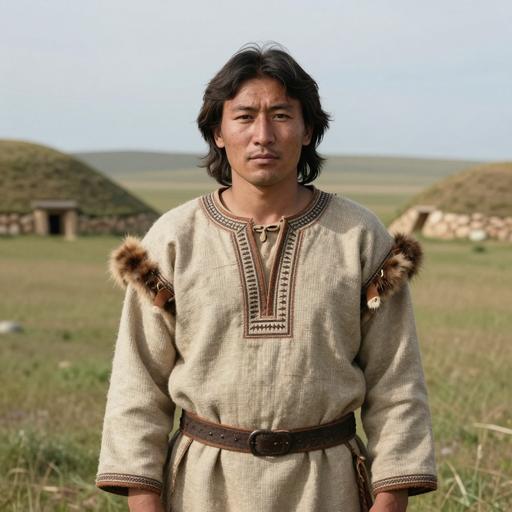
The Srubnaya-Alakul Culture represents an intriguing and significant phase in the prehistory of the Eurasian steppes, specifically during the Late Bronze Age, approximately from 1900 to 1700 BCE. This era is a testimony to the complex socio-cultural transformations and interactions within the Indo-Iranian groups, who played a pivotal role in the formation and spread of Indo-European languages and cultures.
Geographical Spread
The Srubnaya-Alakul Culture occupied a vast expanse of the Eurasian steppes, primarily across the southern areas of modern-day Russia and Kazakhstan. The culture stretched from the Ural Mountains in the west to the barren regions near the Syr Darya River in the east, a strategically significant location that served as a crossroads of cultural and economic exchange between Europe and Asia.
Origins and Influences
The Srubnaya-Alakul Culture evolved from the earlier Andronovo Cultural Complex, which is considered part of the broader Indo-Iranian cultural context. There are notable influences from preceding steppe cultures, such as the Sintashta-Petrovka culture, which is known for its advanced metallurgy and strategic innovations. This cultural transition represents the blending of local traditions with influences brought by new waves of Indo-Iranian-speaking peoples.
Economy and Subsistence
The Srubnaya-Alakul economy was predominantly pastoral, with a strong emphasis on cattle, sheep, and horse breeding. The development of this livestock economy is often linked with the culture's mobile lifestyle and nomadic tendencies, common among the prehistoric steppe societies. Agriculture was also practiced to some extent, though the harsh environmental conditions limited its extent and variety.
Settlements and Architecture
The culture is characterized by distinct burial practices in wood-constructed (timber-framed) kurgans, from which it derives its name 'Srubnaya', relating to the 'timber-grave' construct. Settlements were semi-permanent and often comprised fortified structures, indicating a need for protection, possibly from rival tribes or environmental threats. The kurgan mounds served not only as burial sites but also as social and territorial markers reflecting a highly hierarchical society.
Social Structure
The social organization within this culture appears to have been hierarchical, possibly featuring a chieftain system. Evidence from the burial rites, such as grave goods that included weapons, ornaments, and sometimes chariots, suggests a warrior elite class. This stratification is indicative of a society that placed significant importance on martial prowess and mobility, both essential for survival and dominance in the steppe environment.
Material Culture and Artifacts
The Srubnaya-Alakul culture is particularly noted for its metalwork, including bronze weapons, tools, and ornaments. The metallurgical practices were sophisticated, borrowing and innovating from neighboring cultures, which is evident from the artifacts unearthed in burial sites and settlements. Ceramics from this era were typically utilitarian, featuring ornamentation that suggests symbolic meanings or tribal affiliations.
Religion and Rituals
Religious practices and beliefs of the Srubnaya-Alakul Culture, while not entirely understood, are inferred from burial customs and associated artifacts. The inclusion of weapons and personal items in graves implies a belief in an afterlife where individuals retained their social status and roles. Ritualistic practices likely included animal sacrifices, a common feature among Indo-Iranian and other Indo-European groups.
Legacy and Influence
The Srubnaya-Alakul Culture is considered an integral link in the chain of cultural developments that led to the emergence of later Indo-Iranian-speaking communities. Its influence is particularly noted in the spread of linguistic and cultural traits across the Eurasian steppes, impacting subsequent cultures such as the Scythians and the Sarmatians. The cultural dynamics during this period laid critical foundations for the later historical civilizations that dominated the Central Asian steppes.
Conclusively, the Srubnaya-Alakul Culture is an essential component of the Indo-Iranian narrative in prehistoric Central Asia. It provides critical insights into the intricate tapestry of cultural evolution, migration, and interaction that shaped the ancient world in this region. The culture's legacy, embodied in its artifacts, burial practices, and socio-economic systems, continues to fascinate scholars and highlights the importance of the steppe territories in human history.