Menu
Currency
Main
Store
Blog

Loading Report

Preparing your ancestry journey

Connecting to ancient matches...

Preparing your report

Skip to main content
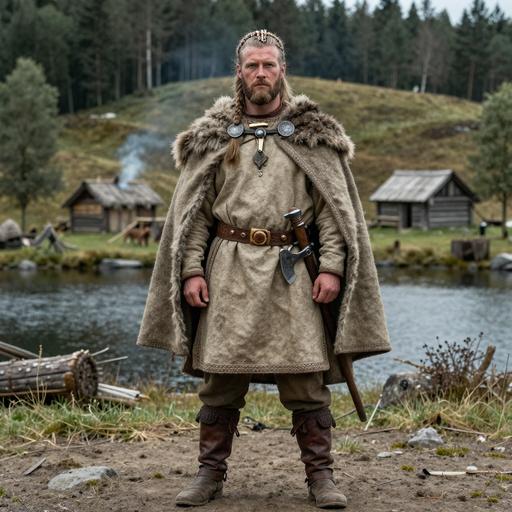
Portrait reconstruction of A man buried in Sweden in the Copper Age era
Ancient Individual

A man buried in Sweden in the Copper Age era

A man buried in Sweden during the Battle Axe Culture, Sweden

A fragment of the ancient world, preserved across millennia in strands of DNA.

ber1
2622 BCE - 2467 BCE
Male
Sweden
Scroll to begin
Chapter I

Identity

The biological and cultural markers that define this ancient individual

Sample ID

ber1

Date Range

2622 BCE - 2467 BCE

Cultural Period

Battle Axe Culture, Sweden

Biological Sex

Male

mtDNA Haplogroup

U4c1a

Y-DNA Haplogroup

R-Z283

Chapter II

Place

Where this individual was discovered

Country Sweden
Locality Bergsgraven
Coordinates 58.4158, 15.6253
Chapter III

Time

When this individual lived in the broader context of human history

ber1 2622 BCE - 2467 BCE
Chapter IV

Story

The narrative of this ancient life

The Battle Axe Culture, known in Sweden and the surrounding regions, represents an intriguing era in the late Neolithic period (approximately 2800-2300 BCE) characterized by the spread of the Proto-Indo-European peoples throughout much of Northern Europe. This culture is distinctively recognized for its contributions to early Scandinavian society, marked by significant technological, social, and economic transformations.

Geographic and Cultural Context

The Battle Axe Culture is part of the larger Corded Ware Culture, which spread across much of Northern Europe, including modern-day Sweden, Denmark, Finland, and parts of Norway. The emergence of this culture is often linked to the migrations of Indo-European peoples, influencing the local Funnel Beaker Culture inhabitants. This interaction led to the assimilation and transformation of local practices, resulting in the complex cultural dynamics observed in this period.

Social and Economic Structure

Social Organization: The Battle Axe Culture was primarily a patriarchal society, as evidenced by burial sites that often emphasize male warriors and their status. These graves commonly included battle axes, a status symbol and marker of identity, suggesting the centrality of warfare and masculine prestige in societal hierarchy. The presence of single burials, as opposed to collective burials typical of earlier cultures, indicates a shift toward individualism and possibly the emergence of a more stratified social structure.

Economy and Subsistence: The economy was predominantly agrarian, with agriculture forming the backbone of sustenance. However, archaeological findings also suggest animal husbandry, particularly cattle, sheep, and goats, played a significant role. There is evidence of a mixed economy where farming and pastoralism were complemented by hunting, fishing, and gathering. Innovations such as the plow may have been introduced during this period, increasing agricultural productivity and influencing settlement patterns by encouraging more permanent settlements.

Technological and Material Culture

Battle Axes: The iconic battle axe of this culture is both functional and symbolic, varying in form and size across different regions. These axes, often intricately crafted, served not only as weapons but as status symbols, indicating the bearer’s social position and warrior status.

Pottery and Tools: The pottery of the Battle Axe Culture was generally cord-impressed, a hallmark of the broader Corded Ware tradition. These ceramics often feature simple, utilitarian shapes with minimal decoration, indicating a focus on function. Stone tools, particularly flint and ground stone axes, are found in abundance, suggesting a continuity and advancement of Neolithic tool-making techniques.

Burial Practices and Religion

The burial practices during the Battle Axe Culture were distinctive and varied from their predecessors. Individual burials in flexed positions are common, often accompanied by grave goods such as pottery, battle axes, and beads. These burials reflect a belief system that emphasized the afterlife, personal identity, and perhaps notions of ancestral lineage and heroism.

Language and Communication

While no written records exist from the Battle Axe Culture, it is widely believed to have been a Proto-Indo-European speaking society. The spread of the culture aligns with the hypothesis of Indo-European language dispersal, and the cultural attributes observed suggest linguistic integration with local prehistoric languages, influencing the development of Proto-Germanic language branches in Northern Europe.

Legacy and Influence

The Battle Axe Culture's legacy significantly influenced the subsequent cultural and historical developments in Scandinavia. Aspects of their social structure, technological innovations, and possibly linguistic elements continued to shape the cultural landscape of the region, leading to the emergence of the Nordic Bronze Age culture.

In summary, the Battle Axe Culture in Sweden represents a transformative period characterized by the intermingling of indigenous practices with new ideas brought by Indo-European migrations. This era laid crucial foundations for the cultural and historical trajectories of Northern European societies.

Chapter V

Genetics

These comparisons show genetic similarity, not identity or origin. The populations listed are those whose genomes show statistical alignment to this ancient individual.

Similarity reflects shared history, not shared identity. These are analytical comparisons, not claims about who this person was.

Modern Genetic Admixture

This analysis compares the DNA profile with present-day reference populations, showing what percentage of genetic makeup resembles modern populations from different regions.

Europe 94.0%
Northwestern European 68.7%
English 46.6%
Northwestern European 9.3%
Scandinavian 8.9%
Finnish 3.9%
Eastern European 23.5%
Southern European 1.9%
Iberian 1.0%
Balkan 0.9%
Asia 3.7%
Northern West Asian 3.0%
Caucasian 3.0%
Central Asian, Northern Indian & Pakistani 0.7%
Indian 0.7%
Africa 1.3%
North African 1.2%
Egyptian 1.2%
Oceania 1.0%
Melanesian 1.0%
Papuan 1.0%

Closest Modern Populations

These are the modern populations showing the closest statistical alignment to A man buried in Sweden in the Copper Age era, ranked by genetic distance. Lower distance values indicate closer statistical similarity.

1
Swedish
2.8461
2
German Hamburg
2.9197
3
Norwegian
2.9958
4
Shetlandic
3.1353
5
Danish
3.1497
6
Icelandic
3.1633
7
Orcadian
3.2261
8
Dutch
3.2582
9
Scottish
3.2761
10
Irish
3.4677
Context

Related Samples

This individual exists within a broader network of ancient samples. No ancient genome stands alone.

Sample ID Culture/Period Date Location Action
ber1 Battle Axe Culture, Sweden 2622 BCE Bergsgraven, Sweden View
oll007 Battle Axe Culture, Sweden 2859 BCE Olljso, Sweden View
ajv54 Pitted Ware Culture, Sweden 3008 BCE Ajvide, Sweden View
ros005 Funnel Beaker Culture, Sweden 3096 BCE Rossberga, Sweden View
oll009 Late Neolithic Sweden 1931 BCE Olljso, Sweden View
ros3 Funnel Beaker Culture, Sweden 3331 BCE Rossberga, Sweden View
ber2 Battle Axe Culture, Sweden 2625 BCE Bergsgraven, Sweden View
oll010 Late Neolithic Sweden 1879 BCE Olljso, Sweden View
poz81 Corded Ware Culture, Poland 2881 BCE Oblaczkowo, Poland View
poz44 Corded Ware Culture, Poland 2866 BCE Oblaczkowo, Poland View
kar1 Corded Ware Culture, Estonia 2447 BCE Karlova, Estonia View
ros005_renamed Funnel Beaker Culture, Sweden 3096 BCE Rössberga, Sweden View
ber1 2622 BCE Bergsgraven, Sweden View
ber2 2625 BCE Bergsgraven, Sweden View
kar1 2447 BCE Karlova, Estonia View
ros005 3096 BCE Rossberga, Sweden View
ajv54 3008 BCE Ajvide, Sweden View
oll007 2859 BCE Olljso, Sweden View
oll009 1931 BCE Olljso, Sweden View
oll010 1879 BCE Olljso, Sweden View
poz44 2866 BCE Oblaczkowo, Poland View
poz81 2881 BCE Oblaczkowo, Poland View
ros3 3331 BCE Rossberga, Sweden View
Sample ID Culture/Period Date Location Action
ber1 Battle Axe Culture, Sweden 2622 BCE Bergsgraven, Sweden View
oll007 Battle Axe Culture, Sweden 2859 BCE Olljso, Sweden View
ber2 Battle Axe Culture, Sweden 2625 BCE Bergsgraven, Sweden View
Sources

References

Scientific publications and genetic data that inform this profile.

Scientific Publication

The genomic ancestry of the Scandinavian Battle Axe Culture people and their relation to the broader Corded Ware horizon

Authors Malmström H, Günther T, Svensson EM, Juras A, Fraser M et al.
Abstract

The Neolithic period is characterized by major cultural transformations and human migrations, with lasting effects across Europe. To understand the population dynamics in Neolithic Scandinavia and the Baltic Sea area, we investigate the genomes of individuals associated with the Battle Axe Culture (BAC), a Middle Neolithic complex in Scandinavia resembling the continental Corded Ware Culture (CWC). We sequenced 11 individuals (dated to 3330-1665 calibrated before common era (cal BCE)) from modern-day Sweden, Estonia, and Poland to 0.26-3.24× coverage. Three of the individuals were from CWC contexts and two from the central-Swedish BAC burial 'Bergsgraven'. By analysing these genomes together with the previously published data, we show that the BAC represents a group different from other Neolithic populations in Scandinavia, revealing stratification among cultural groups. Similar to continental CWC, the BAC-associated individuals display ancestry from the Pontic-Caspian steppe herders, as well as smaller components originating from hunter-gatherers and Early Neolithic farmers. Thus, the steppe ancestry seen in these Scandinavian BAC individuals can be explained only by migration into Scandinavia. Furthermore, we highlight the reuse of megalithic tombs of the earlier Funnel Beaker Culture (FBC) by people related to BAC. The BAC groups likely mixed with resident middle Neolithic farmers (e.g. FBC) without substantial contributions from Neolithic foragers.

G25 Coordinates

These coordinates represent a position in genetic space, a tool for comparison, not a conclusion. You can use these to perform custom admixture analysis in G25 Studio.

ber1,0.13226308,0.11544328,0.05590102,0.05180896,0.03130668,0.02274814,0.00442132,0.0069667,-0.00035084,-0.01071624,-0.0052059,0.0043578,0.00047572,-0.00776348,0.01178976,-0.00090688,-0.01163876,0.00122052,-0.00266136,-0.00212938,0.00444548,0.00440632,-0.0008755,0.01031852,-0.00101939
Continue in G25 Studio
Use code for 25% off Expires Jul 12