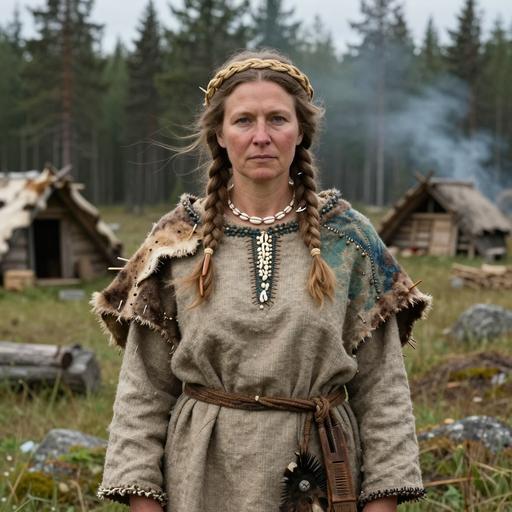
The Bolshoy Oleni Ostrov site, located in the Kola Peninsula of Russia, is a significant archaeological location that provides invaluable insights into the Arctic cultures of northern Europe during the early metal period, specifically around the second millennium BCE. This site, primarily a burial ground, offers a detailed glimpse into the social structures, spiritual beliefs, and material culture of the people who inhabited this harsh and remote region.
Geographic and Environmental Context:
Bolshoy Oleni Ostrov is situated on an island in Lake Lovozero, within the central Kola Peninsula. The region's geography is characterized by a subarctic climate, with long, harsh winters and a short, cool summer season. This environment would have influenced the seasonal activities and survival strategies of its ancient inhabitants, including hunting, fishing, and gathering.
Archaeological Discoveries:
The site was first discovered in the early 20th century and has since become renowned for its exceptionally well-preserved burial goods. The main excavation was conducted in 1928 by the renowned Soviet archaeologist Alexander Bryusov, who uncovered a cemetery with multiple graves.
Burial Practices:
The graves at Bolshoy Oleni Ostrov are notable for their complexity. They were often covered by stone slabs, indicating a sophisticated understanding of construction and ritualistic practices. The positioning of the bodies, as well as the grave goods, suggests a belief in an afterlife and the importance of the deceased's status and possessions within their journey after death.
Grave Goods:
The artifacts found within the graves include a wide array of metal objects, primarily bronze, which reflect extensive trade networks and technological skills. These objects consist of tools, weapons, and ornaments, such as daggers, spearheads, axes, buttons, and pendants. Some items have decorative elements that provide insights into the aesthetic preferences and symbolic meanings attributed to attire and personal adornment.
Additionally, many graves contained remains of wooden structures, textiles, and well-preserved organic materials, which are rare finds in Arctic archaeological contexts. These items provide a more comprehensive understanding of the daily life and material culture of the inhabitants.
Cultural and Social Insights:
The Bolshoy Oleni Ostrov site is invaluable in understanding the social hierarchies and cultural practices of its people. The variation in grave goods and burial elaboration suggests a stratified society, where individuals had different statuses and roles.
Spiritual and Religious Beliefs:
The care taken in burials and the inclusion of various grave goods indicate complex spiritual beliefs. It is likely that the people of Bolshoy Oleni Ostrov practiced animism or shamanistic rituals, common in Arctic regions, where the natural and supernatural worlds were closely intertwined.
Trade and Interaction:
The presence of metal objects, particularly bronze, points to extensive trade connections with other cultures far beyond the Arctic Circle. These trade routes likely extended southward, facilitating cultural exchanges and the spread of technological innovations.
Significance for Arctic Studies:
Bolshoy Oleni Ostrov provides crucial evidence for understanding the adaptation of human societies to extreme environments. It offers insights into how early Arctic cultures developed technology, social organization, and cultural practices in response to their surroundings.
The site is also significant for the comparative study of contemporaneous cultures across northern Europe and western Siberia, contributing to broader discussions about migration patterns, cultural diffusion, and the development of early complex societies in the Arctic.
In summary, the Bolshoy Oleni Ostrov site is a testament to the ingenuity and resilience of its ancient inhabitants, offering a window into a world where nature, belief, and community were deeply interconnected in the face of the Arctic's formidable challenges.