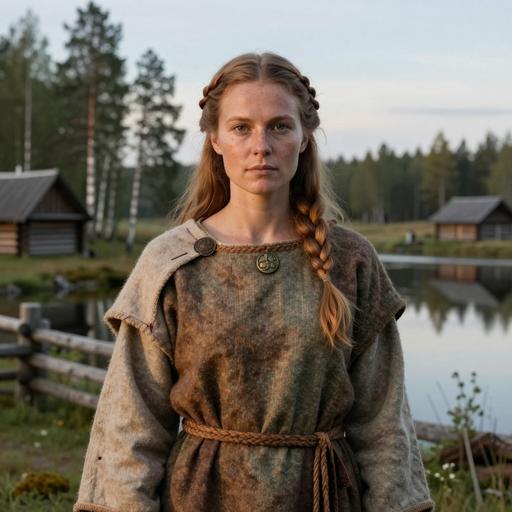
The Levanluhta site, located in present-day Finland, provides a fascinating window into the lives and practices of people during the Nordic Bronze Age, a period spanning approximately from 1700 to 500 BCE in the Nordic region. This era in Finland is somewhat unique compared to other parts of Scandinavia, owing to its geographical positioning and distinct cultural interactions.
Geographic and Archaeological Context
The Levanluhta site is situated in western Finland, characterized by its wetland environment. It's a notable archaeological location primarily because it serves as a burial site. Wetlands, bogs, or lakes were often used in ancient Nordic societies for ritualistic purposes, including human sacrifices and burials, because of their mystical connotations as liminal spaces between life and death.
Cultural Attributes
Settlement and Society
During the Nordic Bronze Age, Finland's society was organized primarily into small communities or clans, often related by familial ties. These communities were typically self-sufficient, relying on a mix of farming, hunting, and fishing. The landscape necessitated a semi-nomadic lifestyle in some areas, with settlements located near water sources for sustenance and transportation.
Material Culture
The material culture of the region around the Levanluhta site reflects a blend of local and external influences, particularly from Scandinavian and Baltic interactions. While bronze was a significant material in Scandinavia during this time, in Finland, bronze artifacts were less common. Instead, stone and organic materials were more frequently used, reflecting the limited access to metal trade networks.
Artifacts: Items such as stone tools, pottery, and wooden implements have been discovered. Ornamentation, when present, often included amber and bone, with designs reflecting symbolic meanings or social statuses.
Burial Practices and Spiritual Life
Levanluhta particularly provides insights into the spiritual and ritual practices of the period. The site is renowned for its use as a burial place, where numerous human remains have been discovered submerged in waterlogged conditions. This method of burial might indicate beliefs associated with water as a purifying element or a means to connect with the spiritual realm.
Rituals: Burials in wetlands may have had ritualistic purposes, possibly related to ancestor worship or appeasement of deities. The presence of animal remains and ritual deposits could suggest offerings to gods or spirits.
Art and Symbolism
Art from this era in Finland includes simplistic geometric designs and depictions of animals, which may have been imbued with spiritual significance. Rock carvings and patterns found on pottery reflect the cultural exchange between Finnish groups and neighboring cultures. Symbolic motifs often found in bronze work from more southern Nordic regions are less prevalent in Finland, underlining the area's divergent cultural evolution.
Economy and Trade
The Bronze Age in this region saw minimal large-scale trade; however, the exchange of goods such as furs, timber, and amber occurred. Trade routes connected Finnish communities with Baltic and Scandinavian partners, fostering a gradual exchange of ideas and materials. The presence of bronze artifacts, although limited, indicates occasional trade interactions with more metal-rich neighboring regions.
Climate and Environmental Impact
The climate during the Nordic Bronze Age in Finland was cooler and wetter than the present day, which influenced the predominantly subsistence-based lifestyle. The abundance of natural resources like forests and water bodies played a crucial role in daily life, providing materials for tools, housing, and food.
Conclusion
The Levanluhta site offers valuable insights into the Nordic Bronze Age specific to Finland, illustrating a society that, while connected to broader Nordic cultural dynamics, maintained unique regional characteristics. The use of wetlands for burials highlights distinctive spiritual beliefs and practices, while the region's material culture reflects a reliance on natural resources coupled with influences garnered through limited but significant trade and contact with neighboring peoples.