Region & Environment
Early Neolithic communities occupied much of Iberia, within a patchwork of Mediterranean-coastal zones, river valleys, and interior uplands. Seasonal climates and locally varied soils shaped what could be grown and where settlements could be maintained, while access to water supported both cultivation and animal husbandry.
Historical Context
This period falls within the broader Neolithization of western and southern Europe, when farming and herding became increasingly established after earlier hunter-gatherer lifeways. In Iberia, archaeological assemblages associated with the Cardial tradition appear as a recurring cultural pattern, helping anchor the earliest long-term Neolithic lifeways in the region.
Populations & Lifeways
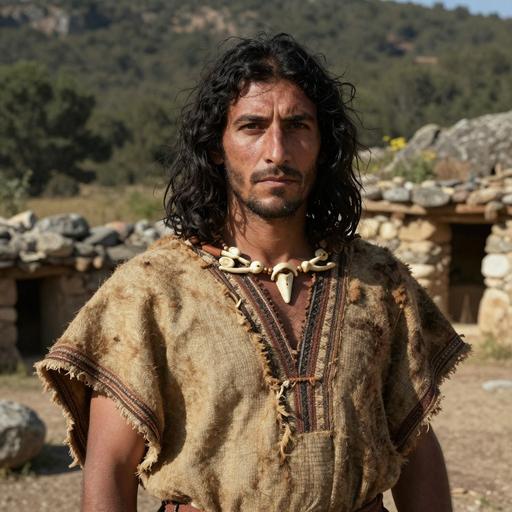
Villages and smaller settlement units formed part of a stable subsistence strategy centered on domestic plants and animals. People were generally tied to fields and grazing areas, though movement between sites—such as seasonal use of particular locales—would have remained important in landscapes with uneven resources through the year. Social life likely involved community labor in cultivation, herding, food processing, and craft activities.
Archaeology & Material Culture
Neolithic material culture in Early Iberian contexts commonly includes ceramics made for daily use, often decorated in ways that link assemblages to the Cardial tradition. Lithic technology shows how stone-working practices continued alongside farming-related needs such as woodworking and food processing tools. Archaeological remains—such as habitation deposits and domestic activity areas—tend to reflect repeated use over time, consistent with village-based lifeways.
Culture & Society
Shared stylistic practices in ceramics and recurring tool traditions suggest networks of interaction across parts of Iberia and beyond. Identity and social communication were likely expressed through craft choices and the transmission of learned techniques. Increasing reliance on domestic economies would also have encouraged more durable settlement patterns and the management of land and herds over generations.
Legacy & Transition
Early Neolithic communities helped transform Iberian landscapes by establishing farming and herding as foundational subsistence strategies. Over time, later Neolithic and subsequent cultural developments built on these early village traditions, while changes in pottery styles, settlement practices, and regional interaction patterns mark the transition toward later prehistoric phases.