Menu
Currency
Main
Store
Blog

Loading Report

Preparing your ancestry journey

Connecting to ancient matches...

Preparing your report

Skip to main content
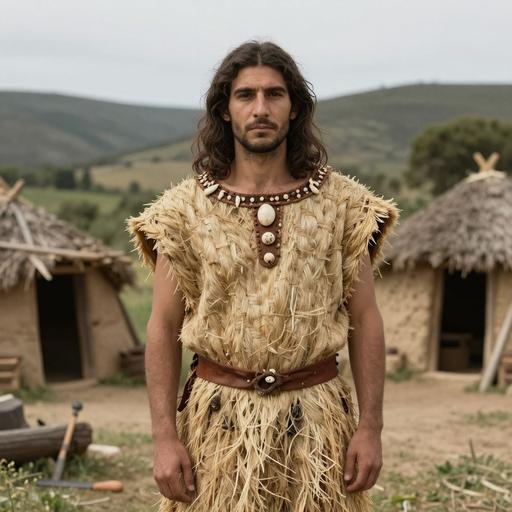
Portrait reconstruction of A man buried in Spain in the Early Neolithic era
Ancient Individual

A man buried in Spain in the Early Neolithic era

A man buried in Spain during the Early Neolithic Spain

A fragment of the ancient world, preserved across millennia in strands of DNA.

FUC003
5209 BCE - 4947 BCE
Male
Spain
Scroll to begin
Chapter I

Identity

The biological and cultural markers that define this ancient individual

Sample ID

FUC003

Date Range

5209 BCE - 4947 BCE

Cultural Period

Early Neolithic Spain

Biological Sex

Male

mtDNA Haplogroup

U

Y-DNA Haplogroup

G2a2a1

Social Role

Farmer (AI estimate, era-typical)

Chapter II

Place

Where this individual was discovered

Country Spain
Locality Fuente Celada
Coordinates 42.3856, -3.7349
Chapter III

Time

When this individual lived in the broader context of human history

FUC003 5209 BCE - 4947 BCE
Chapter IV

Story

The narrative of this ancient life

Region & Environment

Early Neolithic communities occupied much of Iberia, within a patchwork of Mediterranean-coastal zones, river valleys, and interior uplands. Seasonal climates and locally varied soils shaped what could be grown and where settlements could be maintained, while access to water supported both cultivation and animal husbandry.

Historical Context

This period falls within the broader Neolithization of western and southern Europe, when farming and herding became increasingly established after earlier hunter-gatherer lifeways. In Iberia, archaeological assemblages associated with the Cardial tradition appear as a recurring cultural pattern, helping anchor the earliest long-term Neolithic lifeways in the region.

Populations & Lifeways

Villages and smaller settlement units formed part of a stable subsistence strategy centered on domestic plants and animals. People were generally tied to fields and grazing areas, though movement between sites—such as seasonal use of particular locales—would have remained important in landscapes with uneven resources through the year. Social life likely involved community labor in cultivation, herding, food processing, and craft activities.

Archaeology & Material Culture

Neolithic material culture in Early Iberian contexts commonly includes ceramics made for daily use, often decorated in ways that link assemblages to the Cardial tradition. Lithic technology shows how stone-working practices continued alongside farming-related needs such as woodworking and food processing tools. Archaeological remains—such as habitation deposits and domestic activity areas—tend to reflect repeated use over time, consistent with village-based lifeways.

Culture & Society

Shared stylistic practices in ceramics and recurring tool traditions suggest networks of interaction across parts of Iberia and beyond. Identity and social communication were likely expressed through craft choices and the transmission of learned techniques. Increasing reliance on domestic economies would also have encouraged more durable settlement patterns and the management of land and herds over generations.

Legacy & Transition

Early Neolithic communities helped transform Iberian landscapes by establishing farming and herding as foundational subsistence strategies. Over time, later Neolithic and subsequent cultural developments built on these early village traditions, while changes in pottery styles, settlement practices, and regional interaction patterns mark the transition toward later prehistoric phases.

Context

Related Samples

This individual exists within a broader network of ancient samples. No ancient genome stands alone.

Sample ID Culture/Period Date Location Action
BAL003 Upper Paleolithic Azilian Culture, Spain 10727 BCE Balma Guilanya, Spain View
BAL051 Upper Paleolithic Azilian Culture, Spain 11446 BCE Balma Guilanya, Spain View
CHA001_merged Early Neolithic Spain 5308 BCE Cueva de Chaves, Spain View
CHA002 Early Neolithic Spain 5302 BCE Cueva de Chaves, Spain View
CHA003 Early Neolithic Spain 5302 BCE Cueva de Chaves, Spain View
CHA004 Early Neolithic Spain 4545 BCE Cueva de Chaves, Spain View
CMS001 Geometric Mesolithic Portugal 6238 BCE Moita do Sebastiao, Portugal View
ELT002 Middle to Late Neolithic Spain 3941 BCE Cova de Els Trocs, Spain View
ELT006 Middle to Late Neolithic Spain 3949 BCE Cova de Els Trocs, Spain View
FUC003 Early Neolithic Spain 5209 BCE Fuente Celada, Spain View
Sample ID Culture/Period Date Location Action
I2199 Early Neolithic Spain 5214 BCE Burgos. El Prado de Pancorbo, Spain View
I0409 Early Neolithic Spain 5312 BCE Els Trocs, Spain View
I0411 Early Neolithic Spain 5298 BCE Els Trocs, Spain View
I0412 Early Neolithic Spain 5309 BCE Els Trocs, Spain View
I0410 Early Neolithic Spain 5298 BCE Els Trocs, Spain View
I0413 Early Neolithic Spain 5304 BCE Els Trocs, Spain View
I1972 Early Neolithic Spain 4836 BCE Burgos. El Prado de Pancorbo, Spain View
CHA001_merged Early Neolithic Spain 5308 BCE Cueva de Chaves, Spain View
CHA002 Early Neolithic Spain 5302 BCE Cueva de Chaves, Spain View
CHA003 Early Neolithic Spain 5302 BCE Cueva de Chaves, Spain View
CHA004 Early Neolithic Spain 4545 BCE Cueva de Chaves, Spain View
FUC003 Early Neolithic Spain 5209 BCE Fuente Celada, Spain View
mur Early Neolithic Spain 5299 BCE Andalusia. Murciélagos de Zuheros, Spain View
CB13 Early Neolithic Spain 5474 BCE Cova Bonica. Vallirana. Barcelona, Spain View
TOR.6 Early Neolithic Spain 5100 BCE El Toro, Spain View
TOR.8 Early Neolithic Spain 5100 BCE El Toro, Spain View
atp005 Early Neolithic Spain 5214 BCE Atapuerca. El Portalón, Spain View
TOR.7 Early Neolithic Spain 5100 BCE El Toro, Spain View
TOR.11 Early Neolithic Spain 5036 BCE El Toro, Spain View
Sources

References

Scientific publications and genetic data that inform this profile.

Scientific Publication

Survival of Late Pleistocene Hunter-Gatherer Ancestry in the Iberian Peninsula

Authors Villalba-Mouco V, van de Loosdrecht MS, Posth C, Mora R, Martínez-Moreno J et al.
Abstract

The Iberian Peninsula in southwestern Europe represents an important test case for the study of human population movements during prehistoric periods. During the Last Glacial Maximum (LGM), the peninsula formed a periglacial refugium [1] for hunter-gatherers (HGs) and thus served as a potential source for the re-peopling of northern latitudes [2]. The post-LGM genetic signature was previously described as a cline from Western HG (WHG) to Eastern HG (EHG), further shaped by later Holocene expansions from the Near East and the North Pontic steppes [3-9]. Western and central Europe were dominated by ancestry associated with the ∼14,000-year-old individual from Villabruna, Italy, which had largely replaced earlier genetic ancestry, represented by 19,000-15,000-year-old individuals associated with the Magdalenian culture [2]. However, little is known about the genetic diversity in southern European refugia, the presence of distinct genetic clusters, and correspondence with geography. Here, we report new genome-wide data from 11 HGs and Neolithic individuals that highlight the late survival of Paleolithic ancestry in Iberia, reported previously in Magdalenian-associated individuals. We show that all Iberian HGs, including the oldest, a ∼19,000-year-old individual from El Mirón in Spain, carry dual ancestry from both Villabruna and the Magdalenian-related individuals. Thus, our results suggest an early connection between two potential refugia, resulting in a genetic ancestry that survived in later Iberian HGs. Our new genomic data from Iberian Early and Middle Neolithic individuals show that the dual Iberian HG genomic legacy pertains in the peninsula, suggesting that expanding farmers mixed with local HGs. VIDEO ABSTRACT.

Use code for 25% off Expires Jul 27