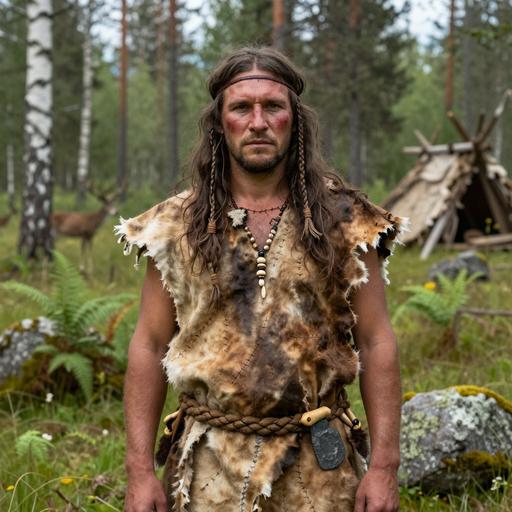
The era of Hunter-Gatherer Russia, particularly within the context of circumpolar cultures, represents a fascinating and rich period in human history. This era stretches from the late Paleolithic to the early Bronze Age, approximately from 40,000 BCE to 2,000 BCE, and is characterized by the adaptation of human communities to the demanding and diverse climates of northern Eurasia. The circumpolar cultures of this region encompass a range of ethnic groups who inhabited vast areas from Eastern Europe to Siberia, each with unique customs and ways of life adapted to the taiga, tundra, and forested landscapes.
Environment and Geography
The geography of Hunter-Gatherer Russia is marked by a varied landscape that includes dense forests, sprawling tundra, and vast stretches of steppes and rivers such as the Volga, Lena, and Yenisei. During this era, climatic conditions varied frequently, impacting the availability of resources and influencing migratory patterns. Glaciations and shifting landscapes resulted in a rich tapestry of ecological niches, leading to diverse flora and fauna.
Subsistence and Survival
The communities of Hunter-Gatherer Russia were primarily mobile, relying on extensive knowledge of the natural world for survival. These groups were adept at exploiting the seasonal abundance of resources:
Hunting: Large game such as mammoths, bison, reindeer, and later on, elks and bears, were primary targets. Tools made from stone, bone, and later copper were employed for hunting. The spear, bow and arrow, and traps were commonly used.
Fishing: The many rivers and lakes provided abundant fish, which were a crucial component of the diet. Techniques included the use of nets, weirs, and harpoons.
Foraging: Gathering wild berries, nuts, tubers, and plant materials supplemented diets heavily reliant on meat. Seasonal movement often followed the ripening of different food sources.
Social Structure and Organization
Social structures within these hunter-gatherer groups were likely egalitarian, with leadership roles based on merit and experience rather than hereditary descent. Kinship ties were crucial and often dictated group organization and cooperation. Division of labor was typically along gender lines, though not rigidly enforced, allowing flexibility depending on necessity and skill.
Culture and Spirituality
Cultural expression in Hunter-Gatherer Russia was rich, with evidence of art, music, and spirituality woven into daily life:
Art: Cave paintings, petroglyphs, and carved figurines found in Siberia and parts of northern Russia suggest a vibrant tradition of visual expression. These often depict animals, hunts, and possibly shamanistic imagery.
Spiritual Beliefs: Animism likely played a significant role, with natural elements and animals imbued with spiritual significance. Shamanism, as deduced from archaeological findings, suggested a deep connection between the people and their natural environment, involving practices to ensure successful hunts and harmony with nature.
Oral Tradition and Storytelling: Stories passed through generations helped maintain cultural continuity and impart vital survival knowledge. Myths and legends would often explain natural phenomena and cultural values.
Technological Advances
During this period, technological advancements were critical to adapting to the harsh environments:
Tool Making: From the early use of simple stone tools, there was a technological evolution to more sophisticated implements made from bone, ivory, and eventually metals like copper.
Clothing: To survive the severe cold, communities developed methods for creating insulated clothing from animal skins and furs, indicating advanced skills in sewing and garment construction.
Dwellings: Structures ranged from simple tents made of skins draped over wooden frames to semi-permanent houses built from bones of large animals and covered with animal hides.
Interaction and Trade
Despite the vast distances and sparse population, evidence indicates that hunter-gatherer groups maintained networks of interaction, trade, and cultural exchange. Items like flint, shells, and later, metals, moved across significant distances. These exchanges facilitated not only the flow of goods but also ideas and technologies.
Transition and Legacy
By the end of this era, significant cultural changes were underway, driven largely by climatic shifts and the introduction of agriculture and metallurgy. However, many aspects of these ancient cultures persisted, influencing subsequent societies in the region. The traditions and practices of these hunter-gatherer communities left an indelible mark on the landscape, genetics, and cultural memory of the peoples of northern Eurasia.
In conclusion, Hunter-Gatherer Russia of the circumpolar cultures is a window into humanity's adaptability and ingenuity in the face of extreme and fluctuating environments. Their legacy lives on in the echoes of modern cultural practices, genetic lineages, and through the continued interest and study of archaeologists and anthropologists worldwide.