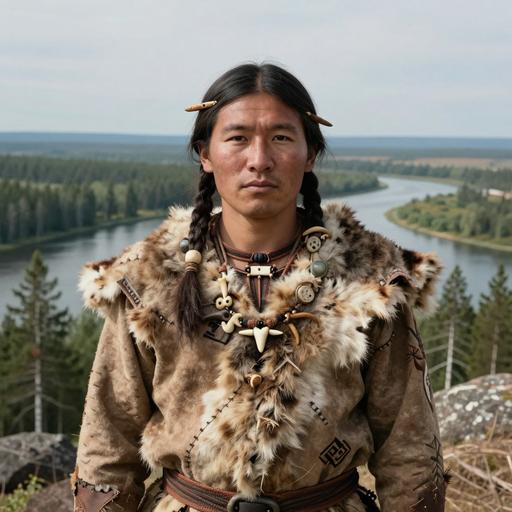
The Ust-Belaya Angara Culture represents a significant chapter in the history of Siberian hunter-gatherers, flourishing approximately during the middle to late Holocene period. This culture is named after the region surrounding the confluence of the two major rivers, the Ust-Belaya and the Angara, in Siberia. It provides a unique insight into the adaptation, innovation, and survival strategies of ancient human communities in the challenging environments of the Siberian taiga and tundra.
Geographic and Environmental Context
The Ust-Belaya Angara Culture thrived in a region characterized by its harsh climate, with long, frigid winters and short, cool summers. The landscape is predominantly defined by expansive forests, challenging mountainous terrains, and numerous rivers and lakes. These geographical features played a crucial role in shaping the subsistence and lifestyle of the Ust-Belaya Angara people. The region provided a diverse range of resources, including fish from the abundant waterways, game from the dense forests, and seasonal plant resources.
Subsistence Strategies
The Ust-Belaya Angara people were highly adept hunter-gatherers, relying on a mixed subsistence economy that was intricately adapted to their environment. Their diet primarily consisted of fish, given the abundance of rivers and lakes. Archaeological evidence suggests the use of sophisticated fishing techniques and tools, such as bone fish hooks and nets. In addition to fishing, they hunted a variety of terrestrial animals, including deer, elk, and smaller mammals.
Gathering played a supplementary role, with the collection of berries, nuts, and roots adding dietary diversity. The seasonal availability of different resources necessitated a semi-nomadic lifestyle, with movement patterns aligned to resource abundance, allowing the community to exploit different environmental zones throughout the year.
Technological and Material Culture
The Ust-Belaya Angara Culture is characterized by its distinctive lithic technology. This includes a variety of stone tools such as bladelets, scrapers, and bifacially flaked points, which were used for hunting, processing food, and crafting. The crafting of tools from locally available stone and bone signifies an advanced understanding of the materials and the tasks they were designed to perform.
Pottery associated with this culture exhibits simple forms with limited decoration, indicating utilitarian use, primarily for cooking and storage. This marks an evolution in the storage and preparation of food, reflecting the gradual changes in their lifestyle toward more sedentary community setups.
Social Organization
The societal structure of the Ust-Belaya Angara Culture is believed to be organized into small, mobile groups or bands that operated within kin-based networks. These groups would have been highly cooperative, relying on collective strategies for resource procurement and sharing of knowledge to ensure survival in the demanding Siberian environment. Evidence of shared tool styles and burial practices across regions implies some form of social cohesion and possibly trade or communication between groups.
Spiritual and Cultural Life
While the material culture provides limited direct evidence of the spiritual life of the Ust-Belaya Angara people, it is likely that their world-view and spiritual beliefs were closely tied to their environment. Animism, the belief that natural objects and phenomena possess a spiritual essence, would have been central, guided by the rhythms of nature which directly influenced their survival.
Burial practices indicate a belief in an afterlife or spiritual continuation, with grave goods occasionally accompanying the deceased, suggestive of their beliefs surrounding death and the existence beyond life. These practices, although not excessively elaborate, highlight the presence of ceremonial aspects to their culture.
Conclusion
The Ust-Belaya Angara Culture offers a vivid glimpse into the life of Siberian hunter-gatherers, showcasing remarkable adaptability in one of the world's most demanding environments. Their technology, subsistence strategies, and social organization lay the foundation for understanding the development of human societies in northern climates and their interactions with the expanses of Siberia. This culture represents a testament to human resilience and ingenuity, forming a crucial part of the prehistoric tapestry of human civilizations in Siberia.