Menu
Store
Blog
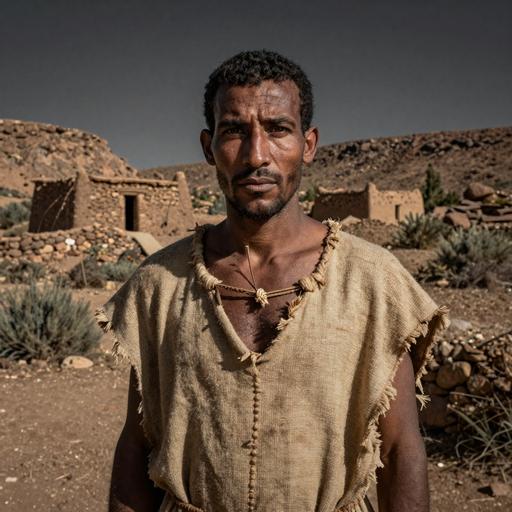
Portrait reconstruction of ktg004
Ancient Individual

A man buried in Morocco in the Neolithic era

ktg004
5209 BCE - 4995 BCE
Male
Early Neolithic Cardial in North Africa
Morocco
Scroll to begin
Chapter I

Identity

The biological and cultural markers that define this ancient individual

Sample ID

ktg004

Date Range

5209 BCE - 4995 BCE

Biological Sex

Male

mtDNA Haplogroup

HV0 + 195

Y-DNA Haplogroup

Not available

Cultural Period

Early Neolithic Cardial in North Africa

Chapter II

Place

Where this individual was discovered

Country Morocco
Locality Kaf Taht el-Ghar
Coordinates 34.5051, -4.2558
Chapter III

Time

When this individual lived in the broader context of human history

ktg004 5209 BCE - 4995 BCE
Chapter IV

Story

The narrative of this ancient life

The Early Neolithic Cardial culture, predominantly recognized in Southern Europe and the Western Mediterranean, is known for its unique pottery, often decorated with shell impressions. When referencing the Early Neolithic Cardial culture in relation to North Africa and Berber communities, we must consider the broader context of Neolithic transitions in the region and the influences that may have traversed the Mediterranean.

Overview of the Neolithic Transition in North Africa

The Neolithic era marks the transition from hunter-gatherer societies to more settled agricultural communities. In North Africa, this transformation occurred at varying paces and in somewhat different forms compared to Europe or the Near East. The Maghreb region, home to the indigenous Berber populations, experienced these changes through a combination of indigenous developments and external influences, including those from the Mediterranean Cardial culture.

Neolithic Cardial Influences

  1. Pottery and Ceramics: Pottery is a defining characteristic of Neolithic cultures. Cardial pottery, named after the Latin word \Cardium" for cockle shells, often features decorative impressions made by pressing shells into soft clay. While the most classic examples of Cardial pottery are found in Southern France and the Iberian Peninsula, there is significant evidence of ceramic influences across the Mediterranean. In North Africa, pottery independently evolved, but exchanges through trade and migration likely brought Cardial pottery techniques and styles to Berber communities.

  2. Agricultural Techniques: The spread of agricultural practices across the Mediterranean was a gradual process. In North Africa, early farming was influenced both by indigenous practices and by techniques from across the sea. The Berber regions eventually adopted grain cultivation, pastoralism, and other agricultural tools and practices that were likely influenced by Mediterranean counterparts, possibly including Cardial connections.

  3. Settlement Patterns: The Cardial culture often established small, semi-permanent settlements. In North Africa, the move from nomadic to more permanent settlements also characterized the Neolithic period, as communities oriented around water sources, fertile land, and trade routes. Some aspects of settlement organization may mirror those seen in the Cardial regions of Europe.

Berber Influence and Adaptation

The Berbers, indigenous to North Africa, are not a monolithic group but rather a collection of diverse communities with varying languages and customs. Their adaptation to the Neolithic way of life illustrates a blend of maintaining traditional practices while adopting new innovations. The Berber people played an active role in shaping how Neolithic practices evolved locally, ensuring that while there might have been external influences, these were integrated into the local context.

Key Archaeological Sites and Findings

Several Neolithic sites in North Africa provide insights into the region's cultural transformations during this era. Sites such as Capsian culture locations in Algeria and Tunisia show evidence of early Neolithic technological and cultural developments. These sites have revealed artifacts, burial practices, and settlement patterns that reflect the mingling of indigenous and foreign influences, including those that might be attributed to Mediterranean interactions.

Conclusion

The Early Neolithic Cardial culture in the context of North African Berber communities represents a fascinating period of cultural exchange and adaptation. While the direct influence of Cardial elements might be less pronounced compared to Southern Europe, the interconnectedness of the Mediterranean facilitated the sharing of ideas, technologies, and commodities. The Berbers, with their distinct cultural identity, absorbed and transformed these elements to suit their unique environments and social structures, contributing richly to North Africa's Neolithic heritage."

Chapter V

Context

Other ancient individuals connected to this sample

Sources

References

Scientific publications and genetic data

Scientific Publication

Northwest African Neolithic initiated by migrants from Iberia and Levant

Authors Simões LG, Günther T, Martínez-Sánchez RM
Abstract

In northwestern Africa, lifestyle transitioned from foraging to food production around 7,400 years ago but what sparked that change remains unclear. Archaeological data support conflicting views: (1) that migrant European Neolithic farmers brought the new way of life to North Africa1-3 or (2) that local hunter-gatherers adopted technological innovations4,5. The latter view is also supported by archaeogenetic data6. Here we fill key chronological and archaeogenetic gaps for the Maghreb, from Epipalaeolithic to Middle Neolithic, by sequencing the genomes of nine individuals (to between 45.8- and 0.2-fold genome coverage). Notably, we trace 8,000 years of population continuity and isolation from the Upper Palaeolithic, via the Epipaleolithic, to some Maghrebi Neolithic farming groups. However, remains from the earliest Neolithic contexts showed mostly European Neolithic ancestry. We suggest that farming was introduced by European migrants and was then rapidly adopted by local groups. During the Middle Neolithic a new ancestry from the Levant appears in the Maghreb, coinciding with the arrival of pastoralism in the region, and all three ancestries blend together during the Late Neolithic. Our results show ancestry shifts in the Neolithization of northwestern Africa that probably mirrored a heterogeneous economic and cultural landscape, in a more multifaceted process than observed in other regions.

Use code for 40% off Expires Mar 01