Menu
Store
Blog
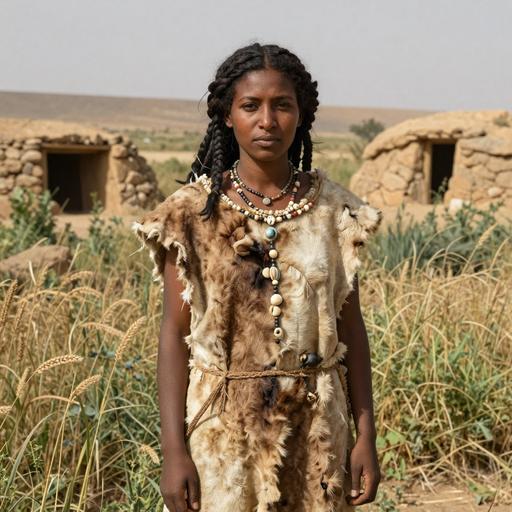
Portrait reconstruction of oub002
Ancient Individual

A woman buried in Morocco in the Paleolithic era

oub002
5710 BCE - 5556 BCE
Female
Epipalaeolithic Era in North Africa
Morocco
Scroll to begin
Chapter I

Identity

The biological and cultural markers that define this ancient individual

Sample ID

oub002

Date Range

5710 BCE - 5556 BCE

Biological Sex

Female

mtDNA Haplogroup

U6a6b

Cultural Period

Epipalaeolithic Era in North Africa

Chapter II

Place

Where this individual was discovered

Country Morocco
Locality Ifri Ouberrid
Coordinates 35.2154, -3.2544
Chapter III

Time

When this individual lived in the broader context of human history

oub002 5710 BCE - 5556 BCE
Chapter IV

Story

The narrative of this ancient life

The Epipalaeolithic era in North Africa represents a transitional period immediately following the Upper Paleolithic and leading into the Neolithic. This era, roughly spanning from around 20,000 to 10,000 years ago, is characterized by significant changes in human behavior, technological innovation, and adaptation to environmental shifts. The Epipalaeolithic era in North Africa is marked by the emergence of more localized and diverse cultures as human populations adapted to specific ecological niches across the region.

Environment and Climate

During the Epipalaeolithic period, North Africa experienced significant climatic changes. As the Last Glacial Maximum began to wane, there were fluctuations in temperature and humidity, leading to changes in the landscape. The Sahara Desert, for example, experienced periods of aridity as well as more humid phases, which affected the distribution of flora and fauna. These environmental shifts necessitated adaptations in human subsistence strategies.

Technological and Cultural Developments

The technological hallmark of the Epipalaeolithic is the development of microlithic tools. These small, retouched stone blades and points were often set into bone or wooden shafts to create composite tools such as arrows and harpoons. This advancement in tool-making reflected a shift towards more efficient hunting techniques, enabling humans to exploit a broader range of animal species.

The Epipalaeolithic cultures of North Africa also demonstrate early evidence of sedentism and experimentation with food production. While full agriculture did not develop until the Neolithic, there is evidence to suggest that certain groups began to cultivate wild grains and manage animal herds. This is particularly notable in areas like the Nile Valley, where the reliable water source may have encouraged more permanent settlement patterns.

Artistic and Ritualistic Expressions

During this era, there is also an evident flourishing of artistic expression. Rock art sites, notably in areas such as the Tassili n’Ajjer in modern-day Algeria, offer insights into the symbolic and ritualistic life of Epipalaeolithic peoples. These artworks often depict animals and human figures, suggesting a rich symbolic or religious life intertwined with the environment and the animals they depended on.

Regional Variability

The Epipalaeolithic cultures in North Africa are by no means homogenous; rather, they exhibit significant regional variation. In the Maghreb, for instance, the Iberomaurusian culture dominated, characterized by certain types of bladelets and the use of marine resources. In contrast, the Nile Valley saw the emergence of groups that would eventually contribute to the development of agriculture and more complex societies.

The diverse adaptations seen across different regions illustrate the varied responses of human populations to changing environmental conditions. These adaptations laid the foundation for the subsequent Neolithic, where significant advances in agriculture and permanent settlements transformed human societies in North Africa.

Summary

The Epipalaeolithic era in North Africa is a critical period of transition and adaptation, marked by technological innovation, early forms of artistic expression, and the gradual shift towards more sedentary and complex societies. The adaptations made by humans during this time reflect a profound interaction with their changing environment, setting the stage for the advent of agriculture and the Neolithic revolution. Understanding this era provides valuable insights into human resilience and ingenuity in the face of environmental change.

Chapter V

Context

Other ancient individuals connected to this sample

Sources

References

Scientific publications and genetic data

Scientific Publication

Northwest African Neolithic initiated by migrants from Iberia and Levant

Authors Simões LG, Günther T, Martínez-Sánchez RM
Abstract

In northwestern Africa, lifestyle transitioned from foraging to food production around 7,400 years ago but what sparked that change remains unclear. Archaeological data support conflicting views: (1) that migrant European Neolithic farmers brought the new way of life to North Africa1-3 or (2) that local hunter-gatherers adopted technological innovations4,5. The latter view is also supported by archaeogenetic data6. Here we fill key chronological and archaeogenetic gaps for the Maghreb, from Epipalaeolithic to Middle Neolithic, by sequencing the genomes of nine individuals (to between 45.8- and 0.2-fold genome coverage). Notably, we trace 8,000 years of population continuity and isolation from the Upper Palaeolithic, via the Epipaleolithic, to some Maghrebi Neolithic farming groups. However, remains from the earliest Neolithic contexts showed mostly European Neolithic ancestry. We suggest that farming was introduced by European migrants and was then rapidly adopted by local groups. During the Middle Neolithic a new ancestry from the Levant appears in the Maghreb, coinciding with the arrival of pastoralism in the region, and all three ancestries blend together during the Late Neolithic. Our results show ancestry shifts in the Neolithization of northwestern Africa that probably mirrored a heterogeneous economic and cultural landscape, in a more multifaceted process than observed in other regions.

Use code for 40% off Expires Mar 01