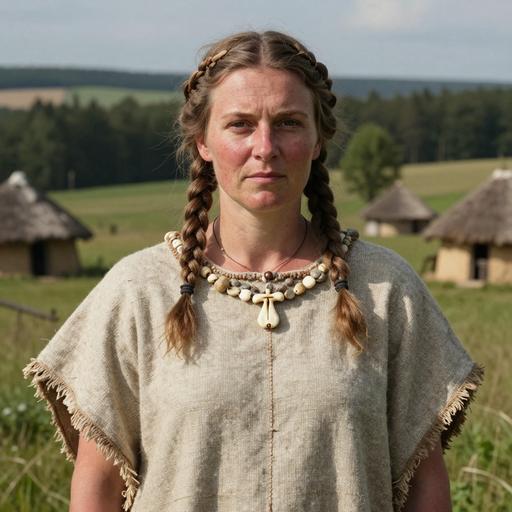
The Brześć Kujawski Group is a fascinating archaeological culture of the European Neolithic, which is particularly noteworthy for its presence in what is now modern-day Poland. Flourishing approximately between 4000 and 3000 BCE, this group is predominantly associated with the later phases of the Neolithic, during a period where agricultural practices and settled lifestyles were becoming increasingly well-established across Europe.
Geographic Scope
The Brześć Kujawski Group is primarily located in the central and north-central regions of Poland. The name \Brześć Kujawski" itself is derived from a key archaeological site within this region, offering critical insight into the life and evolution of these Neolithic communities. This region is characterized by its fertile plains, providing an ideal environment for early agrarian societies.
Cultural Characteristics
Agriculture and Economy:
The Brześć Kujawski Group is notable for its advanced agricultural techniques for the time, which supported a transition from nomadic hunter-gatherer lifestyles to more sedentary farming communities. They cultivated various crops such as wheat, barley, and possibly lentils. Animal husbandry also played a significant role in their economy, with evidence of domesticated cattle, pigs, sheep, and goats.
Settlement Patterns:
Settlements were generally small to medium-sized, comprising a few to several dozen structures. These were often situated near water sources, such as rivers or lakes, which provided necessary resources and a means of transportation. The settlements show evidence of semi-permanent, rectangular longhouses constructed with wooden posts and wattle-and-daub techniques, sometimes reinforced with clay walls.
Material Culture:
The material culture of the Brześć Kujawski Group is distinguished by its pottery, which displays a variety of decorative techniques such as incised, impressed, and painted patterns. Pottery styles often demonstrate intricate geometric designs, indicating a unique aesthetic and cultural emphasis on decoration. Additionally, they produced tools and weapons primarily from stone and flint, including axes, scrapers, and arrowheads, reflecting their advanced tool-making skills.
Social and Ritual Aspects
Social Structure:
The Brześć Kujawski Group likely had a complex social structure, though definitive hierarchies are challenging to ascertain from the archaeological record alone. The presence of burial sites and the varying richness of grave goods suggest some degree of social stratification.
Ritual and Burial Practices:
Burial practices provide significant insight into their belief systems and social organization. Graves often contained pottery, tools, and ornaments, which might indicate a belief in an afterlife or a ritualistic honoring of the deceased. The positioning of bodies and grave goods within these burial sites suggests ceremonial practices with possible symbolic meanings.
Technological and Artistic Contributions
The Brześć Kujawski Group demonstrated considerable creativity and technical skill in their construction methods and artistic expressions. Their pottery, besides being utilitarian, was often decorated with complex motifs, indicating both artistic inclination and the potential social or spiritual significance of these items. Their development of lithic technology, particularly the production of high-quality flint tools, showcases their understanding of material properties and practical applications.
Impact and Legacy
This group is an integral part of the Neolithic tapestry in Central Europe, influencing subsequent cultural developments. By embedding agricultural practices and advancing settled community life, the Brześć Kujawski Group contributed significantly to the broader trend of Neolithization in Europe. Their innovations in pottery, agriculture, and architecture left an enduring legacy that would shape the future cultural and social landscapes of the region.
In summary, the Brześć Kujawski Group represents a crucial phase in European prehistory, characterized by agricultural innovation, complex social structures, and rich material culture. Their impact on the Neolithic transition in Central Europe underscores the importance of their contributions to human history."