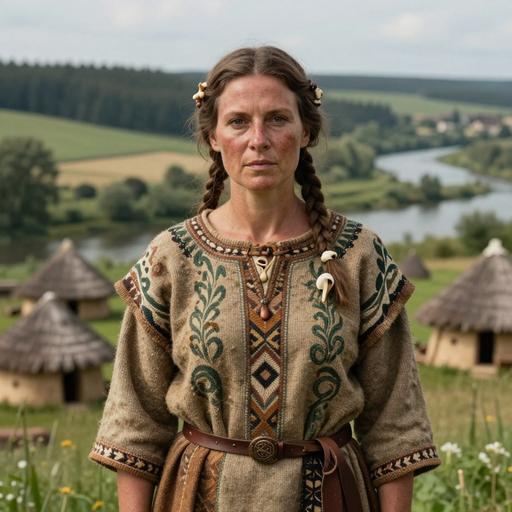
The Globular Amphora Culture (GAC) is an archaeological culture that existed from approximately 3400 to 2800 BCE. It is primarily located in regions that are today parts of Poland, as well as western Ukraine, Belarus, and parts of Germany. This culture is primarily known for its distinct pottery, namely, amphora-shaped vessels with globular bodies, which is where it derives its name.
Geographic Context and Chronology
The Globular Amphora Culture is part of the broader Central European Neolithic period and overlaps with several other contemporary cultures. It occupies a key position within the region, extending from the Vistula Basin in the east to the Elbe and Saale Rivers in the west. The culture flourished in an era characterized by significant transformations, including the end of the Early Neolithic and the rise of more complex societies.
Society and Economy
The society of the Globular Amphora Culture was primarily agrarian, with evidence suggesting they practiced mixed agriculture and animal husbandry. They cultivated a variety of crops, including wheat and barley, and raised livestock such as cattle, sheep, goats, and pigs. There is also some evidence of horse domestication, which is a significant aspect considering the relationship with Indo-European cultures later noted for their equestrian capabilities.
Economic activities were likely supported by a system of settlements that ranged from small, dispersed farmsteads to larger, more complex communities. The settlements were typically located in fertile river valleys or strategic locations that provided easy access to resources such as water, arable land, and raw materials like flint and clay.
Material Culture
The most distinctive and defining feature of the Globular Amphora Culture is its pottery. The amphorae are typically characterized by their globular bodies, narrow necks, and two or more handles. These vessels are often decorated with cord impressions, incised lines, and various motifs that might have held symbolic or functional significance. Other ceramic forms include cups, bowls, and beakers, often similarly decorated.
Beyond pottery, the culture produced tools primarily from stone and flint, including axes, adzes, arrowheads, and sickles. Bone and antler were also utilized for tool-making. Additionally, amber, sourced from the Baltic region, was a valued material used for ornaments and possibly as a trade good.
Burial Practices
The burial practices of the Globular Amphora Culture are noteworthy, often indicating socio-religious beliefs and societal organization. Burials are typically found in flat graves or small mounds, sometimes accompanied by rich grave goods, including pottery, tools, and personal ornaments. The presence of grave goods suggests a belief in an afterlife and possibly a hierarchically structured society.
Intriguingly, some burial sites exhibit evidence of ritual animal burials, especially cattle. These are sometimes interpreted as sacrificial offerings, reflecting a spiritual or religious aspect to their culture. Such practices hint at complex belief systems that included rituals and ceremonies linked to life, death, and possibly fertility, paralleling elements found in later Indo-European mythology.
Cultural Interactions and Influence
The Globular Amphora Culture interacted with neighboring cultures such as the Funnelbeaker Culture and the Corded Ware Culture. These interactions could have included trade, material culture exchange, and perhaps even conflicts or alliances. Such contacts may have facilitated the flow of ideas, goods, and technologies, contributing to cultural evolution.
Some scholars suggest that the Globular Amphora Culture might have contributed to the spread of early Indo-European languages, given its geographical position and timeline. The movement and interactions of peoples during this era likely set the stage for broader linguistic and cultural transformations.
Conclusion
In conclusion, the Globular Amphora Culture represents a significant and intriguing aspect of Neolithic Europe. Its innovative pottery, agricultural economy, complex burial practices, and potential connections to later Indo-European cultures reveal a society both distinctive and influential. This culture demonstrates the intricate tapestry of human social, economic, and spiritual life during a transformative epoch in European prehistory.