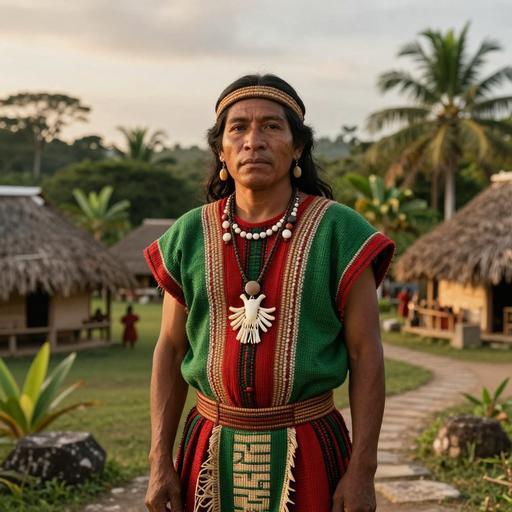
The Pre-Colonial Isthmo-Colombian region, particularly in what is now Panama, represents a fascinating chapter in the broader narrative of Mesoamerican civilizations. This era, spanning thousands of years before European contact, is characterized by numerous indigenous cultures that thrived in the isthmus region, which served as both a cultural crossroads and a barrier between the North and South American continents.
Geography and Environment
The Isthmo-Colombian area includes the narrow strip of land that connects North and South America, primarily encompassing present-day Panama and parts of Costa Rica and northern Colombia. This region is marked by diverse ecosystems, including tropical rainforests, mountain ranges, and coastal plains. The geographic diversity provided rich resources, facilitating agricultural, fishing, and trade activities that fostered cultural and economic development among its indigenous inhabitants.
Cultural Development and Societal Structure
Settlement Patterns and Architecture: Pre-Colonial Panama saw a variety of settlement patterns, from small, scattered villages to larger ceremonial centers. Early inhabitants constructed dwellings using locally available materials like wood, thatch, and adobe. The architecture evolved over time, reflecting increasing social complexity. Archaeological sites such as Cerro Juan Díaz and Sitio Conte illustrate a mixture of residential and ceremonial areas, with evidence of communal structures possibly used for political or religious purposes.
Social Hierarchies: The region was characterized by a variety of social structures, from egalitarian societies to more stratified ones with chieftains, or caciques, wielding influence. These leaders often commanded respect due to their roles as intermediaries with the spiritual world, their prowess in warfare, or their success in managing resources and trade.
Economic Activities
Agriculture: The indigenous peoples of pre-Colonial Panama practiced a subsistence economy largely based on agriculture. They cultivated crops such as maize, beans, squash, and manioc, utilizing slash-and-burn techniques to manage the land. The fertile soils and abundant rainfall of the region allowed for surplus production, which supported population growth and urban development.
Trade and Interaction: The geographically strategic location of the isthmus made it a hub of interaction and trade between Mesoamerican and Andean civilizations. Evidence of trade networks comes from the exchange of goods such as gold, pottery, textiles, and obsidian. The presence of artifacts from distant regions highlights the cultural exchanges that shaped the Isthmo-Colombian societies.
Artistic and Spiritual Life
Material Culture and Art: Artisans in pre-Colonial Panama were highly skilled, creating intricate gold ornaments and jewelry, which were important status symbols among the elite. Pottery and stonework often featured elaborate designs and motifs, sometimes with religious or cosmological significance. The artistic style commonly featured motifs of local fauna and shamanic figures, reflecting the cultural significance of the natural world.
Spiritual Beliefs and Practices: Indigenous groups in this region practiced shamanism, believing that shamans could communicate with the spiritual world to heal the sick, ensure successful hunts, or predict future events. Spiritual beliefs were deeply intertwined with the environment, as evidenced by the reverence for natural entities, such as rivers, mountains, and animals, which were often considered to harbor spiritual essences or deities.
Decline and Transformation
By the time Europeans arrived in the early 16th century, the complex societies of the Isthmo-Colombian region had experienced various transformations, possibly due to climatic changes, shifting trade routes, and internal social dynamics. The arrival of Spanish explorers and conquistadors led to significant disruptions, including the spread of diseases to which indigenous populations had no immunity, and the imposition of colonial rule which drastically altered the social and cultural landscape.
In conclusion, the Pre-Colonial Isthmo-Colombian region of Panama stands as a testament to the vibrant cultures that thrived in this strategic and resource-rich area. The legacies of these indigenous groups are preserved in archaeological findings, oral histories, and the ongoing cultural practices of their descendants, offering vital insights into the complexity and diversity of pre-Columbian America.