Menu
Currency
Main
Store
Blog

Loading Report

Preparing your ancestry journey

Connecting to ancient matches...

Preparing your report

Skip to main content
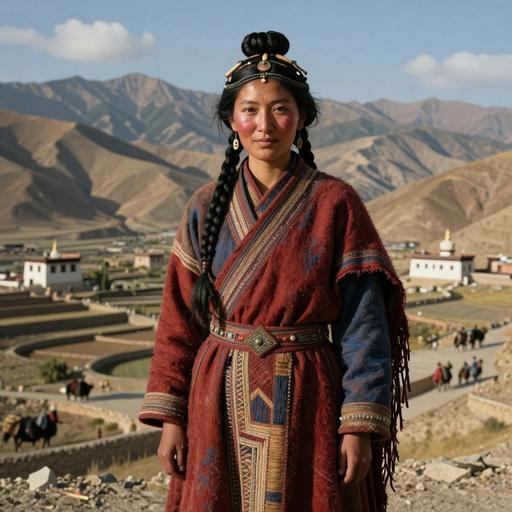
Portrait reconstruction of A woman buried in Nepal in the Iron Age era
Ancient Individual

A woman buried in Nepal in the Iron Age era

A woman buried in Nepal during the Mustang Samdzong Middle Kingdoms

A fragment of the ancient world, preserved across millennia in strands of DNA.

S8
350 CE - 1000 CE
Female
Nepal
Scroll to begin
Chapter I

Identity

The biological and cultural markers that define this ancient individual

Sample ID

S8

Date Range

350 CE - 1000 CE

Cultural Period

Mustang Samdzong Middle Kingdoms

Biological Sex

Female

mtDNA Haplogroup

F1g

Y-DNA Haplogroup

N/A (Female)

Chapter II

Place

Where this individual was discovered

Country Nepal
Locality Mustang. Samdzong
Coordinates 29.2800, 84.0300
Chapter III

Time

When this individual lived in the broader context of human history

S8 350 CE - 1000 CE
Chapter IV

Story

The narrative of this ancient life

The Mustang region in Nepal, particularly the area of Samdzong, holds a significant place in the history and culture of Tibetan Buddhist kingdoms, often referred to as the \Middle Kingdoms." This region is nestled within a rugged and remote part of the Himalayas, making it an area that has historically enjoyed a certain degree of isolation, which has contributed to the development and preservation of its unique cultural identity.

Geographic and Historical Context

Mustang, also known as the Kingdom of Lo, is located in the north-central part of Nepal and extends up to the border with Tibet. This region is set against the backdrop of the Himalayas, providing a dramatic and austere landscape featuring high-altitude deserts and valleys. The Mustang region, historically part of the Tibetan Empire, has served as a crucial cultural and trade link between the Tibetan plateau and Nepal. Its capital, Lo Manthang, played an important role in preserving Buddhist culture as it was an offshoot of the Tibetan kingdoms.

Cultural and Religious Influences

The Mustang region, particularly during the era referred to as the "Middle Kingdoms," represents a fusion of Tibetan Buddhist traditions with indigenous hill tribe cultures. The dominant religion is Tibetan Buddhism, which is reflected in the region's numerous monasteries, chortens (stupas), and mani walls inscribed with Buddhist prayers. Over time, these faith practices have shaped the local communities' social norms, art, and architecture.

The monasteries, such as Thubchen and Jampa in Lo Manthang, are vibrant centers of religious life and learning. They are repositories of ancient Buddhist texts and are essential hubs for the study and practice of Buddhist rituals. The presence of highly revered lamas and monks has made Mustang an important pilgrim site within the Tibetan Buddhist tradition.

The Samdzong Settlements

The Samdzong area consists of several ancient cave settlements that date back to the Middle Kingdoms period, showcasing an intricate network of human habitation that reflects the historical resilience and adaptation of its people. These caves, high in the Himalayan cliffs, were used both for habitation and religious purposes. Their strategic position provided protection and isolation, crucial for preserving the cultural practices of the Tibetan Buddhist kingdoms.

The discovery of these cave complexes has provided archaeologists with a wealth of artifacts, including ancient manuscripts, murals, and relics that offer insights into the sociopolitical structure and daily lives of the people during this era. The art within these caves reveals significant Indian, Tibetan, and Chinese influences, underscoring the region's role as a crossroad of cultures and ideas.

Economic and Political Aspects

During the period of the Middle Kingdoms, Mustang served as an essential conduit for commerce between different cultures. The trade routes through Mustang linked the Salt Route and became instrumental in the exchange of goods like salt, wool, grains, and other products. Despite its harsh terrain, Mustang’s strategic location enabled it to control and levy taxes on the movement of goods, contributing to its economic prosperity.

Politically, the region was governed by local kings or chieftains who were often allied with, or vassals to, larger Tibetan or Nepalese powers. These rulers wielded significant influence, maintaining the delicate balance between autonomy and allegiance to larger imperial interests.

Architectural and Artistic Heritage

Architecturally, the Mustang region, including Samdzong, is characterized by its traditional flat-roofed structures made from local materials like stone and mud. The buildings are often adorned with intricate woodwork and Buddhist iconography, reflecting the cultural and religious priorities of the community.

Art from the Mustang area reveals a blend of styles and techniques influenced by neighboring regions. The wall paintings within the monasteries and caves are particularly notable for their vivid colors and detailed depictions of Buddhist deities and life narratives.

Conservation Challenges and Efforts

In modern times, the Mustang region, particularly sites such as Samdzong, faces numerous conservation challenges due to natural degradation, climate change, and increased tourist activity. Efforts have been made by both local communities and international agencies to preserve this unique cultural heritage, including restoration projects and sustainable tourism initiatives aimed at protecting the delicate architecture and artifacts.

In conclusion, the Mustang Samdzong Middle Kingdoms era stands out as a period of profound cultural and spiritual richness, with deep-rooted connections to Tibetan Buddhist traditions. Despite its geographical isolation, Mustang has played a pivotal role in the history of the Himalayan region, serving as a center of trade, religion, and cultural exchange. The contemporary efforts to preserve its heritage are crucial to maintaining its legacy for future generations."

Context

Related Samples

This individual exists within a broader network of ancient samples. No ancient genome stands alone.

Sample ID Culture/Period Date Location Action
C2 Iron Age Nepal 850 BCE Mustang. Chokhopani, Nepal View
C3 Iron Age Nepal 850 BCE Mustang. Chokhopani, Nepal View
CNE1 Iron Age Nepal 850 BCE Mustang. Chokhopani, Nepal View
KM4 Late Iron Age Nepal 800 BCE Manang. Kyang, Nepal View
KS20_KS25 Late Iron Age Nepal 800 BCE Manang. Kyang, Nepal View
KS21_KS23_KS4 Late Iron Age Nepal 800 BCE Manang. Kyang, Nepal View
KS26 Late Iron Age Nepal 800 BCE Manang. Kyang, Nepal View
KS5 Late Iron Age Nepal 800 BCE Manang. Kyang, Nepal View
KS8 Late Iron Age Nepal 800 BCE Manang. Kyang, Nepal View
KS9 Late Iron Age Nepal 800 BCE Manang. Kyang, Nepal View
L1 Early Iron Age Nepal 1300 BCE Mustang. Lubrak, Nepal View
L2 Early Iron Age Nepal 1300 BCE Mustang. Lubrak, Nepal View
M2113 Late Iron Age to Early Middle Kingdoms Mebrak, Mustang, Nepal 800 BCE Mustang. Mebrak, Nepal View
M241 Late Iron Age to Early Middle Kingdoms Mebrak, Mustang, Nepal 800 BCE Mustang. Mebrak, Nepal View
M295 Late Iron Age to Early Middle Kingdoms Mebrak, Mustang, Nepal 800 BCE Mustang. Mebrak, Nepal View
M354 Late Iron Age to Early Middle Kingdoms Mebrak, Mustang, Nepal 800 BCE Mustang. Mebrak, Nepal View
M368 Late Iron Age to Early Middle Kingdoms Mebrak, Mustang, Nepal 800 BCE Mustang. Mebrak, Nepal View
M4580 Late Iron Age to Early Middle Kingdoms Mebrak, Mustang, Nepal 800 BCE Mustang. Mebrak, Nepal View
M4681 Late Iron Age to Early Middle Kingdoms Mebrak, Mustang, Nepal 800 BCE Mustang. Mebrak, Nepal View
M63_M339_M359 Late Iron Age to Early Middle Kingdoms Mebrak, Mustang, Nepal 800 BCE Mustang. Mebrak, Nepal View
M3490 Late Iron Age to Early Middle Kingdoms Mebrak, Mustang, Nepal 800 BCE Mustang. Mebrak, Nepal View
R2_R7 Iron Age Mustang, Nepal 850 BCE Mustang. Rhirhi, Nepal View
S10_S13 Mustang Samdzong Middle Kingdoms 350 CE Mustang. Samdzong, Nepal View
S143_S173 Mustang Samdzong Middle Kingdoms 350 CE Mustang. Samdzong, Nepal View
S153_S183 Mustang Samdzong Middle Kingdoms 350 CE Mustang. Samdzong, Nepal View
S18_S20_S21_S22 Mustang Samdzong Middle Kingdoms 350 CE Mustang. Samdzong, Nepal View
S29_S30 Mustang Samdzong Middle Kingdoms 350 CE Mustang. Samdzong, Nepal View
S36 Mustang Samdzong Middle Kingdoms 350 CE Mustang. Samdzong, Nepal View
S8 Mustang Samdzong Middle Kingdoms 350 CE Mustang. Samdzong, Nepal View
U1 Late Chalcolithic Nepal 1550 BCE Mustang. Suila, Nepal View
U2 Late Chalcolithic Nepal 1550 BCE Mustang. Suila, Nepal View
S16 Mustang Samdzong Middle Kingdoms 350 CE Mustang. Samdzong, Nepal View
S163 Mustang Samdzong Middle Kingdoms 350 CE Mustang. Samdzong, Nepal View
Sample ID Culture/Period Date Location Action
S10_S13 Mustang Samdzong Middle Kingdoms 350 CE Mustang. Samdzong, Nepal View
S143_S173 Mustang Samdzong Middle Kingdoms 350 CE Mustang. Samdzong, Nepal View
S153_S183 Mustang Samdzong Middle Kingdoms 350 CE Mustang. Samdzong, Nepal View
S18_S20_S21_S22 Mustang Samdzong Middle Kingdoms 350 CE Mustang. Samdzong, Nepal View
S29_S30 Mustang Samdzong Middle Kingdoms 350 CE Mustang. Samdzong, Nepal View
S36 Mustang Samdzong Middle Kingdoms 350 CE Mustang. Samdzong, Nepal View
S8 Mustang Samdzong Middle Kingdoms 350 CE Mustang. Samdzong, Nepal View
S16 Mustang Samdzong Middle Kingdoms 350 CE Mustang. Samdzong, Nepal View
S163 Mustang Samdzong Middle Kingdoms 350 CE Mustang. Samdzong, Nepal View
Sources

References

Scientific publications and genetic data that inform this profile.

Scientific Publication

Ancient genomes from the Himalayas illuminate the genetic history of Tibetans and their Tibeto-Burman speaking neighbors

Authors Liu CC, Witonsky D, Gosling A, Lee JH, Ringbauer H et al.
Abstract

Present-day Tibetans have adapted both genetically and culturally to the high altitude environment of the Tibetan Plateau, but fundamental questions about their origins remain unanswered. Recent archaeological and genetic research suggests the presence of an early population on the Plateau within the past 40 thousand years, followed by the arrival of subsequent groups within the past 10 thousand years. Here, we obtain new genome-wide data for 33 ancient individuals from high elevation sites on the southern fringe of the Tibetan Plateau in Nepal, who we show are most closely related to present-day Tibetans. They derive most of their ancestry from groups related to Late Neolithic populations at the northeastern edge of the Tibetan Plateau but also harbor a minor genetic component from a distinct and deep Paleolithic Eurasian ancestry. In contrast to their Tibetan neighbors, present-day non-Tibetan Tibeto-Burman speakers living at mid-elevations along the southern and eastern margins of the Plateau form a genetic cline that reflects a distinct genetic history. Finally, a comparison between ancient and present-day highlanders confirms ongoing positive selection of high altitude adaptive alleles.