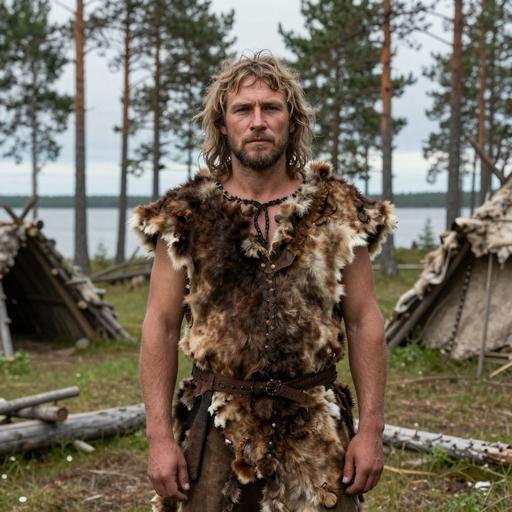
The Mesolithic era in Sweden, part of the broader European Mesolithic period, spans roughly from around 9000 to 4000 BCE, following the retreat of the glaciers at the end of the last Ice Age. This era marks a transformative period in the prehistory of the region as human societies adapted to changing climates, environments, and the availability of resources. The Mesolithic hunter-gatherers of Sweden were part of the broader European continuum but exhibited unique adaptations to the Scandinavian environment.
Geographic and Environmental Context
During the Mesolithic, Sweden's landscape was vastly different from today. As the glaciers receded, they left behind a transformed topography, creating a mosaic of coastal areas, archipelagos, dense forests, and numerous lakes and rivers. The rising sea levels, a result of glacial melting, resulted in an archipelago-rich coast, particularly prevalent in what is now southern and central Sweden. This environment provided a rich array of resources that facilitated the development of diverse hunting and gathering strategies.
Subsistence and Economy
Mesolithic people in Sweden were highly skilled hunter-gatherers who exploited the rich environment. Their subsistence strategies included:
Hunting: Wildlife such as elk, red deer, wild boar, and seals were primary hunting targets. The invention and use of complex hunting tools, including flint microliths mounted on wooden shafts and bone harpoons, were central to their hunting success.
Fishing: The abundance of waterways and coastal areas supported a rich fishing culture. Evidence suggests the use of fish traps, spears, and nets for capturing various fish species, including salmon and herring.
Gathering: The Mesolithic groups also gathered plant resources, including berries, nuts, and edible roots, which were crucial for their diet.
Seasonal Mobility: To efficiently exploit their environment, these groups practiced seasonal mobility, moving between coastal areas in the warmer months for fishing and gathering and inland sites during colder months for hunting.
Technology and Material Culture
The Mesolithic technological toolkit in Sweden comprised advanced stone tools, which were pivotal in their daily life. Noteworthy aspects include:
Microliths: Tiny flint tools used as composite tool components, notably in arrows and spears.
Bone and Antler Tools: Harpoons and spears crafted from bone and antlers were instrumental for hunting and fishing.
Canoes and Boats: Evidence points to the construction of dugout canoes and boats from hollowed tree trunks, reflecting the importance of waterways for transportation and subsistence activities.
Social Structure and Settlements
The Mesolithic societies of Sweden likely operated in small, egalitarian bands based on kinship networks. As mobile groups, their settlements were often temporary campsites, strategically located to exploit seasonal resources. While these groups were generally small, archaeological evidence suggests a degree of social complexity, with possible trade links and cultural exchanges with neighboring groups.
Art and Symbolism
While direct evidence of Mesolithic art in Sweden is sparse, there are indications of symbolic and cultural practices. Petroglyphs and engravings found in the broader region depict wildlife and human figures, reflecting the spiritual and cultural dimensions of these communities. Additionally, the presence of burial sites with grave goods suggests ritualistic practices and a belief in an afterlife.
Transition to the Neolithic
The end of the Mesolithic period in Sweden marks a gradual transition towards the Neolithic era, characterized by the introduction of agriculture and the domestication of animals. This transition was complex and varied, influenced by interactions with incoming agricultural societies and internal cultural developments.
In summary, the Mesolithic era in Sweden represents a dynamic period of adaptation and cultural development among European hunter-gatherers. The interplay between environmental changes and technological innovation facilitated a rich subsistence economy and laid the groundwork for the subsequent Neolithic transformations in the region.